Dassault Reports Falcon Sales Surge In First Half Of 2026
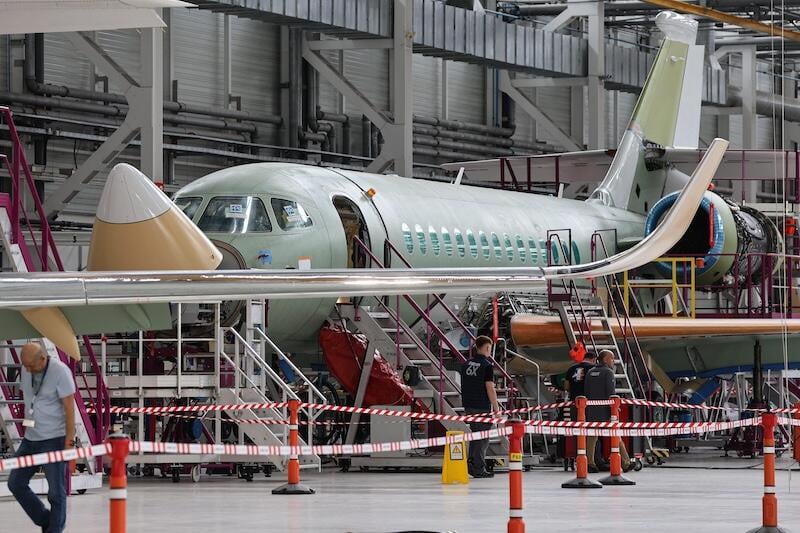
Dassault Aviation's disclosure of 23 Falcon business jet orders in the first half of 2026 signals a notable uptick for a manufacturer that has spent recent years navigating a challenging transition period. CEO Eric Trappier's announcement, delivered July 22 during the company's half-year results briefing, comes with the caveat that a single half-year of improved bookings does not yet constitute a confirmed annual trend, but it nonetheless offers the sales organization in Saint-Cloud and the assembly teams in Mérignac and Bordeaux reason for cautious optimism. The order count represents a meaningful data point for an OEM that has been working to stabilize its business jet backlog following the wind-down of the Falcon 8X-era product cycle and the phased ramp-up of the Falcon 6X, alongside continued development of the flagship Falcon 10X.
For operators and flight departments tracking the business aviation OEM landscape, order momentum matters because it directly affects delivery slot availability, aircraft residual values, and the competitive pricing environment against Bombardier and Gulfstream, Dassault's principal rivals in the large-cabin and super-midsize segments. A stronger order intake typically translates into longer lead times for new white-tails and can firm up pre-owned aircraft values as buyers who cannot secure near-term factory slots turn to the secondary market. Flight departments and fractional/charter operators evaluating fleet renewal decisions in the 2026-2028 window will want to watch whether this first-half surge extends through year-end, as that will shape realistic delivery expectations for the 6X and eventually the 10X, which remains a closely watched program given its scale and technology ambitions, including the new Rolls-Royce Pearl 10X engines and fly-by-wire architecture shared conceptually with Dassault's defense heritage.
The broader context is a business aviation market that has shown resilience even as post-pandemic demand normalizes from its 2021-2022 peak. Manufacturers across the industry—Bombardier with its Global and Challenger lines, Gulfstream with the G700/G800 family, Textron Aviation, and Embraer—have all reported mixed but generally positive order trends through 2025 and into 2026, driven by corporate flight departments replacing aging fleets, continued strength in ultra-high-net-worth individual ownership, and growing interest in newer, more fuel-efficient and technologically advanced airframes. Dassault's improved first-half figures fit within this pattern, though the company's Falcon line has historically trailed the sales volumes of its larger American and Canadian competitors, making any sustained uptick strategically significant for Dassault's civil aviation division, which also helps cross-subsidize investment in military programs like the Rafale and the Future Combat Air System.
For working pilots, particularly those flying Falcon types or considering a transition into the Dassault fleet, stronger order books generally correlate with continued OEM investment in customer support infrastructure, parts availability, simulator training capacity, and software/avionics updates—factors that directly affect dispatch reliability and operational costs. Maintenance planners and chief pilots should also note that sustained order growth often precedes production rate increases, which can ease the current tight market for qualified type-rated crews as fleets expand. Whether this first-half surge holds through the remainder of 2026 will be a key indicator watched closely at industry events such as NBAA-BACE and in subsequent Dassault financial disclosures, with implications rippling through charter operators, fractional providers, and corporate flight departments evaluating their next aircraft acquisition.







 Read original article