The Helicopter Company signs LOI with Bombardier for 60 jets | Corporate Jet Investor | CJI news
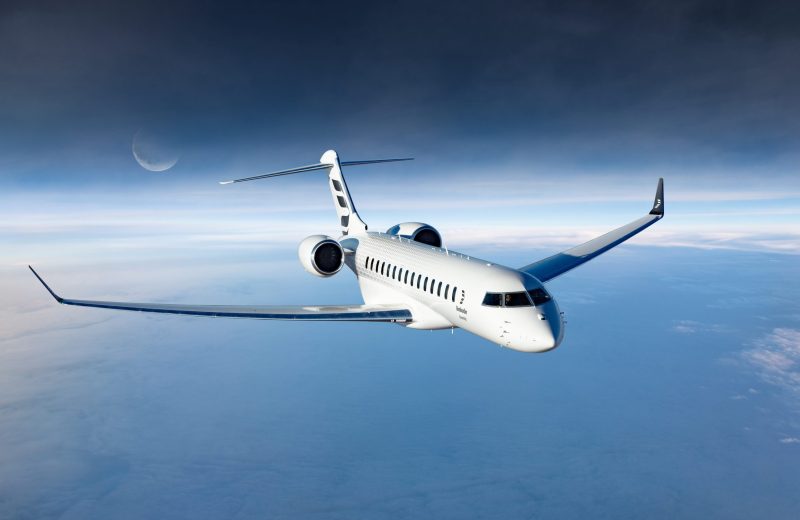
The Helicopter Company (THC), Saudi Arabia's dominant rotary-wing operator, has signed a letter of intent with Bombardier for up to 60 business jets, marking a significant strategic pivot from helicopter operations into fixed-wing charter and management. Announced at the Farnborough International Airshow, the deal includes firm orders for 12 aircraft—five Challenger 3500s, five Global 5500s, and two Global 8000s—with options for 48 additional jets across the same three platforms. The fleet mix spans super-midsize, long-range, and ultra-long-range segments, giving THC a scalable, commonality-driven foundation as it builds out a fixed-wing division from scratch. THC is backed by Saudi Arabia's Public Investment Fund and was established in 2018 as part of the kingdom's Vision 2030 diversification strategy, which has already fueled major aviation investments including Riyadh Air and expanded MRO and FBO infrastructure across the region.
For working pilots and operators, this deal is another data point in the rapid maturation of Middle Eastern business aviation demand, particularly in a market historically underserved by dedicated charter and management infrastructure. THC's stated ambition to become "the national carrier of choice in private charters and business aviation" signals a push toward a vertically integrated operator model—one that controls acquisition, crewing, maintenance, and charter sales domestically rather than relying on foreign-based management companies. That has direct implications for pilot recruitment and training pipelines in the region, as THC will need to rapidly build type-rated crews for Challenger 3500 and Global 5500/8000 platforms, likely drawing experienced business aviation pilots from Europe, North America, and elsewhere in the Gulf. Operators and flight departments competing for charter business in Saudi Arabia, the UAE, and broader MENA markets should anticipate increased competition for slots, ramp space, and skilled labor as THC scales from a rotary-only fleet of 60-plus helicopters into a fixed-wing operation of similar or greater size.
The order also reinforces Bombardier's continued strength in the super-midsize and large-cabin categories, with the Challenger 3500 and Global 5500 both cited by CEO Éric Martel as benchmark performers in customer demand. The inclusion of two firm Global 8000s—Bombardier's flagship, still ramping toward certification and entry into service—signals confidence from a launch customer in a region where ultra-long-range capability matters for connecting Saudi Arabia to global financial and leisure destinations without fuel stops. This adds to a growing backlog of Global 8000 commitments from fleet operators and corporate flight departments worldwide, and it strengthens Bombardier's competitive position against Gulfstream and Dassault in a market segment increasingly defined by range, cabin technology, and sustainability messaging.
More broadly, the THC-Bombardier LOI reflects a pattern seen across Gulf aviation strategy over the past several years: sovereign wealth-backed entities using large aircraft orders not just to build fleets but to seed entire aviation ecosystems—training, MRO, FBO, and charter management—aligned with national economic diversification goals. Similar dynamics have played out with Qatar Executive, Royal Jet in Abu Dhabi, and now Riyadh Air's mainline ambitions. For business aviation OEMs, these state-backed launch customers offer a stable, long-horizon path to fleet growth even as Western corporate and private markets show more cyclical demand patterns. For flight departments, charter brokers, and pilots eyeing international opportunities, the Gulf region's continued build-out suggests sustained demand for qualified business jet crews, expanding maintenance capacity, and an increasingly competitive charter marketplace stretching from the Levant through the Gulf and into East Africa via THC's Heliconia and Rotortrade units.