Boeing To Invest $1.3B In Reacquired Wichita Site As Production Grows
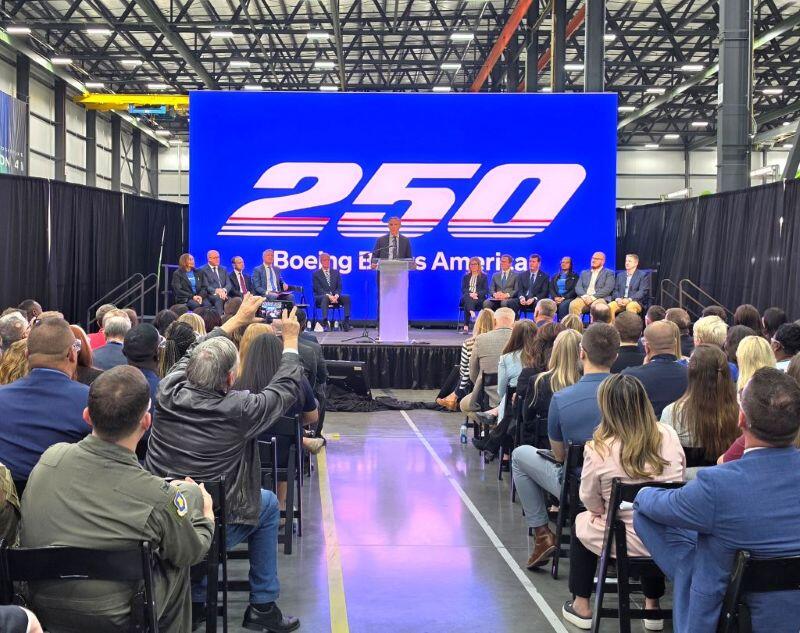
Boeing's announced $1.3 billion investment in its reacquired Wichita manufacturing site marks a significant milestone in the company's effort to reassert direct control over critical airframe production. The commitment, unveiled May 11 at a Boeing Backs America event in Wichita, includes $1 billion to be deployed over the next three years at the facility, which Boeing recently brought back under its ownership after years of operating it through Spirit AeroSystems. Spirit had been spun off from Boeing in 2005, but Boeing moved to reacquire the Wichita operations — a primary source of 737 fuselages and other structural components — following a cascade of quality and manufacturing deficiencies that drew intense FAA scrutiny beginning in early 2024. The framing of the announcement under the "Boeing Backs America" banner reflects both a domestic manufacturing narrative and a deliberate effort to signal institutional stability to customers, regulators, and the workforce.
The reintegration of Wichita is operationally consequential because the facility sits at the heart of Boeing's narrowbody production architecture. The 737 MAX fuselage is assembled there before being shipped to Renton, Washington, for final assembly, meaning that throughput, quality control, and workforce proficiency at Wichita directly govern how many aircraft Boeing can deliver per month. The $1.3 billion investment is expected to support tooling upgrades, facility modernization, and workforce expansion as Boeing attempts to push 737 MAX production rates toward the FAA-capped ceiling and eventually beyond it. For airline operators and lessors awaiting narrowbody deliveries — many of whom have been managing fleet gaps with aging aircraft or wet-lease arrangements — this capital commitment is a tangible indicator of whether Boeing's production recovery is sustainable rather than cosmetic.
For professional pilots and flight operations departments, the Wichita investment carries practical implications beyond the balance sheet. Persistent delivery delays have forced carriers to extend service lives on older 737 NG and A320-family aircraft, increasing maintenance burden and complicating long-range fleet planning. A more vertically integrated Boeing supply chain — with in-house oversight of fuselage production rather than a contractual relationship with a separate tier-one supplier — is widely viewed within the industry as a prerequisite for the consistent quality and predictable delivery cadence that operators require. Boeing's previous arms-length arrangement with Spirit contributed to the escape of nonconforming fastener installations and misdrilled holes that triggered the FAA production cap imposed in January 2024 following the Alaska Airlines 737 MAX 9 door plug incident.
The broader trend this investment reflects is a partial reversal of the outsourcing philosophy that dominated commercial aerospace for roughly two decades. Both Boeing and Airbus aggressively moved to transfer production risk and capital costs to suppliers during the 2000s and early 2010s, a strategy that produced cost savings in stable periods but revealed fragility during production ramp-ups and supply chain disruptions. Boeing's 787 program, built on an unprecedented level of supplier-led assembly, experienced chronic delays and quality issues that cost billions in penalties and concessions. The reacquisition of Wichita, backed by substantial reinvestment capital, suggests Boeing's leadership has concluded that fuselage production for its highest-volume commercial programs requires a level of oversight and integration that an external supplier relationship cannot reliably deliver. Business aviation operators and Part 135 charter companies that depend on Boeing platforms for fleet renewal will be watching production rate trends closely as a gauge of when the order backlog begins to clear at a meaningful pace.






 Read original article