Here's Why The US Air Force Just Doubled Its Order For A Non-Stealth Fighter Jet
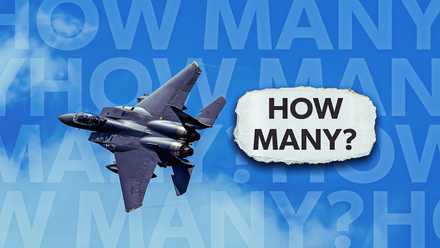
The United States Air Force has moved to more than double its planned F-15EX Eagle II fleet, increasing the program's total procurement target from 129 aircraft to 267 airframes, with the FY2027 budget request seeking 24 additional aircraft at a cost of $3 billion. The expansion follows an anticipated 25 percent increase in overall USAF budget authority to approximately $267.7 billion, which the service intends to channel into a 30 percent procurement increase and a 27 percent rise in research and development spending. At a delivery tempo of roughly two dozen aircraft per year, the F-15EX program is projected to extend well into the 2030s, forming part of a broader acquisition strategy targeting 72 new fighter inductions annually when combined with F-35A deliveries. Currently, approximately 25 F-15EX aircraft are operational in USAF inventory, making the scale of the planned expansion substantial relative to the program's present footprint.
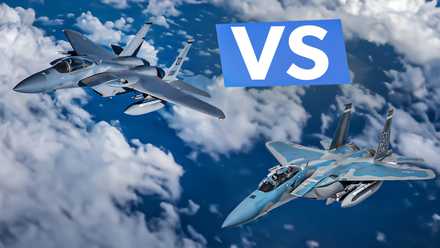
The strategic logic behind continued investment in a non-stealth platform centers on payload capacity and operational flexibility rather than low-observability. Boeing's F-15EX carries a maximum payload of 29,500 pounds, the largest of any fighter currently in service, enabling the aircraft to fill strike package roles that fifth-generation platforms are not optimized for — particularly in partially degraded or contested environments where stealth attributes may be offset by adversary electronic warfare capabilities. The USAF has framed the EX explicitly as a complement to the F-35A rather than a competitor, with the platform designed to execute follow-on missions and add depth to strike packages initiated by stealth aircraft such as the F-35 and B-2 Spirit. This layered approach reflects a doctrinal recognition that no single platform covers all contingencies, particularly in high-end peer conflict scenarios.
The replacement imperative is equally significant. The legacy F-15C and F-15D fleets average approximately 38 years of age, with the majority of airframes having exceeded their original 9,000-hour certified service lives. A Department of Defense Modernized Selected Acquisition Report cites structural inspections, fatigue-related repairs, wiring degradation, and parts obsolescence as compounding factors that make readiness goals increasingly difficult to sustain. For aviation operators and maintainers familiar with the accelerating costs of aging fleet management — a challenge not limited to the military — the F-15EX procurement represents a classic recapitalization trade: accepting higher near-term acquisition expense to arrest the steeper long-term cost curve of sustaining aircraft operating well beyond their design envelope.
The competitive backdrop shaping this decision has direct relevance to the broader civil and defense aviation industry. China's Chengdu J-20 fleet is projected to exceed 1,000 aircraft by 2030 and 1,500 by 2035, supported by five active production lines generating roughly one new airframe every eight days. Against this industrial output, the USAF's stated goal of reversing its long-term trend of fleet aging and contraction frames the F-15EX expansion as a capacity-building measure as much as a capability decision. For Boeing, the program provides sustained production demand that supports the workforce, supply chain, and manufacturing infrastructure underlying its defense division — a stabilizing factor in an environment where commercial aircraft program timelines and defense contract competitions continue to generate significant financial uncertainty for the company.
For professional aviators and aviation operators, the F-15EX expansion is a signal of where the defense aviation sector is allocating capital and production capacity through the decade ahead. The program underscores a durable tension between cutting-edge capability and fleet size — one that civilian operators navigating aircraft acquisition, fleet planning, and maintenance cost management encounter in analogous form. The USAF's willingness to sustain a mature, non-stealth platform alongside fifth-generation investment reflects a pragmatic force structure philosophy: that depth, payload, and availability in quantity carry operational weight that advanced but numerically limited fleets cannot fully substitute for.







 Read original article