Is It True That Boeing's 777X Wing Costs The Same As The Entire Development Of The Airbus A330neo?
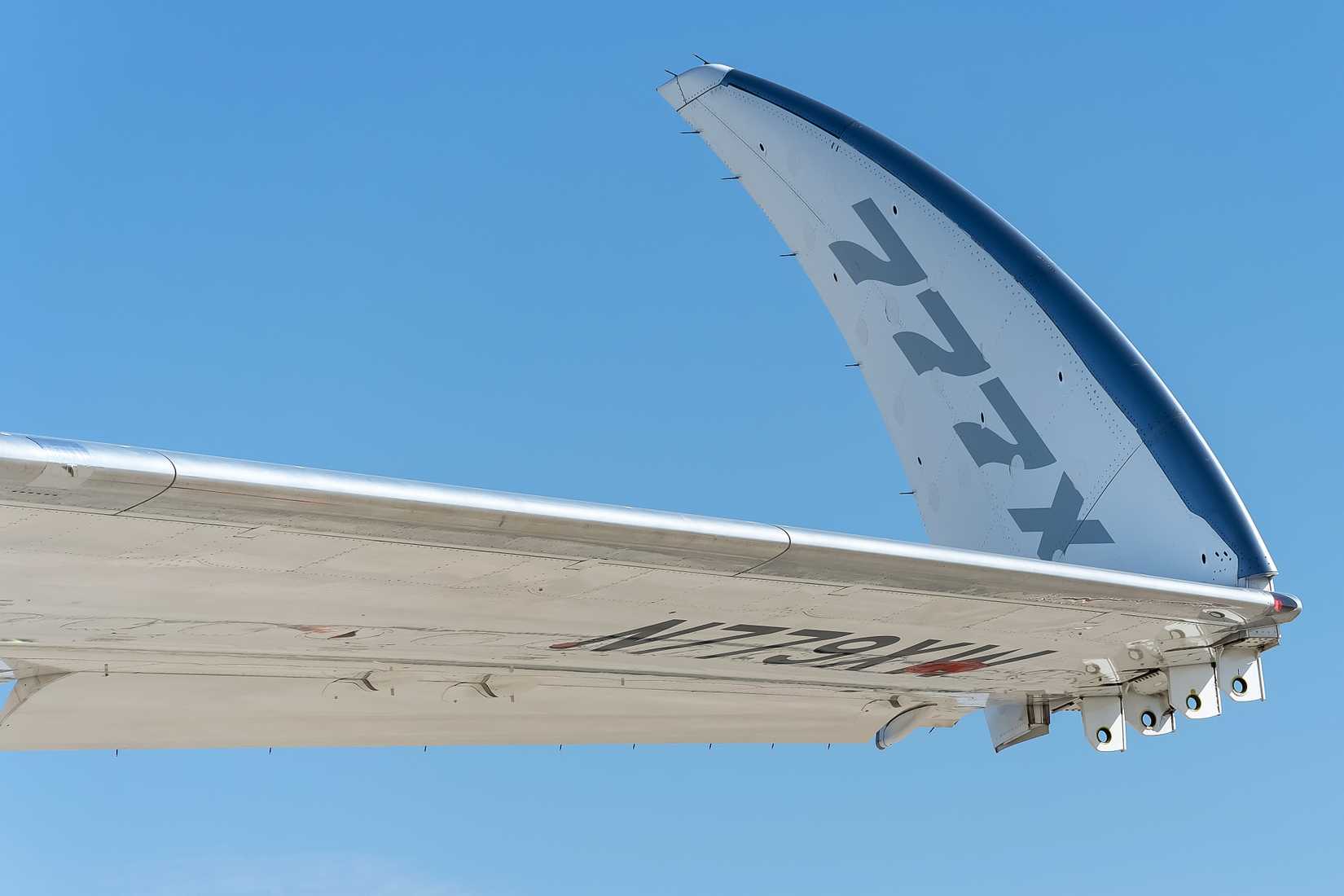
Boeing's $2 billion investment in the 777X's carbon-fiber composite wing — a sum that matches Airbus's total expenditure to develop the entire A330neo aircraft — has crystallized into one of the most revealing financial comparisons in modern aerospace history. The 777X wing, spanning 235.4 feet in flight and requiring a purpose-built composite manufacturing center in Everett, Washington, represents a deliberate clean-sheet gamble on advanced materials and aerodynamic performance. The wing's folding wingtip system, engineered to retract the span to 212 feet for Code E gate compatibility, added hundreds of millions in development cost alone, with each completed unit carrying an estimated $50 million production price tag even after nonrecurring costs are absorbed. Boeing's core thesis is straightforward: composite construction yields a thinner, lighter airfoil capable of sustaining higher structural loads, and over a 25-year airframe life the resulting fuel efficiency will justify the front-loaded capital. Whether that calculus holds depends heavily on the 2027 delivery schedule, which itself follows years of program-wide delays and over $15 billion in total 777X charges.
Airbus approached the same widebody market with a philosophy rooted in disciplined iteration rather than structural reinvention. By stretching the existing A330 aluminum wing from 197.8 feet to 210 feet, adding composite Sharklet wingtip extensions, and applying 3D aerodynamic optimization across the entire surface, the European manufacturer achieved an aspect ratio of 11 — currently the highest of any commercial aircraft in production — while keeping total program cost at roughly $2 billion for the complete aircraft. The fuel efficiency gain from the wing alone amounts to approximately 4 percent, and because no new fuselage, wingbox, or exotic manufacturing infrastructure was required, the development risk was tightly bounded. Airbus concentrated its capital on the engine selection — the Rolls-Royce Trent 7000 — rather than on structural experimentation, preserving financial headroom and compressing the timeline to entry into service.
For airline procurement and fleet planning teams, the financial symmetry between these two programs is not an abstraction. The A330neo's lower development cost propagates directly into lower capital costs for lessors, which in turn drives more competitive lease rates for operators. In a market where yield management runs on thin margins, a lease rate advantage built on conservative engineering can outweigh a technically superior but more expensive alternative. The leasing community has noted this consistently, and the A330neo has built a credible order base precisely because carriers can price its economics with confidence. The 777X, by contrast, carries the compounding uncertainty of ongoing certification timelines, meaning that the 10 percent fuel efficiency advantage over a comparable twin-aisle cannot yet be locked into a network plan with any certainty.
The broader implication for aviation operators and industry observers is that these two programs represent a genuine fork in the design philosophy of large commercial aircraft. Boeing's approach reflects a conviction that composite structures and radical aerodynamic geometry are the only defensible long-term position in a world of rising fuel costs and tightening emissions regulation. Airbus's approach reflects an equally coherent conviction that incremental optimization of proven platforms, when executed with sufficient rigor, can deliver commercially competitive performance without the financial and schedule exposure of clean-sheet development. The 777X's folding wingtip is arguably the most visible symbol of that divergence — an engineering solution that only became necessary because the wing's performance targets required a span that existing airport infrastructure could not accommodate, a cascade of complexity that ultimately traces back to the decision to start from a blank page. Whether that decision proves visionary or excessive will depend on whether the 777X enters revenue service on schedule and whether its fuel burn advantage translates to the per-departure savings Boeing's projections require.







 Read original article