Archer Launches Twin Military, Civil Hybrid VTOL Programs
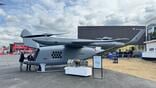
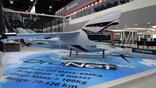
Archer Aviation's unveiling of Halo and Thunder at Farnborough marks a significant strategic pivot for a company that built its public identity almost entirely around Midnight, its piloted electric VTOL air taxi aimed at urban air mobility. By launching a hybrid-electric, autonomous tiltrotor architecture that spans both civil (Halo) and military (Thunder) applications, Archer is signaling that it sees dual-use, uncrewed VTOL as a nearer-term and potentially larger commercial opportunity than the passenger air taxi market it originally staked its future on. The partnership with Anduril on Thunder is particularly notable: Anduril has emerged as one of the most aggressive and well-capitalized players in defense autonomy, and its involvement suggests Archer is positioning itself to compete for military logistics, ISR, and casualty evacuation contracts that increasingly favor VTOL platforms capable of operating from austere or shipboard locations without traditional runway infrastructure.
For working pilots, the technical details matter as much as the business strategy. The hybrid-electric propulsion system—pairing a turbogenerator for cruise with batteries for high-power phases like transition and landing—replaces the mechanical complexity of traditional tiltrotor gearboxes and drive shafts with distributed electrical architecture. This is a meaningful engineering bet: it trades one set of reliability and certification challenges (rotating mechanical linkages) for another (high-voltage electrical redundancy, thermal management, and battery degradation under repeated high-power cycling). Pilots flying rotorcraft, tiltrotors, or hybrid platforms in any capacity should watch how the FAA and military airworthiness authorities treat these hybrid-electric architectures differently from the all-electric systems already under scrutiny in eVTOL certification programs like Joby's and Archer's own Midnight.
The strategic emphasis on defense as a faster path to market is a candid acknowledgment of where the real near-term revenue lies. Military aircraft certification, operating under service-specific airworthiness processes rather than FAA Part 23/25 or Part 27/29 civil certification, allows for faster iteration, less risk-averse acceptance criteria, and quicker fielding of autonomous capability. This mirrors a broader trend across the industry: companies like Shield AI, Anduril itself, and various eVTOL developers are increasingly using defense contracts as a proving ground for autonomy and novel propulsion technologies before pushing them into the more heavily regulated civil space. For corporate and business aviation operators watching the eVTOL sector for future fleet or infrastructure decisions, this suggests that meaningful advances in autonomous flight—reduced crew requirements, remote supervision, AI-assisted mission management—may first mature in defense applications and only later filter into civilian offshore, cargo, or eventually passenger operations.
The introduction of Zee, Archer's generative AI model for "contextual aviation intelligence" and eventual fleet coordination, is arguably the most consequential long-term element of this announcement. It points toward a future where autonomous aircraft fleets are managed less like individual airplanes dispatched by human controllers and more like coordinated swarms overseen by AI systems—a paradigm shift with implications for air traffic management, dispatch, and even the role of pilots as supervisory rather than hands-on operators. While Archer stresses that Midnight remains its core program and that widespread civilian autonomous operations will require substantial regulatory work and public trust-building, the Halo/Thunder/Zee triad reveals a company hedging its bets across military, offshore, and eventually urban markets simultaneously. Pilots and operators across all sectors—airline, business jet, and rotorcraft—should view this as further evidence that autonomy and hybrid-electric propulsion are advancing on multiple fronts at once, with defense increasingly serving as the accelerant for technologies that will eventually reshape civil aviation staffing, training, and operational models.







 Read original article