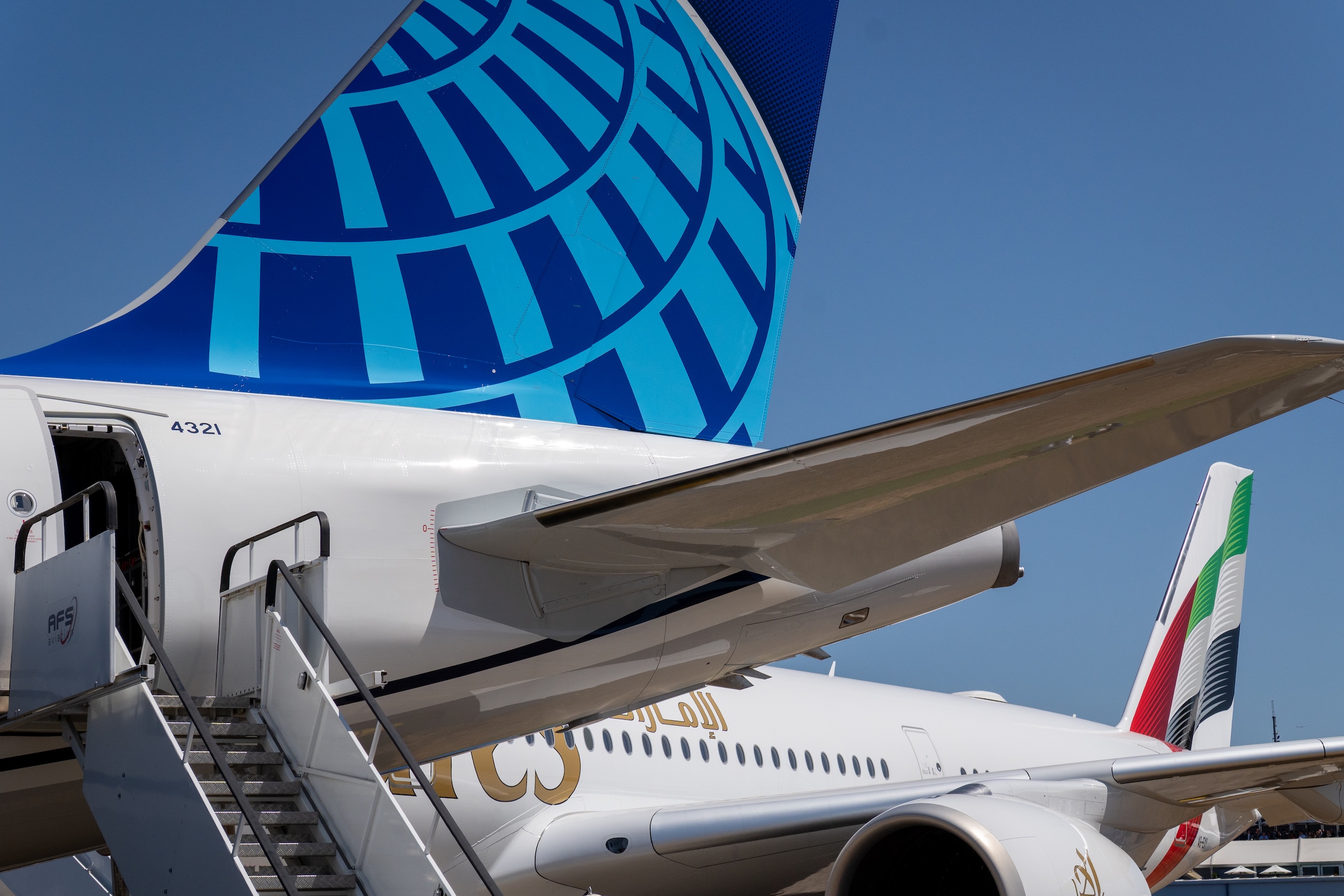
Airbus CEO begrudgingly thinks the dollar is still the best way to sell airplanes
Airbus CEO Guillaume Faury's candid remarks at the Farnborough International Airshow underscore a persistent structural reality in commercial aviation that extends far beyond a single manufacturer's balance sheet: the U.S. dollar remains the industry's functional reserve currency, even for a European champion increasingly caught between transatlantic political tension and its own continent's push for strategic autonomy. Faury's rhetorical response—"Has it ever been?"—when asked whether the dollar is still the right currency for pricing Airbus aircraft signals resignation rather than endorsement. Despite Airbus being headquartered in Toulouse and drawing on a pan-European industrial base spanning France, Germany, Spain, and the UK, the company continues to denominate aircraft sales in dollars because that is the currency in which the entire aviation ecosystem—leasing companies, engine manufacturers, MRO providers, and most airline customers—already operates.
For working pilots and flight departments, this dynamic may seem removed from day-to-day operations, but it has real downstream effects on fleet planning, aircraft availability, and pricing stability. When Airbus prices in dollars while incurring costs in euros, currency volatility becomes a direct hit to margins that the company must either absorb or pass through via hedging costs baked into list prices. This matters to airlines and business aviation operators negotiating new aircraft orders or lease renewals, since currency risk management by OEMs and lessors ultimately shapes delivery timelines, escalation clauses, and residual value assumptions used in fleet planning models. It also matters to Part 135 and fractional operators watching aircraft acquisition costs, since dollar-denominated pricing means that even a European-built jet's cost basis is tied to Federal Reserve policy and U.S. macroeconomic conditions rather than European Central Bank decisions.
The broader context here is Europe's accelerating push toward defense and industrial sovereignty, driven by strained relations with Washington and renewed urgency around continental self-reliance in critical technologies. That political current makes Airbus's continued dependence on dollar pricing something of an uncomfortable admission—a European industrial flagship openly acknowledging that decoupling from dollar dominance is not commercially viable, even as EU leaders discuss reducing dependency on U.S. suppliers for everything from fighter jets to satellite systems. Boeing, by contrast, faces no such tension since dollar pricing aligns naturally with its home currency, giving the American manufacturer a structural advantage that Airbus must engineer around through hedging, natural cost offsets, and dollar-denominated supply contracts of its own.
For the wider industry, Faury's comments are a reminder that currency exposure is an underappreciated variable in aircraft economics that airlines, lessors, and even corporate flight departments should factor into long-term fleet strategy. As geopolitical fragmentation increases—with talk of alternative payment systems, de-dollarization efforts among BRICS nations, and Europe's defense-driven push for autonomy—the aviation sector's near-universal reliance on the dollar stands out as a rare area of continued consensus. Any shift away from that norm, however gradual, would ripple through aircraft financing, leasing rates, and cross-border transactions in ways that operators managing multi-decade fleet plans cannot afford to ignore.