5 Premium Economy Cabins Satisfying Enough That Passengers Rarely Miss Business Class
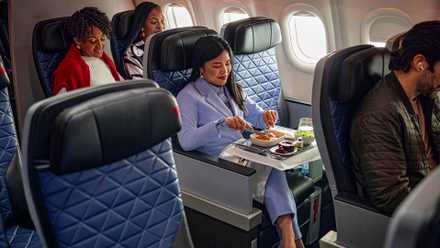
The article catalogs five carriers—Virgin Atlantic, Singapore Airlines, EVA Air, and two others not fully captured in the excerpt—whose premium economy products have matured into genuine business-class substitutes on daytime and shorter long-haul sectors. Drawing on 2025 Skytrax World Airline Awards data, the piece highlights Virgin Atlantic's A350-1000 and 787-9 cabins (18.5–21 inch width, 38-inch pitch, Wander Wall social zone, china-and-linen dining) and Singapore Airlines' Safran recliners (19.5-inch width, 38-inch pitch, six-way headrests, Book the Cook pre-ordering) as benchmark examples. EVA Air, credited as the segment's originator, now offers an industry-leading 42-inch pitch on select fleets with a cradle-motion seat design. The throughline across all examples is that hardware alone no longer differentiates the product—soft-product elements like curated dining, dedicated cabin zones, and priority ground handling are doing the heavy lifting in closing the perceived gap with business class.
For working pilots and crew, this trend is more operationally relevant than it might first appear. Premium economy's growth reshapes cabin weight and balance planning, catering logistics, and turn times, particularly as carriers add multi-course meal service and expanded galley requirements to a cabin class that historically required minimal service complexity. It also affects load planning and revenue management inputs that flight crews increasingly see reflected in dispatch paperwork and fuel planning, since premium economy's higher load factors on transoceanic routes shift the passenger mix airlines are optimizing for. Pilots flying long-haul international routes—especially on aircraft like the A350-900ULR flying near-19-hour missions to New York—are also witnessing firsthand how airlines are re-engineering cabins to manage fatigue and comfort on ultra-long-haul stage lengths, a design philosophy that echoes the same human-factors thinking increasingly applied to flight deck ergonomics and crew rest facility standards on these extreme-duration flights.
The broader significance lies in what this signals about airline economics and fleet strategy. As business class fares climb into five-figure territory, carriers are effectively bifurcating premium demand: a smaller, ultra-high-yield business cabin for those requiring lie-flat sleep, and an expanding premium economy tier capturing price-sensitive travelers who still want meaningful comfort upgrades. This has direct implications for aircraft configuration decisions that airlines communicate to OEMs and lessors—Boeing 787, Airbus A350, and 777 cabin retrofits increasingly favor larger, more amenity-rich premium economy sections at the expense of first class or even some business seats. For corporate and business aviation operators, this trend also reinforces the value proposition of private and fractional flying: as commercial premium economy narrows the comfort gap with commercial business class at a fraction of the cost, the differentiation point for Part 91/91K and charter operators shifts even more heavily toward schedule flexibility, security, and time savings rather than raw cabin comfort, since airlines are closing that gap themselves.
Finally, this development reflects a maturing understanding across the industry that soft product—catering, service design, cabin acoustics, and crew interaction—can rival or exceed hardware investment in shaping passenger perception of value. Airlines investing in items like Virgin Atlantic's Wander Wall or Singapore's Book the Cook program are essentially applying business-class service philosophy to a mid-tier cabin, a strategy that will likely accelerate as carriers compete for the growing "flexible premium" traveler segment. For flight crews and cabin crew alike, this means training, service standards, and cabin management protocols in premium economy will continue trending toward business-class complexity, blurring operational distinctions between cabins even as fare classes remain sharply differentiated.








 Read original article