The U-2 Spy Plane From 1956 Still Flies Missions That Many Advanced Reconnaissance Satellites Cannot Fully Perform
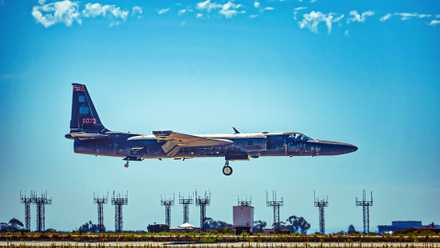
The Lockheed U-2 Dragon Lady's continued frontline service into 2026, seven decades after its 1956 debut, underscores a persistent truth in military aviation: platform longevity is driven less by airframe age than by mission relevance and adaptability. The Air Force's 1st Reconnaissance Squadron out of Beale AFB continues to fly the U-2 not as a legacy curiosity but as a demonstrated capability gap-filler between low Earth orbit and geostationary satellite constellations. The aircraft's July 2025 flight over all 48 contiguous states highlighted both its endurance—12 to 14 hours per sortie, extendable via aerial refueling—and its role as what the squadron commander called a "power projection platform" capable of rapid global response. For an aircraft type many assumed would be retired decades ago in favor of space-based ISR, this operational tempo signals that the Pentagon still values a human-flown, persistently loitering sensor platform that satellites, despite their proliferation, cannot fully replicate.
The technical case for the U-2's staying power rests on three factors directly relevant to ISR and reconnaissance professionals: dwell time, geometry, and modularity. Unlike LEO satellites constrained to brief overflight windows of predictable timing—windows adversaries can calculate and exploit by pausing activity until the pass concludes—the U-2 can park over or beside a target area for hours, building a continuous intelligence narrative rather than a series of disconnected snapshots. Its ability to observe from an oblique, off-axis angle rather than straight down also allows it to defeat certain camouflage and concealment techniques optimized against overhead satellite imagery. Combined with a modular open-systems architecture that allows ground crews to swap sensor payloads—synthetic aperture radar, SIGINT packages, electro-optical/infrared cameras, electronic countermeasures—between sorties, the aircraft functions as a reconfigurable ISR node rather than a fixed-function platform. This flexibility, paired with unpredictable basing and flight profiles compared to a satellite's fixed orbital mechanics, gives commanders an asset that is fundamentally harder for adversaries to plan around.
For working pilots and aviation operators, the U-2 story is a useful case study in airframe lifecycle management and mission-system upgrades outpacing structural obsolescence. The Dragon Lady has survived its own intended successor, the SR-71 Blackbird, precisely because incremental avionics, sensor, and systems modernization kept pace with threat evolution, a pattern increasingly visible across military and civil fleets alike—from KC-135 tankers to legacy business jets receiving glass-cockpit retrofits. It also reinforces the enduring value proposition of manned, high-altitude ISR platforms even in an era of exploding smallsat constellations and persistent-stare drone technology; procurement decisions in both military and commercial remote-sensing markets increasingly weigh the trade-offs between orbital assets, high-altitude pseudo-satellites (HAPS), UAS, and crewed aircraft in terms of responsiveness, tasking flexibility, and total cost of persistent coverage.
More broadly, the U-2's continued relevance amid discussions of its eventual replacement—by systems such as the RQ-4 Global Hawk successor programs or classified next-generation ISR platforms—illustrates how reconnaissance requirements have diversified rather than consolidated onto a single technology. Satellite proliferation, often framed as rendering manned recon aircraft redundant, has instead created a layered ISR architecture where each asset class fills distinct gaps: satellites for broad-area and repeat coverage, UAS for long-endurance low-risk missions, and platforms like the U-2 for high-altitude, on-demand, persistent stare over discrete targets. For military and commercial aviation stakeholders tracking fleet modernization, sensor integration, and airspace deconfliction with growing UAS and space traffic, the Dragon Lady's continued operational relevance is a reminder that mission-critical capability, not airframe vintage, remains the deciding factor in retention decisions—an increasingly important consideration as both defense and civil operators weigh new acquisition against extending proven, adaptable platforms.





 Read original article