JetBlue Is The 1st US Carrier To Build An Entire Transatlantic Model Around A Single-Aisle Jet
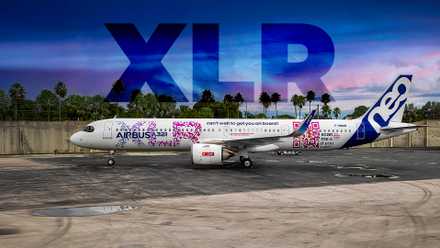
JetBlue's transatlantic strategy represents one of the more consequential aircraft-selection decisions in recent US airline history, and one that stands in direct contrast to the widebody-centric approach that has defined North Atlantic flying since the jet age began. Rather than acquiring 767s, A330s, or 787s to compete with legacy carriers on JFK-Heathrow or Boston-Paris routes, JetBlue built its entire international expansion around the A321LR and later the A321XLR, aircraft that trace their lineage directly to the domestic narrowbody fleet the airline already operates. For pilots and flight operations departments, this matters enormously: it means transatlantic type-rating and currency requirements collapse into the existing A320-family training pipeline, dramatically lowering the barrier for a carrier to stand up long-haul international routes without standing up a parallel widebody division with its own crew base, simulator requirements, and maintenance infrastructure.
The operational implications extend well beyond crew qualification. A321LR/XLR transatlantic flying still involves ETOPS considerations, oceanic procedures, and extended-range fuel planning that differ meaningfully from domestic single-aisle operations, even though the airframe and flight deck are familiar. Pilots flying these routes are managing long-range oceanic clearances, North Atlantic Track structure, and extended diversion planning in an aircraft whose systems and automation philosophy are otherwise identical to a transcontinental A321 flight. That blend—familiar aircraft, unfamiliar mission profile—has forced JetBlue and other operators pursuing similar strategies to build hybrid training programs that bolt oceanic and ETOPS competencies onto existing narrowbody type ratings rather than starting from scratch. It also changes fatigue-risk management and duty-time planning, since these are ultra-long-haul missions flown in an airframe not originally associated with that duty cycle.
From a broader industry perspective, JetBlue's model validates what Airbus explicitly designed the A321LR and XLR to do: open "long, thin" city pairs that can't reliably fill a widebody but can sustain a smaller aircraft at higher frequency with strong premium yields. This has significant implications for network planners and corporate flight departments alike, because it lowers the capital and risk threshold for launching new international routes. Airlines no longer need hub concentration and 250-plus seat aircraft to justify a transatlantic frequency; a well-configured 130-160 seat A321XLR with a strong Mint-style premium cabin can generate comparable margins with far less capacity risk. Other carriers have taken note—United, Aer Lingus, and several European operators have ordered or are evaluating XLR variants for similar thin-route strategies, and this validates a structural shift in how long-haul networks get built.
For working pilots, this trend signals that the line between "domestic narrowbody" and "international long-haul" career tracks is blurring. Where transatlantic flying was once the exclusive province of widebody-qualified crews at legacy carriers, a growing share of oceanic international flying is now being flown by narrowbody-qualified crews at JetBlue and its emerging peers. This has downstream effects on pilot career pathing, training investment, and even quality-of-life considerations, since long-haul narrowbody flying carries different rest, layover, and augmented-crew dynamics than traditional widebody operations. As more carriers examine the A321XLR's extended 4,700nm range to open even thinner routes—potentially reaching further into Southern Europe or deeper into the US interior—the industry should expect continued erosion of the traditional widebody-only assumption for oceanic flying, with meaningful consequences for fleet planning, crew scheduling, and network design across both commercial and business aviation sectors.













 Read original article