Why The Aircraft Boeing Never Built Is Now The Most Expensive Gap In Every US Airline's Network
Boeing's decision to shelve the New Midsize Airplane (NMA), informally dubbed the "797," has left American carriers without a purpose-built replacement for the 757/767 family more than two decades after 757 production ended in 2004. The NMA was conceived in the late 2010s as a 225-270 seat, 4,500-5,000 nm aircraft with a novel oval cross-section fuselage that would have allowed twin-aisle boarding efficiency while approaching single-aisle operating economics. That combination targeted the so-called "middle of the market"—routes too thin for widebodies like the 787 or 777 but beyond the payload-range capability of even the largest 737 MAX variants. When the 737 MAX grounding consumed Boeing's engineering resources, capital, and regulatory attention starting in 2019, the NMA program was quietly parked, and it has never been revived despite continued airline interest.
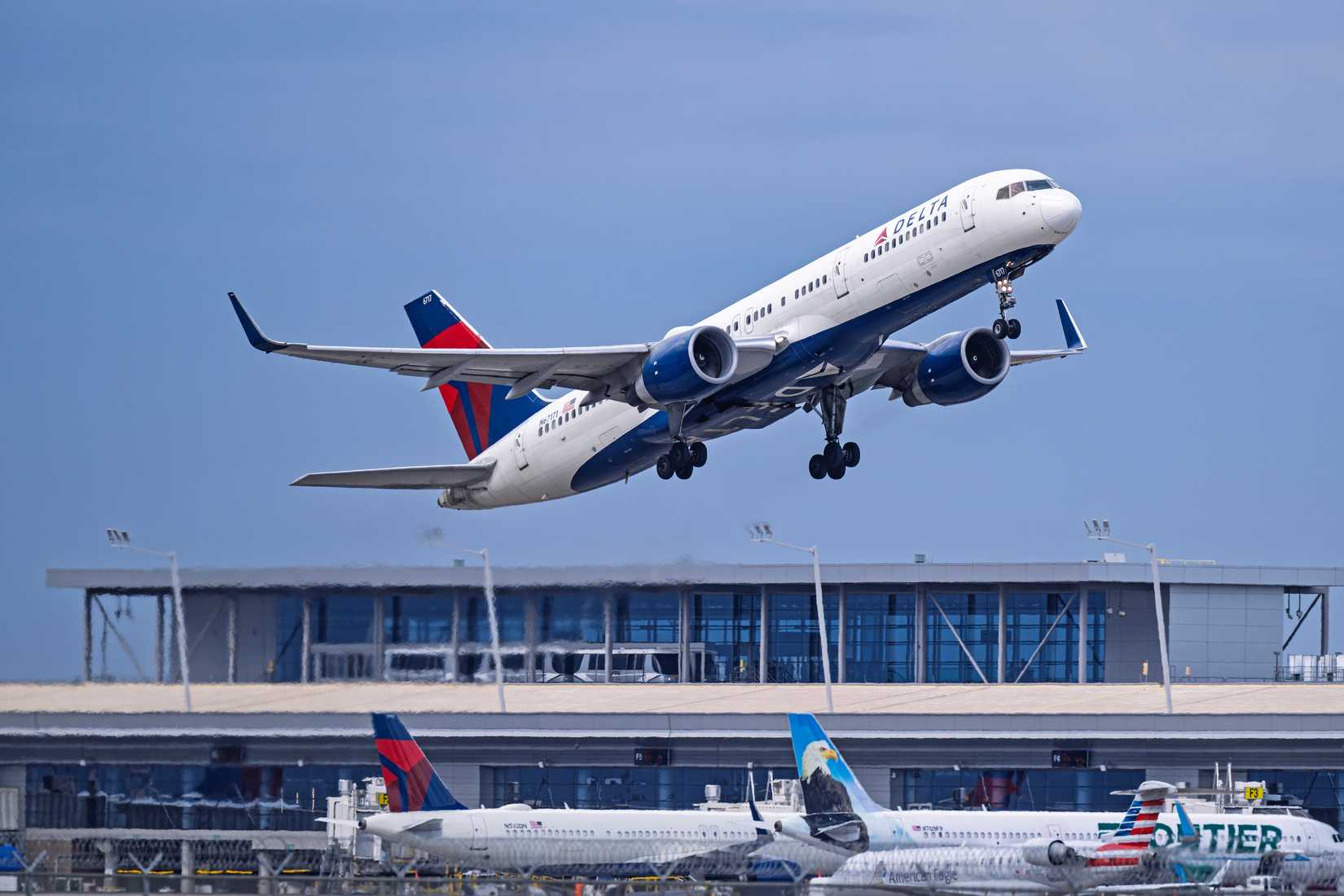
For working pilots, this gap is not an abstraction—it shows up directly in fleet composition and route assignments. Airlines such as United, Delta, and American have been forced to keep aging 757s and 767s flying well past their originally planned retirement dates, particularly on transatlantic routes to secondary European cities and demanding domestic missions requiring strong short-field performance. Pilots flying these legacy types are operating aircraft with older cockpit technology, higher maintenance burdens, and less fuel efficiency than a clean-sheet replacement would offer, while training and staffing departments must continue supporting type ratings for airframes Boeing no longer produces. Meanwhile, carriers lacking a true middle-of-market jet have had to substitute either oversized widebodies that erode route economics or narrowbodies stretched to their operational limits, a compromise that affects everything from crew scheduling to diversion planning on longer sectors.
The strategic consequence extends well beyond individual carriers. Airbus has effectively owned this segment by default, with the A321XLR delivering long-range, single-aisle capability that edges into 757 territory, giving Airbus a commanding position in a market Boeing once dominated outright. This has reshaped fleet planning across the industry, as airlines increasingly lean toward Airbus for future middle-market growth simply because Boeing has no competing product on the horizon. For flight departments and network planners, that means aircraft acquisition decisions—and the associated pilot hiring, training pipelines, and fleet-type diversity—are increasingly dictated by Airbus's roadmap rather than a balanced two-manufacturer competition.
More broadly, the 797's cancellation illustrates how a single crisis—the MAX grounding—can ripple through the industry for years, delaying innovation and locking operators into suboptimal fleet strategies. Boeing has signaled that any future clean-sheet aircraft would need to incorporate meaningful propulsion and manufacturing advances rather than simply replicate the abandoned NMA concept, suggesting no near-term fix is coming. For pilots and operators alike, the lesson is that manufacturer program decisions made in boardrooms during a corporate crisis can constrain operational flexibility, fleet economics, and career-relevant type-rating pathways for a generation, reinforcing why airlines increasingly hedge their long-term fleet planning across both Boeing and Airbus rather than betting on a single manufacturer to fill critical market segments.







 Read original article