Over 150,000 Flights: Airlines Just Flew The Busiest Day In Recorded History
Flightradar24's confirmation that July 23, 2026 produced 153,359 tracked commercial flights—the highest single-day total in the platform's recorded history—offers a useful data point for operators gauging system-wide capacity strain heading into the peak of Northern Hemisphere summer travel. When general aviation, military, and private traffic are folded in, the day's total climbed to 287,364 movements, the second-highest all-category figure ever recorded, trailing only prior late-June and mid-July 2025 peaks. The convergence of factors driving this spike—summer leisure demand, simultaneous airshow traffic from Farnborough and Oshkosh, and a high-profile long-haul test flight—illustrates how tightly compressed the aviation calendar has become, with multiple demand drivers stacking on top of already-elevated baseline traffic.
For working pilots, days like July 23 translate directly into operational reality: denser terminal airspace, more frequent traffic advisories, tighter sequencing on arrival and departure corridors, and increased likelihood of ATC-driven delays or reroutes. Crews flying into or out of major European and North American hubs during this window should anticipate compressed gate availability, longer taxi times, and a higher probability of holding patterns during peak departure banks. Dispatchers and flight planners also face a more volatile fuel-cost environment this summer, as the article notes analysts linking price spikes to the ongoing Iran War-related disruptions—an added variable layered onto already-thin margins during high-traffic periods. For business aviation operators in particular, airshow weeks like Oshkosh and Farnborough create localized surges that can overwhelm smaller fields and FBOs even as the majors absorb record loads elsewhere, making advance slot coordination and alternate planning more critical than usual.
The record also underscores a broader recovery-and-growth trend that has been building steadily since the pandemic trough: air travel demand has not just returned to pre-COVID levels but is now setting new highs, with Flightradar24 noting it first broke 200,000 total daily movements in June 2025 and has repeated that milestone multiple times since. This trajectory matters for fleet planning, crew scheduling, and infrastructure investment decisions across the industry—airlines and airports that assumed a plateau in post-pandemic demand are instead facing a market that continues to press against capacity ceilings, particularly in the July-to-August window and again expected around late August, per Flightradar24's historical pattern.
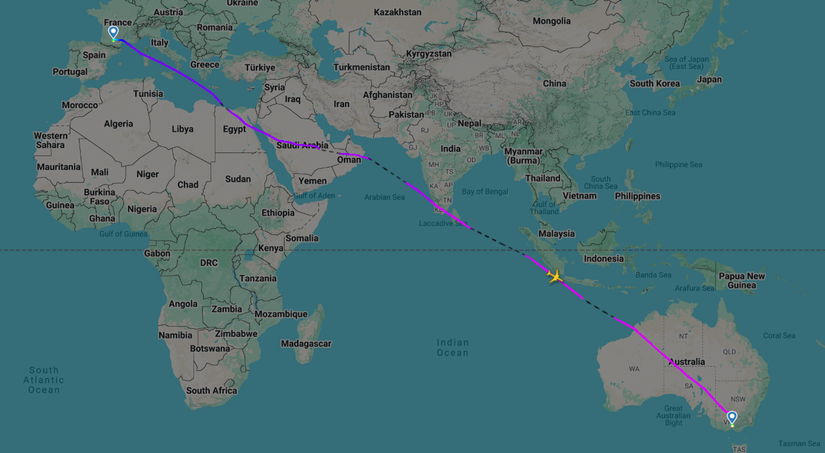
Notably embedded within this record-breaking day was the Qantas-Airbus A350-1000ULR proving flight from Toulouse to Melbourne, a 19-hour-13-minute nonstop sector that became the single most-watched flight on the tracker, drawing roughly 9,000 simultaneous viewers. That flight, part of Qantas's ongoing Project Sunrise ultra-long-range development program, represents the kind of operational and human-factors milestone that working long-haul crews will be watching closely, given its implications for augmented crewing requirements, fatigue management protocols, and the eventual certification pathway for regularly scheduled ultra-long-range routes exceeding 19 hours in the air. The juxtaposition of a record-setting mainline traffic day with a single experimental sector capturing outsized public attention reflects how commercial aviation's routine growth and its next frontier of range and endurance are unfolding in parallel.





 Read original article