Hydrogen Propulsion Retrofit For Light Aircraft Secures Support
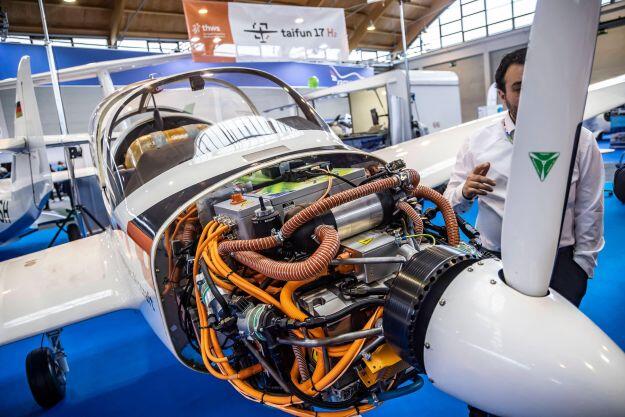
Germany has taken a targeted step toward decarbonizing the light-aircraft segment through a DLR-managed program to develop a modular hydrogen fuel-cell propulsion system designed specifically for retrofit into existing ultralight airframes. Backed by roughly €2 million from Germany's LuFo national aviation research funding scheme, the project builds on prior work by Technische Hochschule Würzburg-Schweinfurt (THWS), which has already installed a hydrogen fuel-cell powertrain in a Taifun 17 motor glider. Rather than pursuing a clean-sheet hydrogen aircraft design—an approach that carries enormous certification, infrastructure, and cost hurdles—this program focuses on a modular architecture that could be installed across a range of existing light and ultralight platforms, potentially accelerating the path to zero-emission flight in a segment where the technology and regulatory barriers are comparatively lower.
The retrofit strategy is notable because it sidesteps many of the challenges that have stalled larger hydrogen and electric propulsion efforts in commercial aviation. Ultralights and motor gliders operate at low power levels, low speeds, and modest weights, making them a far more forgiving testbed for fuel-cell stacks, hydrogen storage, and thermal management systems than airliners or even turboprop regionals. Germany's aviation research apparatus—DLR in partnership with academic institutions like THWS—has increasingly used this class of aircraft as a proving ground for propulsion technologies that may eventually scale upward, following a pattern similar to earlier electric and hybrid-electric demonstrator programs in Europe.
For working pilots, especially those in general aviation, flight training, and light sport categories, this development signals that hydrogen propulsion may reach the flight line sooner in small, simple airframes than in the business jet or airline categories where most public attention on sustainable propulsion has focused. Flight schools, glider clubs, and light aircraft operators in Europe could see early exposure to hydrogen fuel-cell systems well before similar technology matures for turbine-powered aircraft. This has practical implications for training curricula, maintenance practices, and airport infrastructure—fuel-cell aircraft require hydrogen storage and handling capabilities that differ substantially from traditional avgas or even battery-electric charging setups, meaning airports and FBOs supporting these aircraft will need to invest in new ground infrastructure even at modest operational scale.
More broadly, this program reflects a diversification in how the industry is approaching sustainable propulsion, moving beyond the assumption that decarbonization must start with widebody or narrowbody retrofits and instead recognizing that meaningful emissions reductions can begin in the lowest-power, lowest-risk segments of aviation. For business aviation and advanced air mobility stakeholders tracking propulsion technology maturation, Germany's modular retrofit approach offers a data point on how fuel-cell systems might eventually migrate toward larger aircraft, including eVTOL and regional platforms, once core technologies—stack durability, storage density, and certification pathways—are validated in lower-stakes applications. Pilots and operators across all segments should watch how quickly this modular hydrogen system moves from demonstrator to certified retrofit kit, as it will offer an early real-world indicator of hydrogen propulsion's practical timeline and limitations before the technology is seriously considered for higher-performance aircraft.









 Read original article