What An easyJet Takeover Could Mean For The European Aviation Industry
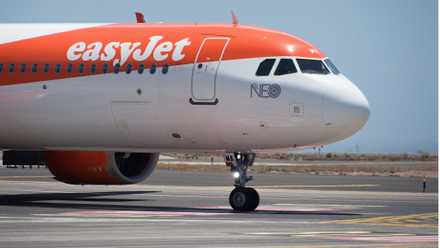
EasyJet finds itself at the center of a potential takeover battle involving two major American private equity firms, Castlelake and Apollo Global Management, both of which have publicly disclosed interest in acquiring the British low-cost carrier. The bidding process, which began with Castlelake's disclosure on May 29 and its first non-binding offer on June 12, marks the most serious acquisition threat easyJet has faced since its market capitalization bottomed out around $2.5 billion in late 2022—a valuation that at the time sat below the airline's net asset value and represented just $36 per passenger carried annually. While speculative interest from IAG and Wizz Air surfaced in prior years, none of those approaches materialized into formal bids, making the current dual-bidder situation a genuine inflection point for the carrier and, potentially, for European aviation consolidation more broadly.
The attractiveness of easyJet as a target rests on a combination of improving profitability and an unusually asset-rich balance sheet. Operating margins have climbed steadily from 5.8% in FY2023 to 7.0% in FY2025, driven substantially by the high-margin easyJet Holidays segment, which contributed 38% of pre-tax profit from just 14% of revenue. More significant to financial buyers like Castlelake and Apollo, however, is easyJet's fleet ownership structure: the airline owns 205 of its 356 aircraft (58%), nearly double the roughly 30% ownership rate across Europe's commercial fleet as estimated by IATA. That gives a private equity acquirer a large pool of tangible, monetizable assets—ripe for sale-and-leaseback transactions or use as collateral—a playbook increasingly familiar to airline industry observers who have watched PE firms extract value from aircraft-heavy balance sheets in other transportation sectors. Layered on top of the fleet value is easyJet's slot portfolio at congested airports including Gatwick, Schiphol, and Milan Linate, with 87% of FY2026 capacity scheduled at constrained airports—a strategic moat that would be extraordinarily difficult and expensive for any new entrant to replicate.
For working pilots and flight operations leaders, a private equity takeover of an airline the size of easyJet—356 aircraft and a workforce spread across dozens of bases from Gatwick to Naples to Marrakesh—carries real implications beyond the boardroom. Financial sponsors acquiring airlines have historically pursued aggressive cost restructuring, fleet monetization through sale-leasebacks, and sometimes base consolidation or route rationalization to maximize returns ahead of an eventual exit via IPO or resale. Pilots at easyJet, along with ground crews, dispatchers, and maintenance personnel across its extensive base network, would likely face uncertainty around collective bargaining agreements, base closures, and fleet renewal timelines depending on which bidder prevails and what strategy it pursues. The regulatory complexity cited in the article—EU ownership and control rules restricting non-EU investors, plus competition concerns that have blocked strategic buyers like IAG from pursuing a full acquisition—means a private equity structure may be the only realistic path to a change of control, which itself signals how thoroughly consolidated Europe's legacy-carrier landscape has become.
More broadly, this situation reflects a growing trend of financial sponsors circling asset-heavy, cash-generative airlines whose public market valuations have lagged their underlying balance sheet worth. The pattern echoes moves seen in other transport and infrastructure sectors, where private equity has targeted businesses with hard assets, strong cash flow, and constrained competitive positioning (in easyJet's case, slot scarcity) as ideal leveraged buyout candidates. Should either Castlelake or Apollo succeed, it would represent one of the largest PE plays in European commercial aviation history, and could set a precedent encouraging similar bids for other mid-cap European carriers trading below intrinsic asset value. For flight crews and aviation labor groups across the continent, the outcome will be closely watched as a bellwether for how private capital, rather than traditional airline consolidation, may reshape ownership structures, operational priorities, and job security in Europe's low-cost sector over the coming years.





 Read original article