How Delta Air Lines Quietly Built A Backup Plan For Its Longest Airbus A350 Route
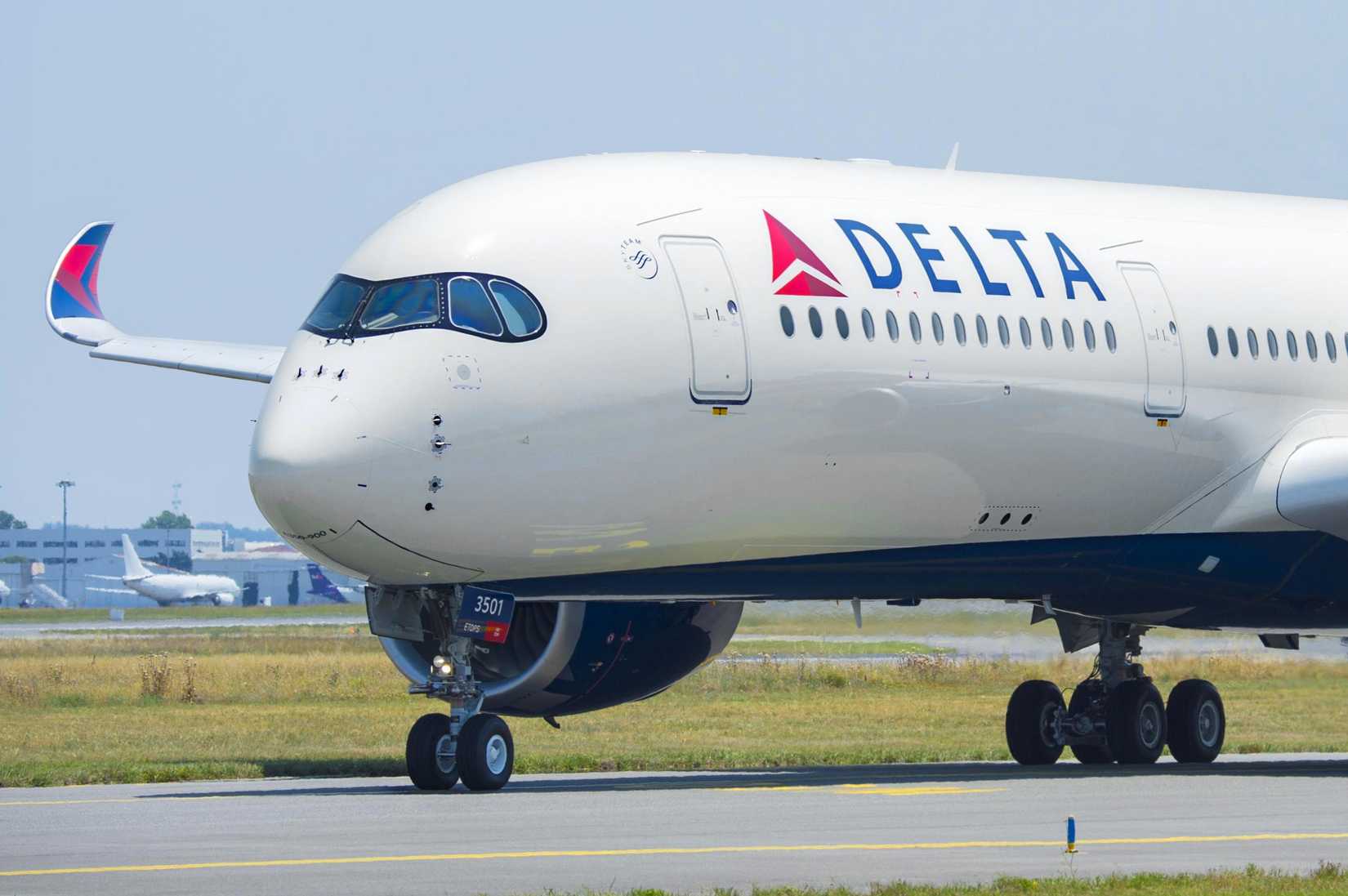
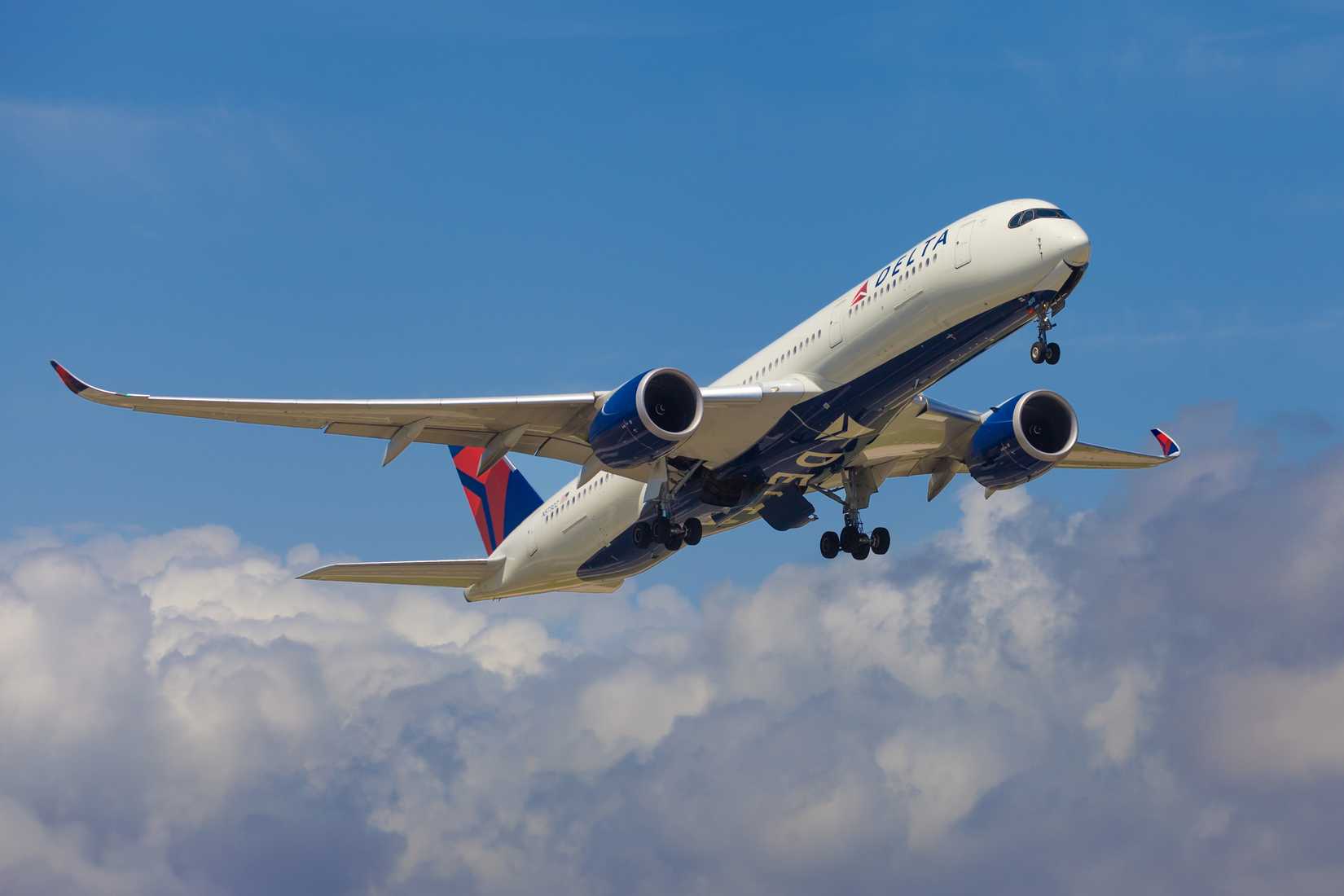
Delta Air Lines' longest scheduled route, the Atlanta–Johannesburg pairing operated as Flight DL201, reveals an operational reality that rarely surfaces in public discussions of ultra-long-haul flying: aircraft range figures published in marketing materials rarely tell the whole story. While the Airbus A350-900's Trent XWB engines give it exceptional still-air range, Delta operates a reduced-density version of the jet on this route specifically to solve a performance problem rooted in Johannesburg's physical geography. O.R. Tambo International Airport sits at 5,558 feet elevation, and that altitude thins the air enough to meaningfully degrade both engine thrust and wing lift at takeoff. Combined with a westbound sector scheduled for as long as 17 hours and 5 minutes covering roughly 8,433 miles, the airport's hot-and-high conditions create a classic aviation constraint: an aircraft that must carry nearly a full fuel load for an ultra-long-haul mission cannot simply offload fuel to improve takeoff performance the way a shorter-haul flight might. Delta's response—permanently lowering the A350's seating capacity on this route rather than relying on ad hoc weight-shedding before each departure—effectively builds performance margin into the airframe itself before dispatchers ever run the day's load calculations.
For working pilots and flight operations teams, this case illustrates the intricate interplay between payload, runway length, density altitude, and mission fuel that defines dispatch planning on the most demanding long-haul sectors. Johannesburg's runways exceed 13,000 feet, which is generous by global standards, yet the article makes clear that runway length alone cannot compensate for reduced engine thrust and diminished aerodynamic efficiency at altitude—climb gradient becomes the binding constraint rather than takeoff roll. This is a scenario familiar to crews who have flown out of other high-elevation, high-temperature airports such as Quito, Mexico City, Denver, or Nairobi, where performance-limited takeoff weight often falls well below structural maximum takeoff weight. Dispatchers and pilots operating such routes must continuously balance passenger loads, cargo revenue, fuel requirements, and regulatory performance margins, and any miscalculation can force last-minute offloads, delays, or diversions. Delta's decision to address this structurally, through a dedicated lower-density subfleet, rather than tactically, through per-flight passenger or cargo restrictions, reflects a broader industry preference for predictability and schedule reliability over maximizing per-flight revenue on the margin.
The article also touches on Delta's earlier workaround for this same problem: a technical fuel stop in Senegal when the Johannesburg route launched in 2006, before the airline had aircraft capable of flying the sector nonstop. That historical detail underscores how far ultra-long-haul aircraft technology has advanced in two decades, and it also frames the current A350 configuration as an evolution rather than a novel solution—airlines have always had to engineer around hot-and-high, high-elevation origin airports on their longest routes, whether through intermediate stops, weight restrictions, or specialized cabin configurations. The A350's fuel efficiency and range eliminated the need for a fuel stop, but it did not eliminate the underlying physics of departing a mile-high airport with nearly a full tank for a 17-hour flight.
This case is broadly relevant to how carriers plan ultra-long-haul network expansion, particularly as airlines increasingly chase "route of the future" nonstop city pairs enabled by the A350, 787, and A321XLR. Route planners, dispatchers, and performance engineers evaluating new ultra-long-haul markets—especially those originating from elevated or hot climates in Africa, South America, and parts of Asia—must weigh whether an aircraft's theoretical range can actually be realized against real-world payload restrictions at the departure airport. For pilots, it's a reminder that published aircraft range figures are best-case numbers assuming standard conditions and full structural payload, and that actual line operations frequently involve trade-offs between passengers, cargo, and fuel that are invisible to travelers but central to how airlines quietly engineer reliability into routes that sit at the outer edge of what current aircraft can do.








 Read original article