The Airline Known To Have The World's Most Comfortable Premium Economy Seat
Emirates' premium economy rollout, now five years into its lifecycle, illustrates how the Gulf carrier has methodically built a fourth cabin class into an already premium-heavy fleet strategy rather than treating it as an afterthought. Since debuting the product on the A380 in May 2022, Emirates has expanded premium economy across the 777-300ER, 777-200LR, and now the A350-900, with 130 aircraft currently equipped and plans to push that number toward the entirety of its widebody fleet, including all 270 Boeing 777X aircraft on order. Notably, the carrier configures the A350 seven-abreast rather than the industry-standard eight, sacrificing density to preserve seat width — a decision that signals Emirates views premium economy as a long-term revenue and brand differentiator rather than a stopgap between business and economy. For flight crews and operations planners, this kind of fleet-wide standardization matters because it simplifies training, catering logistics, and cabin crew staffing models across aircraft types, even as it adds complexity to load planning and weight-and-balance calculations given the varying seat counts (21-28 seats depending on aircraft).
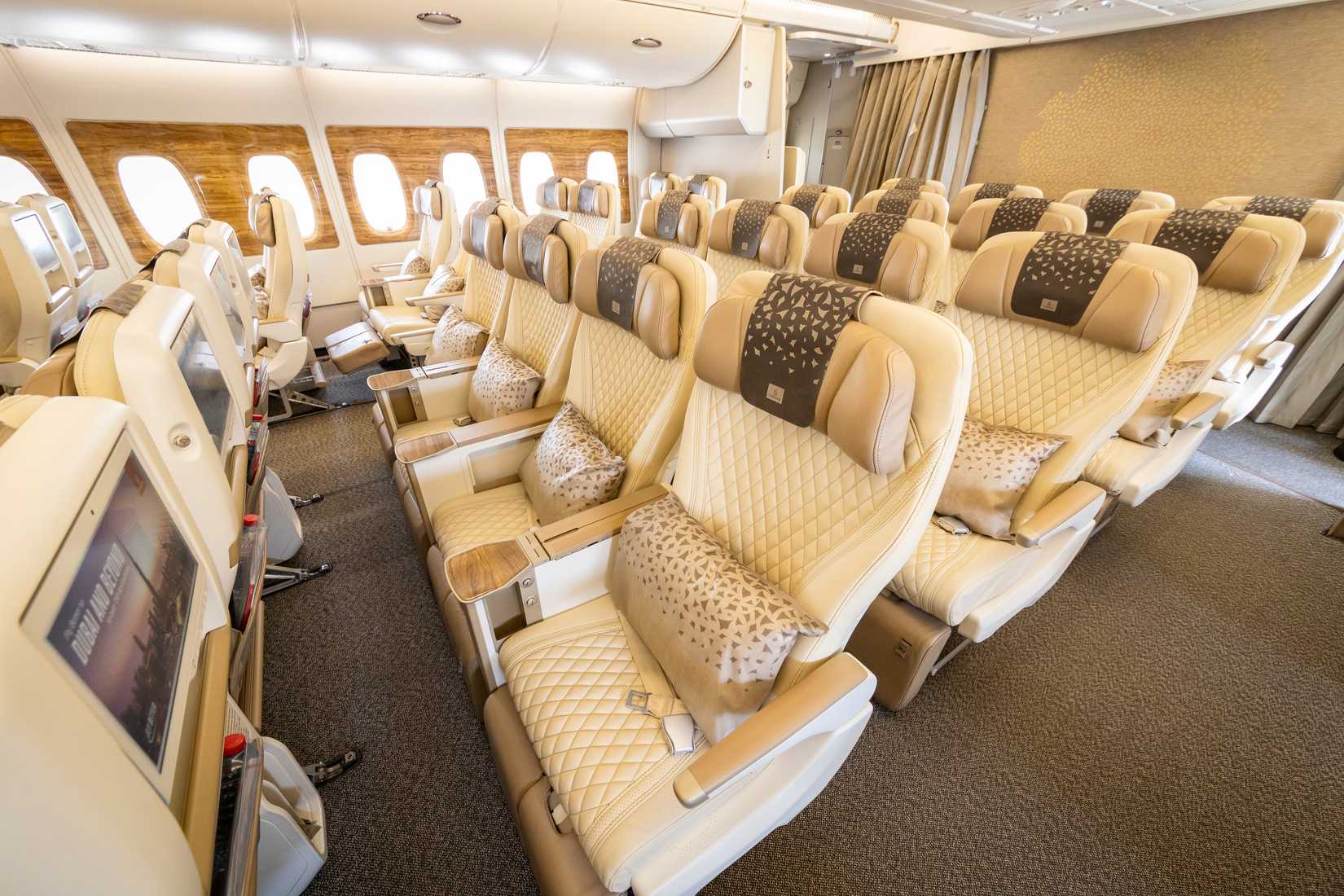
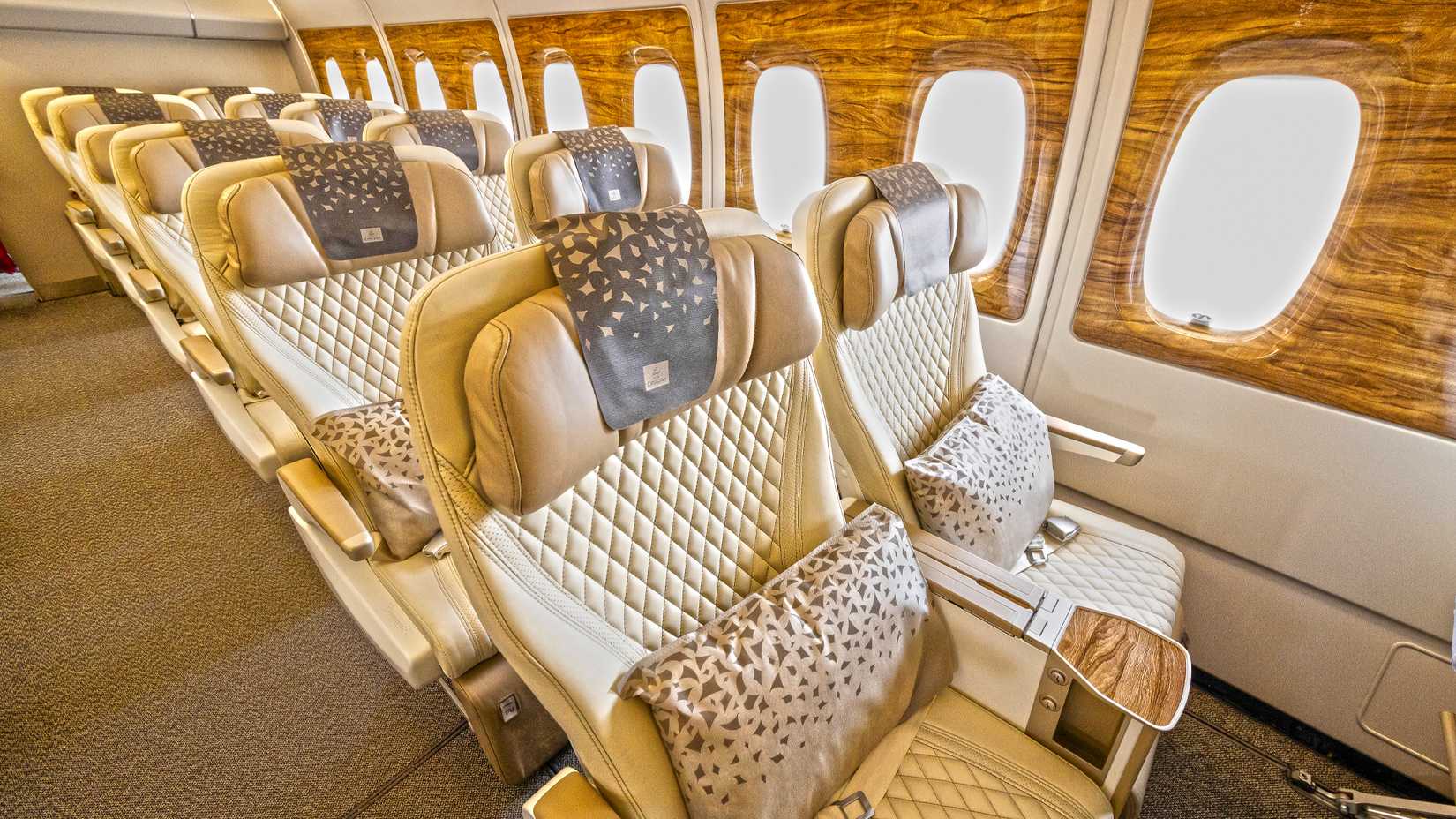
What makes this case study particularly relevant to industry observers is that Emirates achieves top-tier premium economy status using a relatively unremarkable hard product — the Recaro PL3530, a seat found on multiple carriers, without privacy dividers, wireless charging, or an oversized IFE screen. Instead, Emirates wins on pitch (40 inches versus the 38-inch standard), recline (8 inches), and the inclusion of both a calf rest and footrest. This is a useful data point for airline product planners and aircraft interior engineers: passenger satisfaction in premium economy appears to hinge more on space and ergonomics than on gadgetry, which has implications for retrofit economics on aging widebody fleets where installing new IFE suites is far more capital-intensive than adjusting seat pitch during a cabin reconfiguration.
For working pilots and flight operations personnel, the broader significance lies in what premium economy expansion signals about network and fleet strategy at a carrier like Emirates. The cabin has been prioritized on high-demand, long-haul routes to cities like London, Paris, and Sydney — exactly the sectors where crew fatigue management, extended-range operations, and dual-crew or augmented-crew scheduling are most relevant. As Emirates commits an increasing share of its widebody cabin real estate to premium economy across A350s, 777s, and eventually 777Xs, it reinforces the airline's long-haul, premium-revenue business model, which has direct implications for pilot bidding, route pairings, and the types of aircraft crews can expect to fly as the fleet transitions. The 777X order in particular, at 270 units with premium economy standard, suggests this cabin class will be a fixture of Emirates' operations for decades, shaping recurrent training and type-rating planning well into the 2030s and beyond.
More broadly, Emirates' success validates a trend playing out across the industry: airlines from legacy US carriers to Gulf and Asian competitors are racing to fill the widening gap between business class lie-flat suites and increasingly cramped economy cabins. As Etihad and Qatar Airways — Emirates' regional peers — watch this rollout, competitive pressure will likely accelerate premium economy adoption across the Gulf region and beyond, reshaping cabin configurations, weight distribution, and revenue management models fleet-wide. For pilots and dispatchers, this steady densification and cabin diversification across widebody fleets underscores the need for continued attention to evolving payload configurations, as more aircraft carry a wider mix of cabin classes with only marginal changes to overall passenger counts, subtly affecting range, fuel planning, and center-of-gravity considerations across long-haul operations.











 Read original article