DHC-515 Program Hits Major Assembly Milestones
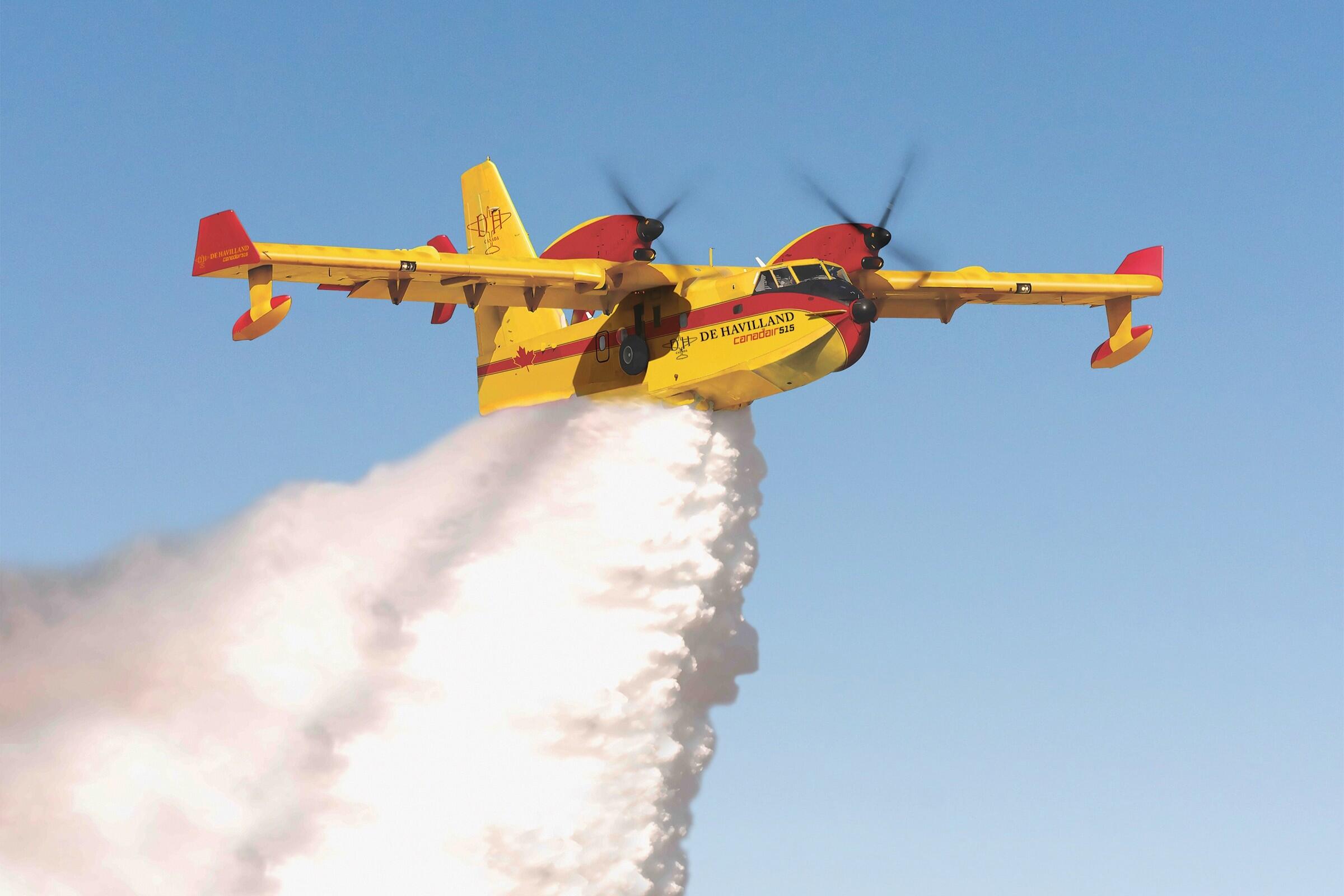
De Havilland Canada's DHC-515 amphibious firefighting program has reached a series of significant assembly milestones on its first production aircraft, with the cockpit and hull now joined, the mid-fuselage complete and being mated to the forward fuselage, and the first wing box finished ahead of installation of the 28.6-m wing. Announced via video for the Farnborough Airshow, these developments mark tangible progress toward a first flight targeted for late 2027 or early 2028. The timing is notable: the milestones land amid active, severe wildfire seasons in France and Spain, underscoring both the urgency of the aircraft's mission and the multi-year lead time required to bring specialized firefighting platforms from order to operational status. With roughly 38 aircraft on order—including a recent doubling of France's Sécurité Civile commitment to four DHC-515s—the program illustrates how quickly demand can outpace near-term supply in a niche but increasingly critical segment of aviation.
For pilots and operators in the aerial firefighting community, the DHC-515 represents a long-awaited return to production of the CL-215/415 lineage, whose "Super Scooper" amphibians have been a mainstay of European and North American wildfire suppression for decades. The last CL-415 rolled off the line in 2015, and the intervening decade left operators sustaining aging fleets through parts scarcity and rising maintenance costs, particularly as fire seasons have grown longer and more intense. The DHC-515 isn't a clean-sheet design, but it does incorporate meaningful upgrades over its predecessor—an updated water-drop control system, modernized cockpit avionics, and revisions to the wing root and landing gear intended to ease maintainability. For crews transitioning from CL-415s, these changes should reduce turnaround times between drops and lower the maintenance burden that has historically challenged operators running high-utilization firefighting schedules during peak season.
The program's resurgence also carries broader implications for fleet planning and procurement models in specialized aviation missions. The European Commission-backed joint procurement of 22 aircraft across six countries was instrumental in giving De Havilland Canada the production certainty needed to restart the line—a model that other multinational or multi-agency aviation programs may look to replicate when unit costs and low production volumes make single-customer business cases difficult to justify. Canadian provincial orders from Alberta, Manitoba, and Ontario further diversify the customer base, and De Havilland Canada's projection of a 100-aircraft total market reflects confidence that climate-driven wildfire trends will sustain demand well beyond the initial batch.
More broadly, the DHC-515's relaunch fits into a pattern across aviation where extreme weather and climate volatility are reshaping specialized aircraft markets—from firefighting amphibians to heavy-lift helicopters and unmanned aerial suppression platforms. Operators and government agencies are increasingly treating aerial firefighting capability as critical infrastructure rather than a discretionary asset, which has implications for training pipelines, pilot staffing, and cross-border mutual aid agreements as fleets modernize. For pilots eyeing this specialized career path, the DHC-515 program signals sustained institutional investment and a multi-decade service horizon, while for operators and manufacturers alike, it demonstrates that even legacy airframes can find renewed life when market demand, government backing, and engineering updates align.






 Read original article