DoorDash Launches Its Own Drone Delivery Program
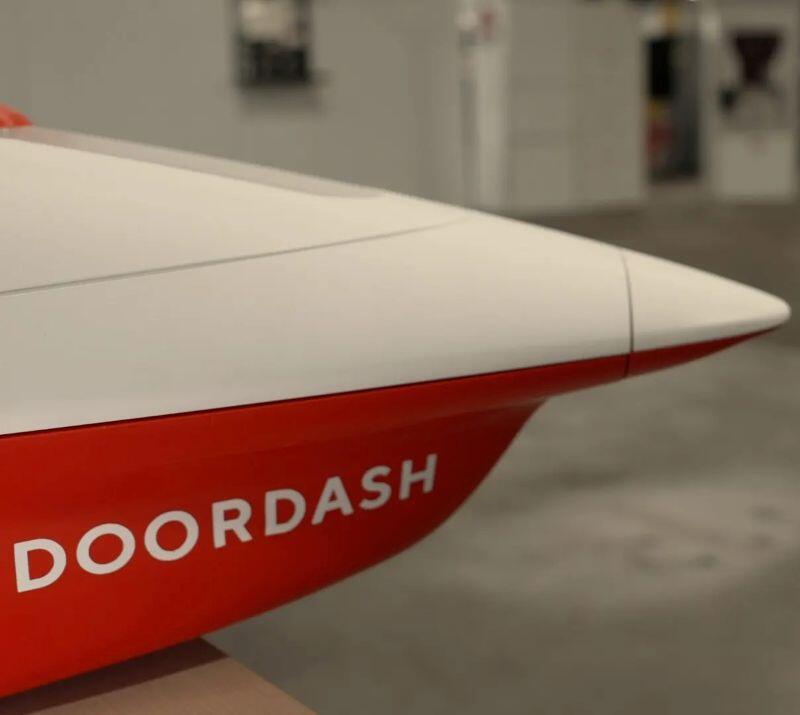
DoorDash's move to secure its own FAA Part 135 air carrier certification marks a significant escalation in the food delivery giant's drone strategy, shifting it from a pure integrator of third-party drone operators to a certificated air carrier developing its own U.S.-made mid-range delivery aircraft. Until now, DoorDash's drone delivery footprint has been built entirely on partnerships—first with Wing (Alphabet's drone delivery subsidiary) and Flytrex, and now expanding to include Manna, an Irish drone delivery operator that has been scaling operations in the U.S. and Europe. By obtaining its own Part 135 certificate, DoorDash gains the regulatory standing to operate aircraft directly rather than relying solely on partners' certificates and fleets, giving it far greater control over route design, service areas, aircraft specifications, and ultimately unit economics as it scales into new markets.
For working pilots and aviation operators, this development is another data point in the steady maturation of the Part 135 drone delivery ecosystem, which increasingly resembles a parallel track to traditional on-demand and charter aviation. The FAA's willingness to issue additional Part 135 certificates to non-traditional operators—Amazon Prime Air, Wing, Zipline, Flytrex, and now DoorDash—signals that the regulatory pathway for small UAS package delivery is becoming more standardized and repeatable, even as full BVLOS (beyond visual line of sight) rulemaking under the long-awaited Part 108 framework remains pending. Manned aviation professionals, particularly those in regional and low-altitude airspace, should note that these certificate holders are beginning to operate at meaningful scale in suburban and urban environments, raising ongoing questions about airspace deconfliction, sense-and-avoid technology, and how small UAS traffic will be integrated with existing general aviation, helicopter EMS, and agricultural operations that share low-altitude airspace.
Strategically, DoorDash's decision to develop its own drone airframe rather than exclusively license third-party hardware reflects a broader trend among logistics and delivery companies seeking vertical integration to reduce dependency on outside drone manufacturers and to tailor aircraft performance and cost structures to their specific delivery use case. This mirrors similar moves by Amazon, which has iterated through multiple in-house MK-series drone designs, and by Walmart and other retailers experimenting with hybrid partner/proprietary models. A U.S.-made airframe also aligns with policy momentum in Washington favoring domestic drone manufacturing and reduced reliance on Chinese-made platforms like DJI, a theme reinforced by recent executive orders and NDAA provisions targeting drone supply chain security.
More broadly, this news underscores how the advanced air mobility and drone delivery sector continues to attract serious capital and operational commitment from mainstream consumer companies, not just aerospace startups. As DoorDash, Uber Eats, and other delivery platforms weigh drone integration against traditional ground courier networks, the economics of last-mile delivery are likely to keep pushing operators toward multi-modal fleets that blend drones, ground robots, and human couriers. For business aviation and AAM stakeholders, DoorDash's move adds another well-capitalized, high-volume commercial entrant to a Part 135 drone ecosystem that is quietly building the operational precedent, safety case, and public acceptance needed for the eventual scaling of BVLOS operations—groundwork that will ultimately matter for eVTOL air taxi certification and operations as well.






 Read original article