20/Twenty: The Piper M500, A Perfect First Turboprop
The Piper M500 occupies a well-established niche in owner-flown aviation as the entry point into Piper's single-engine turboprop lineage, a role it has filled since replacing the original Meridian in 2015. Powered by the Pratt & Whitney PT6A-42A, the same engine family trusted across decades of turboprop operations worldwide, the M500 pairs proven Pratt reliability with Garmin's G1000 NXi integrated flight deck, giving pilots transitioning from high-performance piston singles a glass-cockpit turbine platform that feels familiar yet delivers meaningfully more capability in speed, altitude, and payload. Aviation Week's profile, built around Mike Borden's decades-long involvement with the program dating to its late-1990s development, underscores how the aircraft has matured into a mainstay for pilots and dealers who view it as the logical next step for owner-operators outgrowing pressurized piston twins or singles like the Cessna 400 series or high-end Cirrus SR22T.
For working pilots, particularly those flying Part 91 personal or light business operations, the M500's significance lies in its role as a training and insurability bridge. Moving from a piston aircraft into any turbine, even a single-engine one, introduces new systems complexity: engine start procedures, torque and ITT management, pressurization, and often a first exposure to a PC-12/TBM-style single-pilot IFR turbine environment. Insurance underwriters and training providers like SIMCOM and FlightSafety have long treated the Meridian/M500 as a lower-risk stepping stone compared to jumping straight into a TBM 940 or a light jet, both because of its lower approach speeds and because Piper positioned it deliberately as an accessible turboprop rather than a high-performance flagship. That positioning matters to instructors and mentor pilots who guide clients through progressive type transitions, and it matters to fleet operators and flight schools that use the M500 as a stepping-stone platform before students or owner-pilots move up to the M600/SLS with its Garmin Autoland (Halo) system or into full jet operations.
Competitively, the M500 sits against Daher's TBM 910, Textron's since-shelved Denali single, and to a lesser extent turbine conversions of legacy piston airframes, all fighting for the same owner-flown market segment that has grown steadily as personal wealth and business aviation demand have expanded post-pandemic. Piper's strategy of keeping the M500 as an accessible, lower-cost alternative to the TBM line, while reserving autoland and higher cruise speeds for the M600, reflects a broader industry trend of tiering turboprop singles by mission and pilot experience level rather than competing purely on top-end performance. This tiering benefits the overall health of the single-engine turboprop market by giving pilots a realistic progression path rather than an all-or-nothing leap, which in turn supports higher utilization, better safety outcomes, and stronger resale value across the segment.
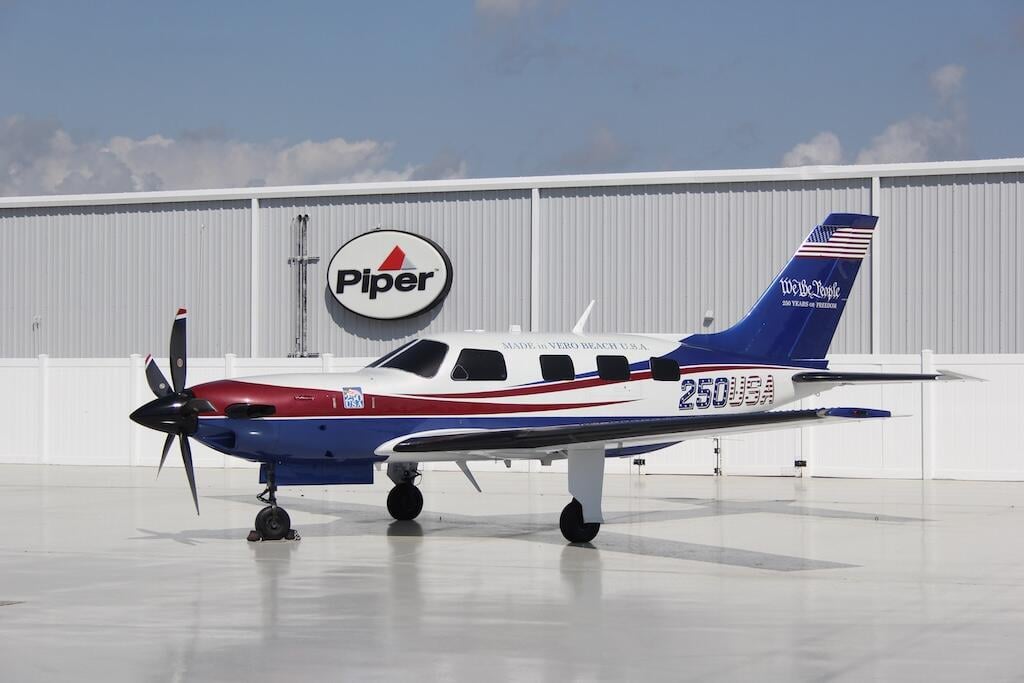
More broadly, the continued relevance of aircraft like the M500 speaks to the resilience of the owner-flown personal and light business aviation market even as very light jets and single-pilot jet options have proliferated. Turboprop singles remain attractive for their operating economics, shorter runway requirements, and simpler systems relative to jets, while still offering pressurization, known-ice capability, and cruise speeds well above piston aircraft. For corporate flight departments evaluating fleet additions, charter operators building fractional or on-demand single-engine turboprop programs, and individual owner-pilots planning a multi-year upgrade path, the M500's continued production and its America250 anniversary livery this year serve as a reminder that the single-engine turboprop category remains a durable, strategically important segment of general aviation rather than a legacy product line being phased out.




 Read original article