New: Allegiant Air Set To Introduce First Class On Select Aircraft & Adds Complimentary Drinks
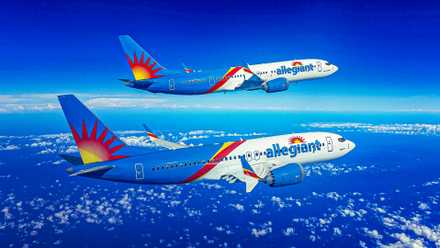
Allegiant Air is preparing one of the most significant shifts in its 29-year history with the launch of Allegiant First, a premium cabin product set to debut in spring 2027 on select aircraft. The new offering will place eight dedicated seats at the front of the cabin in a 2-2 configuration, featuring a 37-inch pitch, five inches of recline, adjustable headrests, and calf rests. Rather than replacing the airline's existing Allegiant Extra product, First will sit above it as a new top-tier option, bundling a personal item, carry-on bag, and a checked bag up to 70 pounds into the fare. This is a notable departure for a carrier whose entire commercial identity has been built on unbundling every possible service and monetizing ancillaries separately. Alongside the new cabin, Allegiant will begin offering complimentary non-alcoholic beverages to all passengers starting August 1, ending its long-standing buy-on-board-only policy for drinks.
For working pilots and flight crews, particularly those at Allegiant or carriers watching the ULCC space closely, this signals meaningful operational and training implications down the line. A new premium cabin configuration typically brings revised weight and balance considerations, updated cabin crew service procedures, potential changes to boarding flow and turn times, and possibly retrofit downtime as aircraft are reconfigured. Allegiant's commentary about "bringing together two highly complementary leisure airlines" also references its ongoing integration with Sun Country, suggesting the premium push may be tied to fleet and network harmonization following that combination. Pilots and dispatchers at both carriers should anticipate incremental changes to aircraft interior specs, MEL considerations for new seat hardware, and possibly different loading profiles as forward-cabin weight distribution shifts with the new configuration.
More broadly, this move reflects an industry-wide recalibration of the once-clear line between ultra-low-cost and full-service carriers. Airbus's 2026 Global Market Forecast data cited in the announcement, showing premium widebody capacity growing at roughly double the rate of economy capacity from 2005-2025, underscores that airlines across all business models are chasing higher-margin premium revenue rather than relying solely on volume-driven, cost-per-available-seat-mile competition. American Airlines' parallel push to lead the US market in premium seat count via retrofits on its 777 and narrowbody fleets shows this isn't isolated to leisure carriers; it's a systemic response to changing passenger willingness-to-pay dynamics post-pandemic. For ULCCs specifically, which have faced margin pressure from rising costs, fare compression, and increased competition from network carriers' basic economy products, premium ancillary revenue represents a lifeline that doesn't require abandoning the low-fare core model.
For flight operations professionals, the Allegiant First rollout is also a bellwether for how thinly-staffed, single-fleet-type ULCCs manage complexity creep. Carriers like Allegiant, Spirit, and Frontier have historically prized simplicity: single aircraft types, minimal cabin variation, and lean crew training footprints to control costs. Introducing a distinct premium product with different service standards, potentially different crew staffing or service timing on affected flights, and new customer-facing procedures pushes against that operational simplicity. How Allegiant manages this without eroding its cost advantage will be closely watched by other ULCCs weighing similar moves, and it may foreshadow further convergence between the low-cost and legacy network carrier playbooks industry-wide, a trend with downstream effects on crew scheduling, training curricula, and fleet planning across the sector.





 Read original article