Cessna Citation CJ3 Gen3 completes first flight | Corporate Jet Investor | CJI news
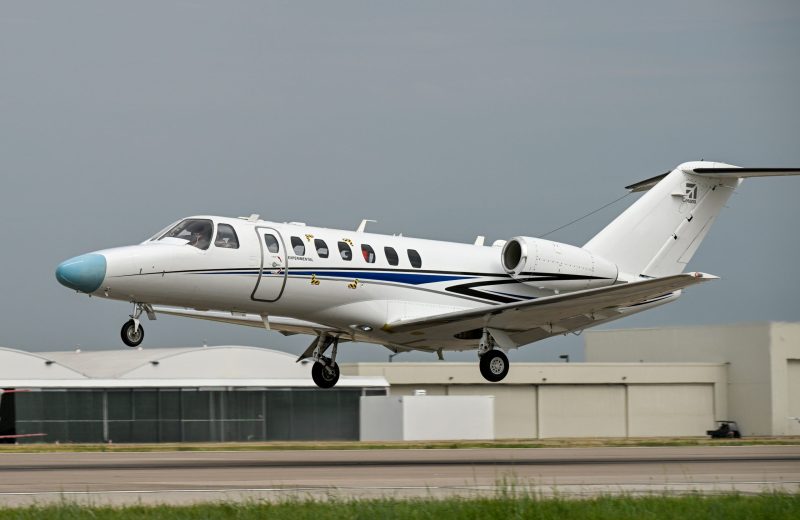
Textron Aviation's Citation CJ3 Gen3 has completed its first flight from Wichita Dwight D. Eisenhower National Airport, marking a significant milestone as all three Gen3 light jets—the CJ4 Gen3, CJ3 Gen3, and M2 Gen3—are now simultaneously in active flight testing. The nearly two-hour sortie, flown by test pilots Steve Helmer and Dave Welbrock, focused primarily on validating cockpit software functionality, with the aircraft reaching FL410 and 278 knots indicated. Textron executives characterized the flight as confirming expected handling qualities and system performance, setting the stage for a comprehensive flight test campaign aimed at FAA certification, with entry into service targeted for 2027 across the entire Gen3 lineup.
For working pilots, the most consequential technical detail is the introduction of Garmin Emergency Autoland to the G3000 avionics suite on the CJ3 Gen3. This represents an expansion of autonomous safety technology beyond the platforms where it has already gained traction—notably the Cirrus Vision Jet and certain Daher TBMs and Piper M-series aircraft—into the competitive light jet segment. Autoland's migration into a high-volume, owner-flown and charter-operated aircraft like the CJ3 signals that regulators and manufacturers increasingly view this capability as a baseline expectation rather than a boutique feature, particularly for single-pilot operations where incapacitation risk is a persistent safety concern. Pilots transitioning to or training on the Gen3 CJ3 should anticipate expanded systems and procedures training around this feature, as well as evolving guidance from insurers and operators on how it factors into single-pilot IFR authorizations and minimums.
Performance-wise, the CJ3 Gen3's 2,040nm range and 10-occupant capacity keep it squarely competitive within the light jet category against aircraft like the Embraer Phenom 300E and HondaJet Elite II, a segment where cabin technology, avionics integration, and dispatch reliability increasingly differentiate otherwise similar performance envelopes. The decision to run all three Gen3 variants through flight test concurrently reflects Textron's confidence in a shared systems architecture across the CJ4, CJ3, and M2 lines, likely streamlining certification timelines and reducing program risk by leveraging common avionics, software, and structural updates. This parallel-development approach mirrors strategies used by other OEMs to compress time-to-market while managing engineering resources across a family of related airframes.
More broadly, this program underscores the light jet segment's continued vitality even as broader business aviation demand normalizes from pandemic-era highs. Fleet operators, charter providers, and fractional programs that rely heavily on CJ-series aircraft for entry-level jet missions will be watching the certification timeline closely, since a 2027 EIS means current CJ3+ and CJ4 Gen2 operators have a multi-year window to plan fleet transition or expansion decisions. The emphasis on customer-driven feature requests, particularly around automation and safety systems, also reflects a broader industry trend: manufacturers are increasingly using technology refreshes rather than clean-sheet designs to extend the commercial life of proven airframes, a strategy that keeps certification risk and cost lower while still delivering meaningful capability gains that matter to both charter operators and owner-pilots evaluating total cost of ownership against safety and utility improvements.