The 4 Most Critical Air Bases In The 2026 Iran Campaign & Why They Matter
Operation Epic Fury, the combined American-Israeli air campaign against Iran that opened on February 28, 2026, has evolved into a grinding attrition fight that is now inflicting direct casualties on US forces and exposing critical vulnerabilities in the coalition's regional basing structure. The article's focus on four hub airfields—Muwaffaq Al Salti in Jordan, Ali Al Salem in Kuwait, Al Udeid in Qatar, and Al Dhafra in the UAE—illustrates how modern high-intensity conflict places enormous strain not just on strike aircraft and aircrew, but on the logistics, air defense, and command-and-control infrastructure that makes sustained combat operations possible. The confirmed deaths of three American service members at MSAB on July 17, when Iranian ballistic missiles penetrated the base's layered air defense "dome," mark a sobering escalation point: after nearly six months of combat, an adversary with a substantial ballistic and cruise missile inventory is still capable of scoring lethal hits against a heavily defended US installation sitting along a critical geographic corridor.
For working military and contract pilots, as well as civilian operators flying anywhere near this theater, the Ali Al Salem friendly-fire incident is the most operationally significant data point in the piece. Three F-15E Strike Eagles were shot down by their own side's air defenses after IFF (identify friend or foe) systems failed amid the chaos of a massive drone and missile barrage—a scenario that underscores how saturated, contested airspace can overwhelm even sophisticated deconfliction and identification systems. This is a stark reminder that in dense, high-threat environments, kinetic risk is not limited to enemy fire; sensor confusion, target saturation, and compressed decision timelines in automated defense systems can produce lethal errors against friendly low-and-fast returning strike aircraft. Civil operators, cargo carriers, and business aviation crews transiting or operating near CENTCOM airspace—or any theater where NOTAMs reflect active hostilities—should treat this as a case study in why conflict zones generate risks well beyond direct targeting, reinforcing the industry-wide caution around flight planning through or near active combat airspace, a concern that has repeatedly resurfaced in incidents involving airliners in contested regions (MH17, the Ukrainian conflict, and prior Gulf tensions).
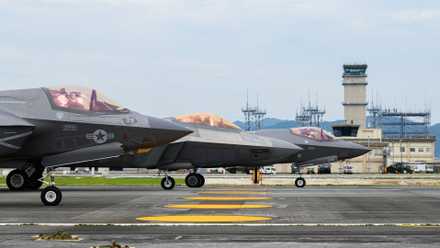
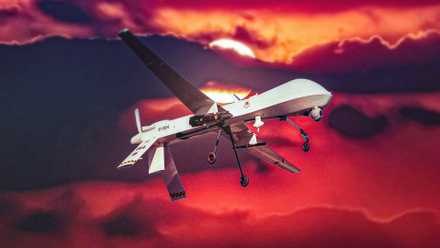
The operational tempo described—airlifters cycling around the clock through Ali Al Salem, fighter and bomber sorties launching from Al Dhafra and Muwaffaq Al Salti, and an air operations center at Al Udeid orchestrating electronic warfare and strike synchronization—also highlights the centrality of a small number of chokepoint bases to an entire theater's sustainment. The 386th Air Expeditionary Wing's C-130J fleet moving virtually every CENTCOM-bound service member and piece of cargo through "The Rock" demonstrates how airlift capacity, not just fighter and bomber inventories, is a decisive constraint in sustained air campaigns. This mirrors long-standing lessons from Desert Storm, Enduring Freedom, and more recent Indo-Pacific contingency planning, where planners emphasize base resiliency, dispersal, and redundant airlift nodes precisely because adversaries can and will target the hubs that make combined air operations possible. The heavy reliance on MQ-9A Reaper drones for ISR and targeting, alongside their acknowledged high attrition rate, further reflects the broader industry and Department of Defense shift toward uncrewed systems as expendable, iterative combat capability rather than exquisite, irreplaceable assets—an approach increasingly mirrored in commercial and dual-use UAS development.
Beyond the immediate tactical details, this campaign carries broader implications for aviation professionals monitoring geopolitical risk. The shift toward striking infrastructure—bridges, power stations, electrical grids—rather than solely military targets signals an intensifying campaign with no clear diplomatic exit in sight, which has downstream effects on regional airspace closures, diversions, fuel logistics, and insurance risk assessments for any carrier operating through the Middle East corridor. Airlines and business aviation operators routing through or near Gulf airspace must continue monitoring NOTAMs, threat advisories from organizations like OPSGROUP and IATA, and government guidance, as escalation dynamics like those seen at MSAB and Ali Al Salem demonstrate how quickly air defense environments can become lethal to friend and foe alike. For military aviators and contractors operating in or supporting CENTCOM, the events described reinforce enduring lessons about IFF reliability, air defense coordination under saturation conditions, and the vulnerability of even hardened, well-defended installations to sufficiently massed missile and drone attacks—lessons that will likely shape basing, defense system procurement, and joint force protocols well beyond the resolution of this particular conflict.









 Read original article