Emirates A380 Diverts 2,000+ Miles To London After Medical Emergency Over Russia
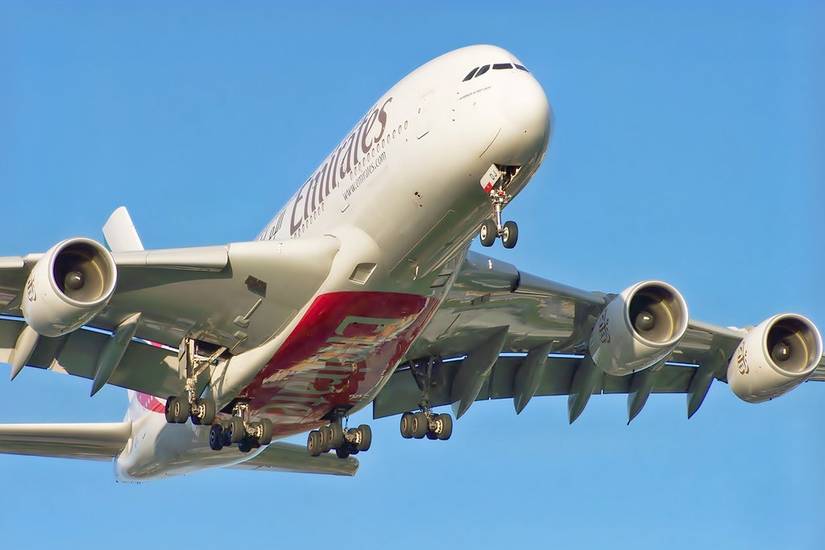
Emirates flight EK225, an Airbus A380 operating from Dubai to San Francisco, was forced into one of the more dramatic diversions seen on the carrier's network this year when a passenger medical emergency struck approximately six hours into the 16-hour ultra-long-haul sector. Rather than continuing north over the Arctic or diverting to a nearer alternate, the flight crew, while overflying the remote Russian town of Nyagan, turned the aircraft west and flew roughly 2,485 miles to London Heathrow, a detour that added an estimated five hours to the journey and left hundreds of passengers stranded overnight in the UK instead of California. The A6-EVH aircraft, an eight-year-old A380 configured for 484 passengers across four cabins, landed at Heathrow at 7:20 PM local time, about 12 hours after its delayed Dubai departure, before resuming its journey to SFO the following afternoon with further gate delays.
The routing decision underscores a critical but often underappreciated element of long-haul dispatch and crew decision-making: alternate selection is rarely just about proximity. While numerous ETOPS-suitable and A380-capable fields exist across Russia and Central Asia, operational realities such as diplomatic relations, sanctions regimes, ground handling capability, immigration processing for international passengers, and the availability of spare crews and hotel accommodation weigh heavily on the choice of diversion airport. Heathrow's status as one of Emirates' largest outstations, with dedicated ground crew, spare aircraft support, and established passenger welfare infrastructure, made it a pragmatic choice even at the cost of a much longer flight time than closer alternates might have offered. This is a useful case study for pilots and dispatchers regarding the tradeoffs between minimizing diversion distance and ensuring the diversion airport can actually absorb an A380-sized disruption without compounding passenger and crew problems.
For working pilots, particularly those flying widebody international routes, the event is a reminder that medical diversions carry judgment calls beyond the immediate clinical assessment. The article notes that a diversion to a major hub like Heathrow, rather than the nearest technically viable airport, typically signals that the crew and any onboard medical personnel assessed the situation as serious but not immediately life-threatening. This kind of triage, balancing patient welfare against the practical consequences of stranding a full A380 load at a remote or poorly resourced field, is a scenario that captains and first officers on long-haul equipment train for but rarely execute in earnest. The decision also has ripple effects on crew duty time limits, requiring Emirates to source a fresh operating crew for the continuation leg, which contributed directly to the extended ground time and secondary delay on push-back the following day.
More broadly, this incident adds to a pattern of high-profile A380 diversions affecting Emirates in recent weeks, following a separate event just seven days earlier in which severe thunderstorms forced an A380 bound for Shanghai to divert to Hangzhou, stranding passengers on the tarmac for roughly ten hours. Together these episodes highlight the operational fragility inherent in operating the world's largest passenger aircraft on ultra-long-haul, thin-alternate routes. With over 100 A380s in its fleet, Emirates remains the type's dominant operator, and any diversion involving the aircraft creates outsized logistical challenges, since few airports worldwide have the gate infrastructure, jet bridges, and ground handling capacity to accommodate an unscheduled 484-seat arrival smoothly. As airlines continue to push A380s and other large widebodies on routes exceeding 15 hours, carriers, dispatch teams, and airport planners alike will need to keep expanding contingency networks for medical, weather, and technical diversions, since the cost of getting alternate planning wrong scales dramatically with aircraft size.





 Read original article