First UK-Manufactured BN Islander For More Than 50 Years Unveiled
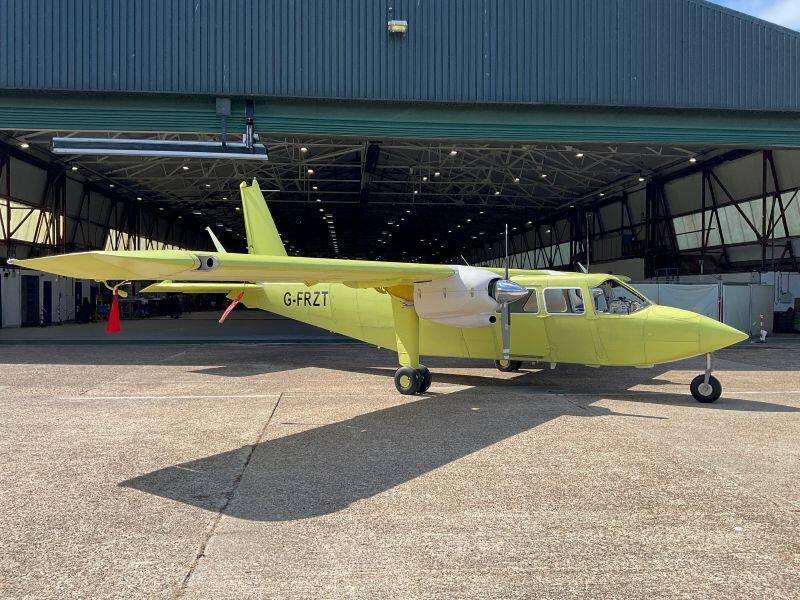
Britten-Norman's rollout of the first UK-manufactured Islander in nearly 60 years marks a significant inflection point for one of general aviation's most enduring utility aircraft designs. The BN2B-26, powered by twin Lycoming O-540-E4C5 engines, was unveiled complete with engines, propellers, electrical systems, brakes, and flight controls installed, with the aircraft now moving into ground testing ahead of a scheduled late-September delivery to the Falkland Islands Government Air Service (FIGAS). This represents a deliberate repatriation of manufacturing capability from Romania, where production had been based for years, back to BN's historic home at Bembridge on the Isle of Wight—a move that signals renewed confidence in both the Islander's market relevance and the UK's ability to sustain complex aerospace manufacturing domestically.
For working pilots, particularly those flying in remote, short-field, or island-hopping operations, the Islander's continued production matters because few aircraft occupy its specific niche as effectively. The type has been a workhorse of regional and inter-island connectivity for decades—rugged, simple, capable of operating from unprepared strips, and economical to maintain relative to more complex twin-turboprop alternatives. FIGAS's selection of a new-build BN2B-26 for Falklands service underscores that even in an era of advanced avionics and turbine power, there remains a durable market for straightforward, maintainable piston-twin utility aircraft in operations where reliability and simplicity in harsh, isolated environments outweigh speed or cabin comfort. Pilots who fly Islanders in bush operations, cargo runs, or scheduled commuter service in places like the Caribbean, Scotland, and the Pacific will likely view this manufacturing revival as a positive signal for long-term parts and airframe availability.
The broader significance lies in what this rollout says about resilience in niche aircraft manufacturing supply chains. BN's decision to re-establish production capacity in the UK, rather than remain dependent on offshore assembly, reflects a wider trend among specialty OEMs reassessing geographically dispersed manufacturing models in light of post-Brexit trade friction, pandemic-era supply chain disruptions, and geopolitical uncertainty affecting Eastern European industrial capacity. Coupled with the company's 40% workforce growth over two years, surpassing 150 employees, and its stated investment in aftermarket parts and service support for the existing global Islander fleet, BN appears to be positioning itself not just as a manufacturer of new airframes but as a more vertically integrated sustainer of an aircraft type with thousands of examples still flying worldwide.
This development also resonates with a broader pattern across general and regional aviation where legacy piston and light-turboprop utility designs—Islanders, Twin Otters, Caravans—continue to see renewed investment because no clean-sheet replacement has emerged that matches their combination of STOL performance, payload flexibility, and low operating cost. For operators and pilots flying these aging but essential fleets, sustained OEM support, whether through new production or robust parts pipelines, directly affects dispatch reliability, maintenance costs, and ultimately the viability of routes serving communities with no practical alternative to air access. Britten-Norman's UK production restart, however modest in volume, offers a tangible signal that this segment of aviation retains strategic and commercial relevance well into its seventh decade of service.






 Read original article