Why It Took The X-59 Nearly A Year Of Flights To Finally Break The Sound Barrier
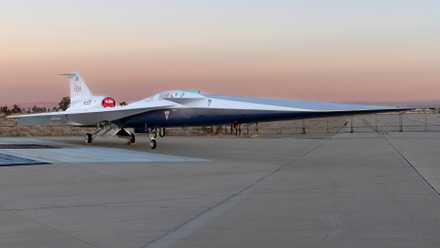
The NASA X-59 Quesst's roughly seven-month journey from first flight on October 28, 2025, to its first supersonic dash on June 5, 2026, offers a instructive window into how experimental aircraft test programs actually operate versus how they're often perceived by the public. Built by Lockheed Martin Skunk Works, the X-59 is designed to prove that supersonic flight can be reshaped—literally, through its needle-nosed, 99.7-foot-long airframe—to replace a traditional sonic boom with a much quieter "sonic thump." But before NASA could even attempt Mach 1, the aircraft had to complete 16 subsonic flights focused purely on envelope expansion: verifying airworthiness, engine performance, handling qualities, and structural integrity. That methodical pace, dictated by rigid test cards and telemetry-gated milestones, is standard practice for any clean-sheet experimental type, and it stands in sharp contrast to the rapid dispatch-and-turn cadence of revenue flying that most working pilots know.
For pilots and operators, the piece is a useful reminder of just how much invisible infrastructure underpins the "routine" supersonic and transonic performance envelopes that fighter and business jet pilots take for granted. Every speed increment on the X-59 required a dedicated flight, with real-world data compared against simulator predictions before the next step was authorized—if the aircraft rolled even 5% faster than modeled, testing halted until engineers understood why. This is the same fundamental discipline that underlies FAA/EASA certification flight test campaigns for new business jets and airliners, though most type certification programs benefit from decades of accumulated aerodynamic data that the X-59, with its unprecedented shape, simply doesn't have. The absence of a forward cockpit window—replaced by a 4K External Vision System fed by camera arrays—adds another layer of systems redundancy and risk management uncommon even in modern glass-cockpit transport aircraft, underscoring how experimental flight test remains fundamentally different from operational flying even when the airframe is destined for eventual commercial application.
The broader significance for the industry lies in Quesst's ultimate goal: gathering community response data to the X-59's quieter sonic signature in hopes of persuading the FAA to revisit the 1973 overland supersonic flight ban. If successful, this could open the door for a new generation of supersonic business jets and airliners—companies like Boom Supersonic and Spike Aerospace are watching this program closely, as regulatory relief on overland booms would materially change the addressable market for supersonic transport. Corporate and charter operators eyeing future supersonic business jet acquisitions should recognize that the X-59's slow-motion test campaign isn't bureaucratic caution for its own sake; it's the necessary evidentiary foundation for the acoustic and safety data that regulators will eventually demand before certifying any commercial supersonic overland operations.
More broadly, the X-59 program illustrates the widening gap between the test-and-certification rigor still required for genuinely novel airframes and the increasingly software-driven, iterative development cycles seen in other corners of aviation, from eVTOL urban air mobility prototypes to autonomous cargo drones. As the industry pushes toward more unconventional aircraft configurations—blended wing bodies, distributed electric propulsion, boundary-layer-ingesting engines—the X-59's incremental, telemetry-gated flight test model will likely serve as a template. For pilots transitioning into flight test roles, or operators evaluating next-generation aircraft procurement timelines, the Quesst program is a case study in why breakthrough aviation technology, however transformative its eventual promise, still moves at the speed of validated data rather than headline ambition.





 Read original article