Why Doesn't The World's Fastest Commercial Aircraft Have Winglets?
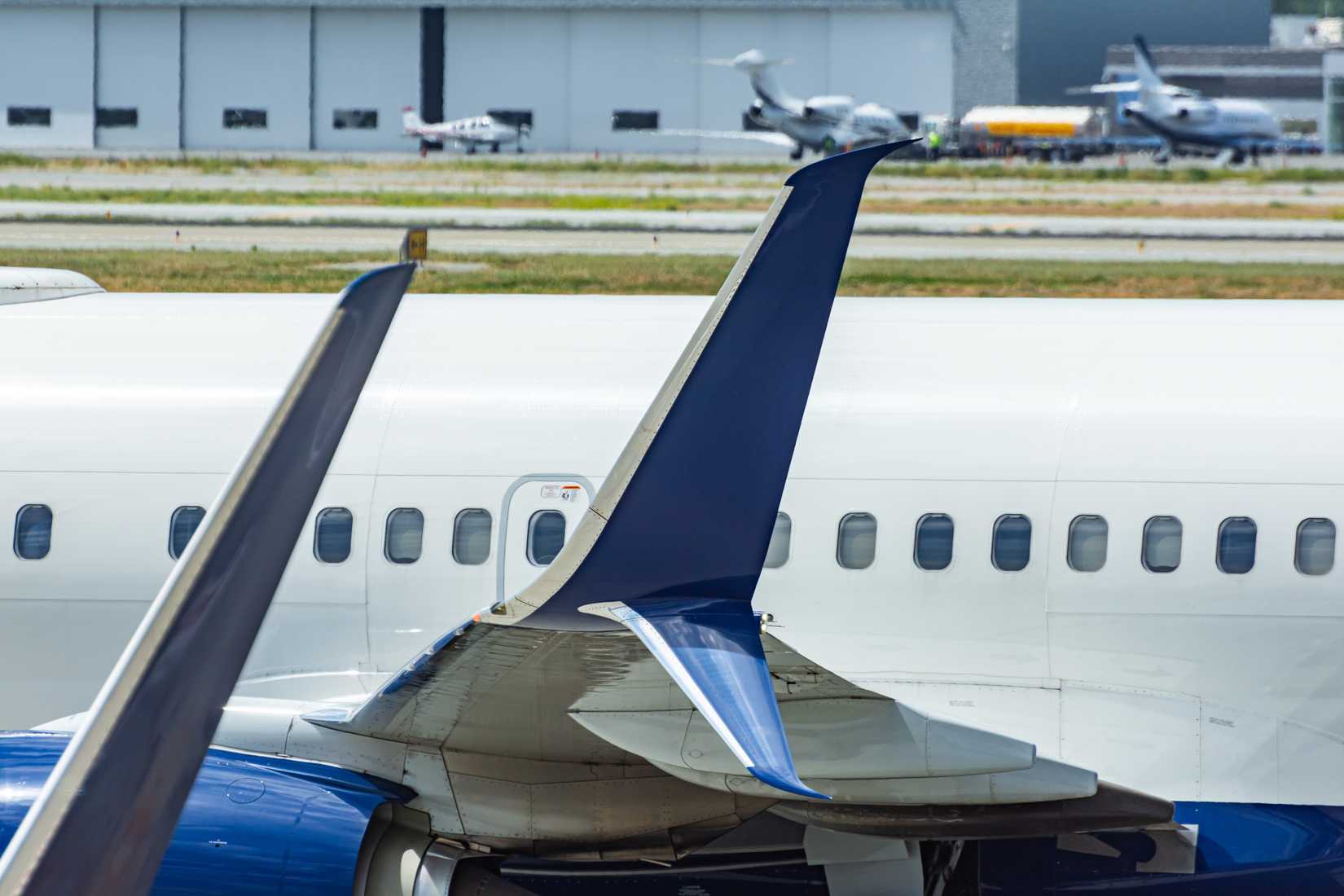
The Boeing 747-8's wing design offers a useful case study in how airframers balance competing aerodynamic and infrastructure constraints when refining a legacy platform. Rather than following the winglet-retrofit path used on the 737, 767, and even earlier 747 variants, Boeing gave the 747-8 an entirely new wing with a longer span, redesigned airfoils, and raked wingtips instead of vertical winglets. The raked tip approach extends the wing's effective aspect ratio and improves span-wise lift distribution without adding the vertical structure, weight penalty, and parasite drag that winglets introduce at high cruise speeds. Boeing's data cites up to a 16% fuel efficiency improvement over the 747-400 while keeping the aircraft within Code F airport compatibility limits—a critical detail, since exceeding that classification would immediately restrict which gates, taxiways, and runways the jet could use at major hubs like Frankfurt, Hong Kong, and Dubai.
For working pilots, particularly those flying widebody international routes or transitioning into 747-8 freighter or passenger operations, understanding this design logic matters beyond academic interest. Wingtip devices directly affect handling characteristics, crosswind performance, ground clearance during taxi and pushback, and structural loading during turbulence or gust encounters. Raked wingtips behave differently in flight than canted or blended winglets, and pilots moving between fleet types (say, from a winglet-equipped 737 MAX or 787 to a 747-8) should recognize that these are not interchangeable solutions but distinct engineering answers to the same induced-drag problem. Dispatchers and performance engineers also factor these differences into runway analysis, climb gradients, and fuel planning, since the aerodynamic efficiency gains translate directly into payload-range capability on ultra-long-haul cargo and passenger sectors.
The broader trend illustrated here is the industry's shift toward integrated, mission-specific aerodynamic solutions rather than one-size-fits-all retrofits. The 777X's folding wingtip mechanism represents the next evolution of this same tradeoff—maximizing aspect ratio in flight while mechanically shrinking the footprint on the ground to satisfy ICAO Code E/F gate constraints. This reflects a maturing design philosophy across Boeing and Airbus programs: airport infrastructure, not just aerodynamics, increasingly dictates wing architecture. Operators evaluating fleet renewal, particularly cargo carriers reliant on 747-8F freighters for oversized and high-density cargo, should note that these aerodynamic choices directly affect trip cost, block fuel burn, and route economics on long-haul lanes.
Ultimately, the 747-8's wing stands as a reminder that winglets are one tool among several for managing induced drag, not a universal requirement. As airlines and cargo operators continue pushing for lower fuel burn amid tightening emissions regulations and volatile fuel prices, pilots and flight operations personnel will increasingly encounter a wider variety of wingtip solutions—raked tips, blended winglets, split-scimitar designs, and folding mechanisms—each reflecting a different balance between aerodynamic gain, structural cost, and airport compatibility. Recognizing why a given aircraft was designed the way it was helps flight crews better understand performance charts, structural limitations, and the economic reasoning behind fleet decisions made well above their pay grade but felt directly in day-to-day operations.








 Read original article