Why The Boeing 777X’s New Cabin Architecture Will Be Such A Game Changer For Airlines
The Boeing 777X's cabin architecture represents a significant departure from the legacy 777 platform, borrowing heavily from lessons learned on the 787 Dreamliner program to deliver measurable improvements in passenger comfort and airline economics simultaneously. The headline technical specs are substantial: a cabin four inches wider than the current 777, windows 29% larger than the competing Airbus A350 and 17% larger than the outgoing 777, a cabin altitude of 6,000 feet versus the industry-standard 8,000 feet, and roughly double the humidity of prior Boeing widebodies. These are not marketing footnotes but physiologically meaningful changes—lower cabin altitude and higher humidity directly reduce the dehydration, fatigue, and jet lag that accumulate on ultra-long-haul sectors, which is precisely the mission profile airlines are targeting with this aircraft. For crews flying 14-16 hour transoceanic legs, a materially less fatiguing cabin environment has real implications for crew rest quality and alertness management, even though the FAA/EASA regulatory rest requirements remain unchanged.
For flight operations and airline planning departments, the 777X's value proposition extends well beyond cabin comfort into the operating economics that ultimately drive route and fleet decisions. Boeing is positioning the aircraft to undercut the A350 by roughly 10% in operating costs while offering the largest twinjet capacity in history, a combination that will influence long-haul network planning, especially on high-density trunk routes and thinner ultra-long-haul city pairs where seat-mile economics determine viability. The modular cabin architecture—allowing airlines to reconfigure first, business, premium economy, and economy sections without wholesale structural changes—gives carriers flexibility to respond to shifting demand patterns (e.g., the premium leisure and business travel rebound) without the capital expense of a full retrofit program. This matters to flight departments and scheduling teams because aircraft configuration changes affect weight and balance, cargo capacity calculations, and crew training requirements each time a carrier alters seating density or class mix.
From a broader industry perspective, the 777X continues a trend that began with the 787 and accelerated with the A350: cabin environment as a competitive and engineering differentiator, not just an afterthought bolted onto an existing tube-and-wing design. Boeing's shift from convex to concave interior surfacing, first proven on the Dreamliner, demonstrates how psychological perception of space (via overhead bin and sidewall geometry) is now engineered with the same rigor as aerodynamic surfaces. The quieter cabin—achieved through GE9X nacelle design, improved insulation, and revised air conditioning systems—also reflects industry-wide pressure to reduce both cabin noise exposure for crew (a longstanding occupational health concern for flight attendants and pilots on long sectors) and community noise footprint near airports, an increasingly important factor as regulators tighten noise certification standards and airports expand curfews.
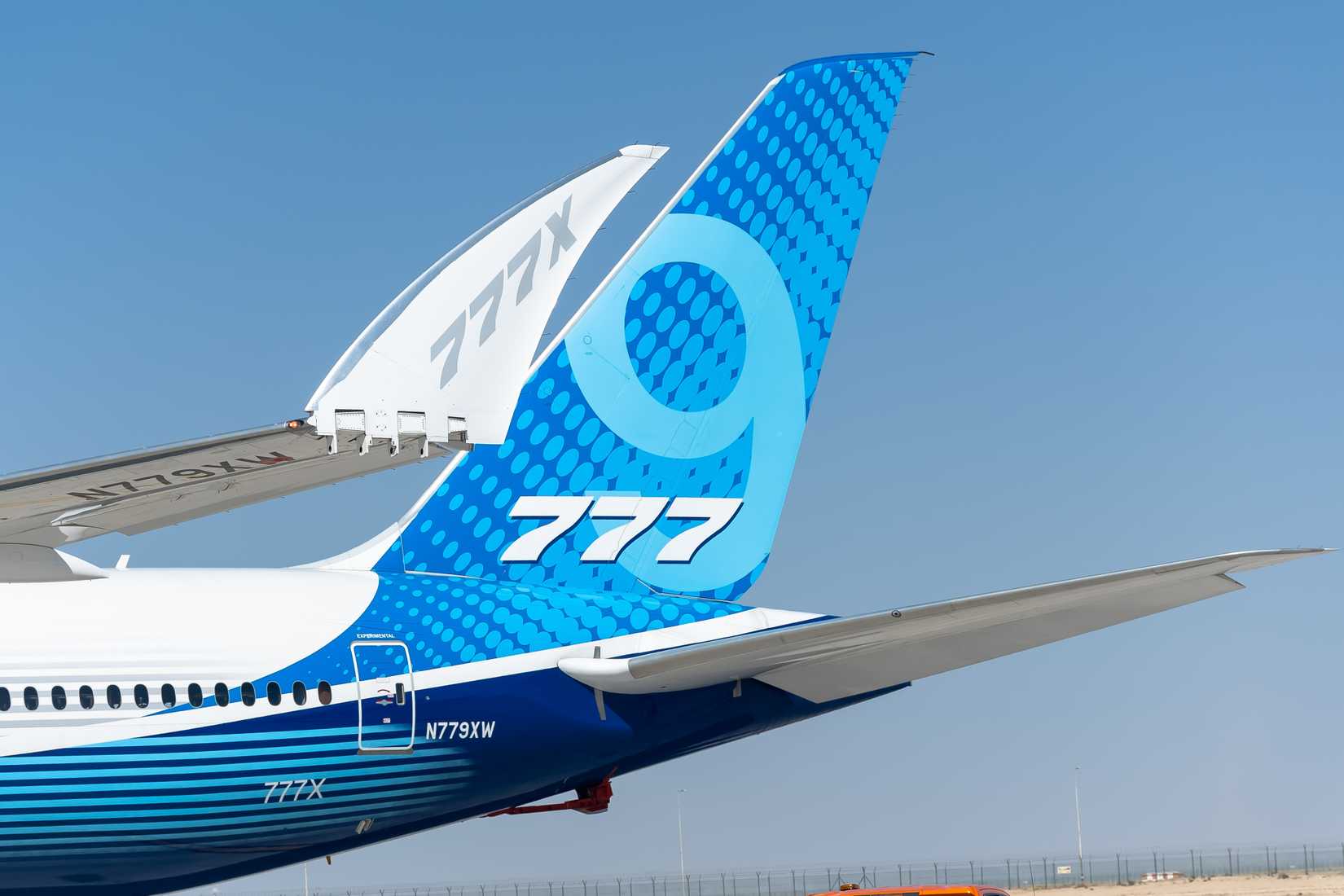
For working pilots, particularly those flying widebody international operations, the 777X's delayed but steadily progressing certification program (Boeing has repeatedly pushed the in-service date, now targeting the back half of this decade) means type-rating transition planning and training department curricula will need to account for a cabin and systems architecture that borrows more from the 787 than from the legacy 777 many crews currently fly. The folding wingtip system, GE9X engine performance characteristics, and revised environmental control systems all represent meaningful differences from the -300ER and -200LR variants still dominating long-haul fleets, and simulator and ground school content will need updating accordingly once deliveries ramp up. As airlines like Emirates, Qatar Airways, and Lufthansa Group await their 777X orders, flight operations planners should expect the aircraft's introduction to reshape both passenger expectations and crew training pipelines across the widebody long-haul segment.












 Read original article