Why The GEnx-Powered Boeing 787-10 Dreamliner Beats 13 Other Widebody Combinations On Fuel Burn
A comparative fuel-burn study by Aircraft Commerce, first published in late 2018 but recirculating now as a reference point for current fleet planning, ranked 14 widebody aircraft-engine combinations across five representative routes and found the GEnx-powered Boeing 787-10 delivers the lowest fuel burn per available seat mile of any configuration in service. The analysis, built on Lufthansa Systems fuel data, pitted the 787-8, -9, and -10 in both GEnx and Trent 1000 configurations against the A350-900, A350-1000, A330-200/-300, 777-200ER, 777-300ER, and 747-400. The 787-10/GEnx pairing led decisively, beating its own Trent 1000-equipped sibling, both A350 variants, and every legacy widebody by a clear margin. The finding underscores a point that matters more to fleet planners than to passengers: airframe and engine choice are inseparable variables, and identical airframes with different powerplants produce materially different lifetime operating costs.
For working pilots, this kind of data rarely changes what happens in the flight deck day to day — a GEnx-powered 787 and a Trent 1000-powered 787 fly virtually identically from a pilot's perspective, sharing type ratings, procedures, and systems architecture. But the economics behind these engine choices directly shape network planning, route assignments, and ultimately career trajectories. Airlines that standardize on the more fuel-efficient GEnx variant are positioned to fly longer, thinner routes profitably, which affects where 787 bases are established, how frequently crews operate ultra-long-haul segments, and which international markets get served nonstop versus with a connection. The GEnx now powers more than two-thirds of the in-service 787 fleet, and recent large orders from carriers like Philippine Airlines and Delta Air Lines confirm the market is consolidating around this pairing rather than splitting evenly between the two engine options as it did earlier in the program's life.
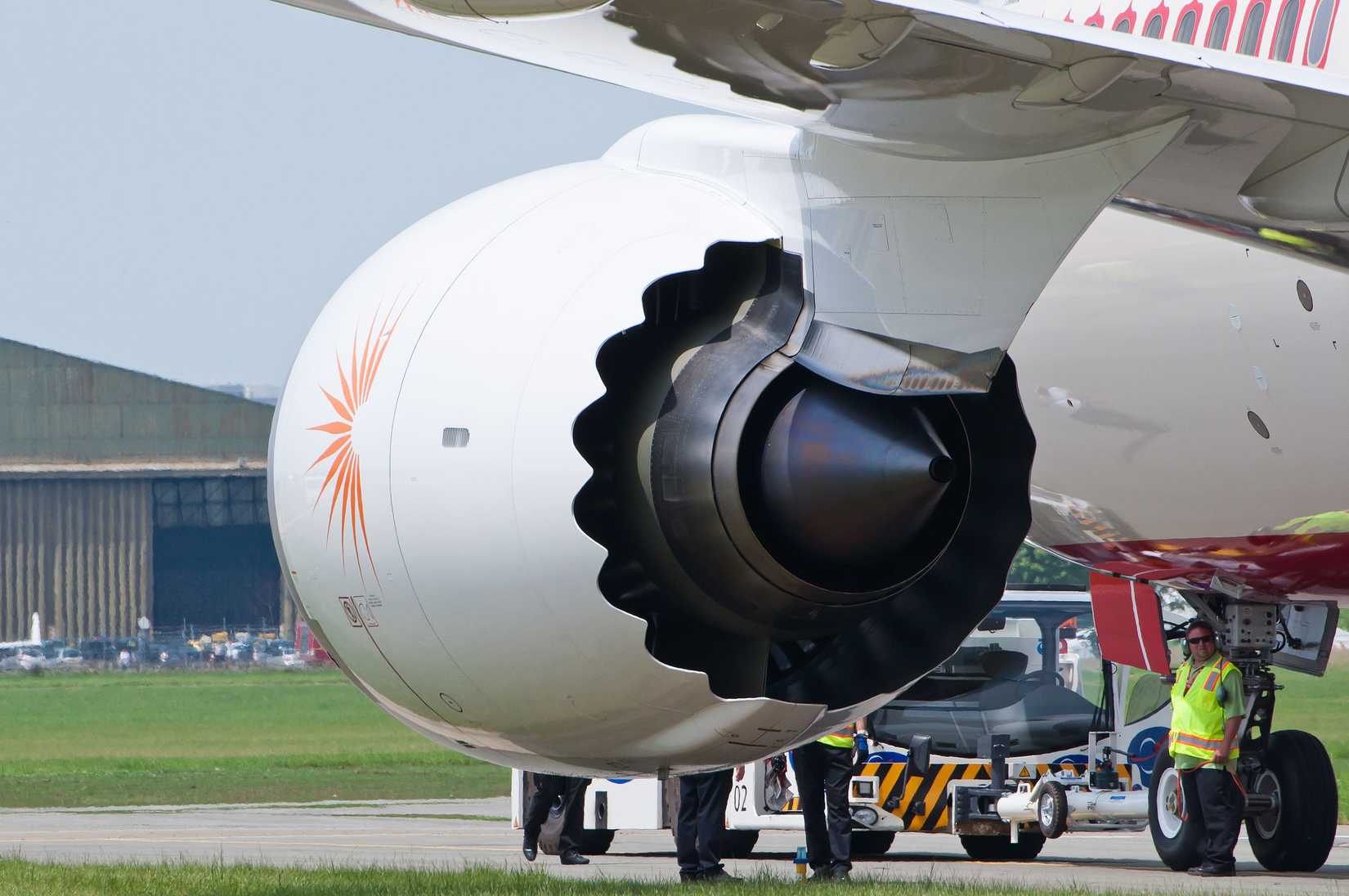
Technically, the GEnx-1B's edge comes from a combination of incremental but compounding advances: composite fan blades that cut rotating mass by roughly a third compared to titanium, a 23:1 overall pressure ratio in the high-pressure compressor, and a Twin Annular Pre-Swirl combustor that improves combustion efficiency while cutting NOx emissions. GE Aerospace quotes roughly a 1.4% specific fuel consumption advantage over the Trent 1000 on a typical 3,000 nm mission — a margin that sounds trivial in isolation but becomes significant across 1,200-plus annual cycles on a long-haul jet, translating into real annual fuel savings and, notably, a 99.98% dispatch reliability rate that reduces schedule disruption. The 787-10 itself doesn't out-range its siblings — its roughly 6,330 nm range is actually shorter than the 787-9's or 787-8's — but its added length allows it to carry more revenue passengers at essentially the same fuel burn, which is what drives its per-seat efficiency advantage to the top of the ranking.
The broader trend this reflects is the aviation industry's continued shift toward evaluating aircraft not as isolated airframes but as full propulsion-airframe systems optimized for stage length and seat count, a mindset increasingly central to sustainability and cost-of-operation conversations across commercial, cargo, and even business aviation sectors. As fuel costs and emissions scrutiny remain persistent pressures, expect airlines to keep leaning on granular studies like this one when negotiating engine exclusivity deals, retiring older 777s and A330s, and structuring long-haul networks around the most efficient available pairing. For pilots watching fleet composition trends, the consolidation around GEnx-powered 787-10s signals where training pipelines, base growth, and long-haul flying opportunities are likely to concentrate in the coming decade.









 Read original article