The U.S. Navy’s new search for ultra-long-range strike brings its Pacific strategy into focus
The U.S. Navy's July 14 request for information marks a significant new chapter in the service's push toward a distributed, uncrewed-heavy carrier air wing built to survive and operate effectively in the Indo-Pacific theater. The RFI calls for a high-end, multi-role uncrewed aircraft — or a family of single-role platforms — capable of a 1,000-nautical-mile combat radius, survivability in contested airspace, and a generational leap beyond the F/A-18 Super Hornet and other fourth-generation fighters. This is not an incremental upgrade request; it is a solicitation for a purpose-built long-range strike asset that has been conspicuously absent from the Navy's future air wing planning, even as programs like the MQ-25A Stingray tanker, the F/A-XX sixth-generation fighter, and the Collaborative Combat Aircraft (CCA) initiative have advanced. The RFI's timing and scope suggest the Navy views long-range uncrewed strike as the missing piece needed to complete a coherent, next-generation carrier air wing concept.
For working naval aviators and carrier air wing planners, this development reflects a fundamental shift in operational philosophy driven by China's growing anti-access/area-denial (A2/AD) capabilities, including long-range anti-ship missiles and counter-air weapons that push carriers farther from potential conflict zones than ever before. As stand-off distances grow, the combat radius of current air wing assets becomes a critical vulnerability — crewed fighters like the Super Hornet, with unrefueled combat radii well under 1,000 nautical miles, increasingly require buddy-tanking support that consumes sorties and limits strike density. An uncrewed platform capable of striking at 1,000 nautical miles without refueling would free crewed fighters from tanker duty, expand the effective reach of the air wing, and reduce the exposure of human pilots to the highest-risk missions deep inside contested airspace. This has direct implications for carrier strike group tactics, sortie generation rates, and the risk calculus commanders must weigh when operating within range of sophisticated integrated air defense systems.
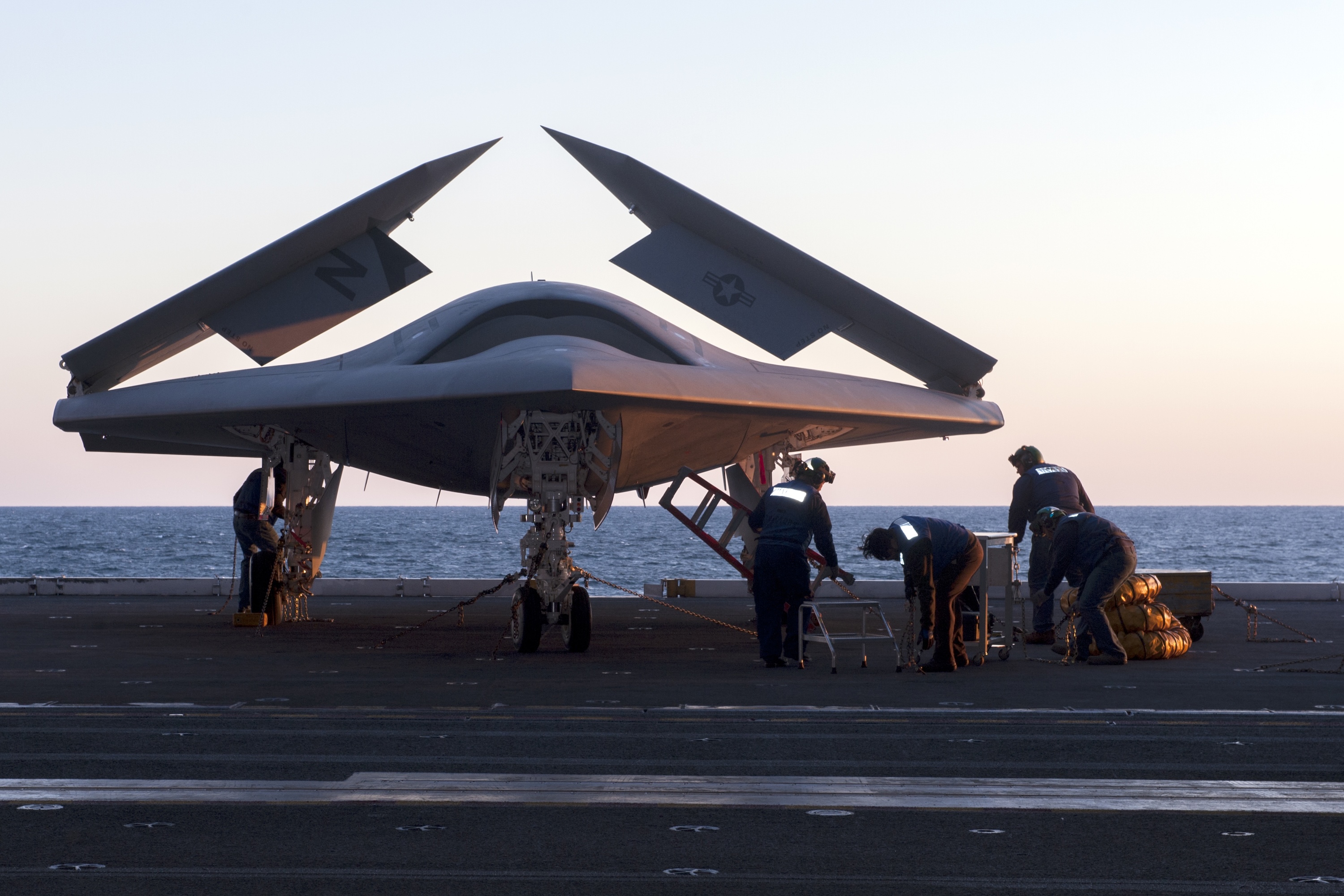
The competitive landscape for this program is notable both for its inclusion of nontraditional defense contractors and its potential revival of shelved technology. Companies like Shield AI and Anduril — relative newcomers to naval aviation who have built reputations on autonomy software and rapid, iterative aircraft development — are positioned as credible competitors alongside legacy primes. Equally intriguing is the possible resurrection of a Northrop Grumman uncrewed strike platform that was reportedly near operational maturity a decade ago before being shelved, a reminder that some capabilities the Navy now urgently needs were technologically within reach years earlier but deprioritized amid shifting budget and strategic priorities. This dynamic underscores how quickly Pentagon procurement priorities can pivot when geopolitical threat assessments change, and it raises questions about lost time and sunk investment in programs that might have provided earlier operational relevance.
More broadly, this RFI fits into an accelerating trend across military and commercial aviation toward uncrewed and optionally-crewed platforms taking on higher-risk, longer-duration missions traditionally reserved for crewed aircraft. For naval aviators, this signals a carrier air wing of the future in which human pilots increasingly serve as mission commanders and quarterbacks for teams of autonomous systems rather than sole executors of strike missions — a transition already underway with CCA and Stingray integration. For defense-sector and business aviation observers, the RFI also illustrates how quickly the barrier to entry in high-end military aviation is falling, with software-centric companies challenging traditional airframe manufacturers for major strike aircraft contracts. As the Navy races against China's expanding reach in the Pacific, this program will likely serve as a bellwether for how aggressively the service is willing to restructure its carrier air wings — and how much risk it is willing to shift from pilots to autonomous systems — in the years ahead.