Wheels Up posts $107m net loss as fleet overhaul costs continue to bite | Corporate Jet Investor | CJI news
Wheels Up's second-quarter results tell a bifurcated story that will be familiar to anyone tracking the private aviation sector's post-pandemic reckoning: deep financial losses masking genuine operational improvement. The company posted a $107m net loss, wider than the $82m loss a year earlier, driven largely by a $13m non-cash impairment tied to legacy fleet retirement and a $13m jump in interest expense and aircraft rent from fleet investment and borrowings. Revenue held essentially flat at $182m as growth in the premium Signature membership program offset planned declines from discontinued legacy offerings. On an adjusted basis, the trend lines look more favorable — adjusted EBITDAR loss improved 27% year-on-year to $20m — suggesting the underlying business is trending toward sustainability even as GAAP accounting absorbs the one-time costs of a fleet transformation now largely complete.
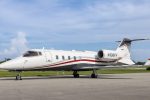
For operators and pilots, the most consequential detail is the completion of Wheels Up's fleet modernization in April, roughly 18 months ahead of schedule and following more than $300m in investment. The controlled fleet now comprises over 40 Phenom and Challenger aircraft, with plans to exceed 50 by year-end. This matters because Wheels Up's earlier years were defined by an unwieldy, multi-type legacy fleet inherited through acquisitions, which drove maintenance complexity, crew training burdens, and reliability problems that became a recurring source of customer and industry criticism. The record operational metrics reported this quarter — a 99.4% completion rate, 86.8% on-time performance (up 6.5 points), a 50% reduction in delays of three-plus hours, and 119 consecutive days without a cancellation through July — reflect the payoff of fleet standardization. For pilots and dispatchers, a more homogeneous fleet typically means more predictable scheduling, reduced type-specific training overhead, and fewer maintenance-driven disruptions, all of which factor into crew quality-of-life and operational safety margins.
The strategic pivot toward the Signature membership tier, which surpassed 1,200 members and now represents more than half of the active membership base, signals Wheels Up's attempt to reposition itself as a premium, higher-margin product rather than compete purely on volume. This is consistent with broader industry trends: charter and fractional operators across the sector — from NetJets to Flexjet to Jet Linx — have increasingly emphasized premium positioning and membership stickiness over raw flight-hour growth, particularly as post-pandemic demand normalizes and price-sensitive flyers who entered during the 2020-2022 boom churn out. The 8% decline in total gross bookings, attributed to charter volume softness during a sales force reorganization, and the 28% drop in live flight legs (offset by a 27% rise in bookings per leg to $22,048) reinforce that Wheels Up is deliberately trading volume for yield — a strategy that carries execution risk but aligns with where the premium end of the market appears headed.
The financing and partnership details underscore how dependent Wheels Up remains on external capital and its Delta relationship to fund this transition. The new $100m term loan from its lead investor group, the $68m AIP Capital aircraft financing facility, and Delta's extension of its $100m revolving credit commitment through September 2028 all point to a company still reliant on patient capital to bridge the gap to profitability. The Delta partnership also drove an 8% increase in corporate flight revenue, illustrating how legacy-carrier tie-ups continue to matter for private aviation demand generation. Meanwhile, the launch of Surf Air Mobility's Palantir-powered BrokerOS platform as a charter booking tool signals where much of the industry's near-term technology investment is heading — toward AI-driven booking optimization to improve conversion and fleet utilization. For business aviation operators broadly, Wheels Up's trajectory offers a useful case study in the costs and timeline required to right-size a fleet and rebuild operational credibility after a period of overexpansion, a dynamic other charter and fractional players continue to navigate as the sector matures past its pandemic-era growth spike.