Archer Expands AI Push With Airport Traffic Prediction System
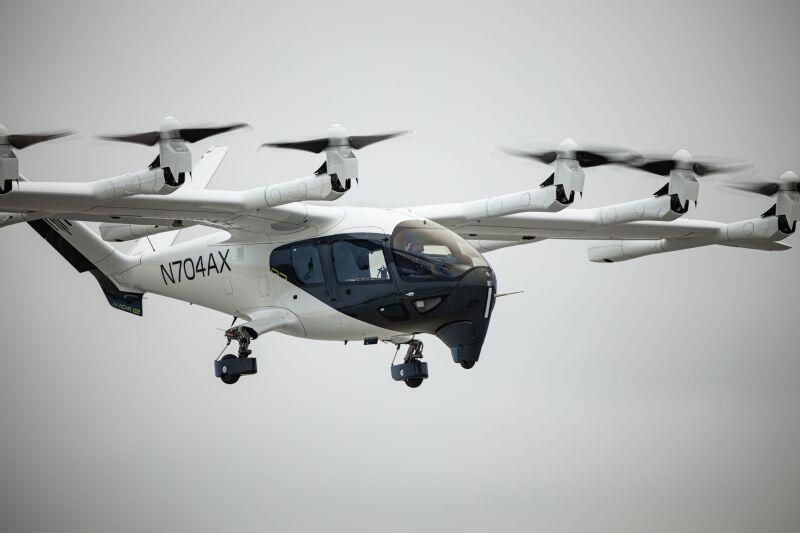
Archer Aviation's disclosure of an AI-driven airport traffic prediction system marks a notable strategic pivot for the eVTOL manufacturer, extending its technology ambitions well beyond the Midnight aircraft itself. The company says its in-house artificial intelligence platform can now forecast aircraft movements on taxiways and runways several minutes into the future, a capability that moves Archer from being purely an airframe developer into the realm of airspace and airport operations software. While details remain limited given the subscription-gated nature of the reporting, the underlying signal is clear: Archer is positioning itself as a technology company with applications that could extend to conventional airport traffic management, not just the advanced air mobility (AAM) ecosystem it was originally built to serve.
For working pilots and aviation operators, this development is significant because predictive traffic modeling directly touches surface safety and operational efficiency—two areas that have drawn increasing scrutiny following a string of runway incursions and near-miss incidents at major U.S. airports in recent years. A system capable of anticipating conflicts on taxiways and runways minutes in advance could feed into ATC decision-support tools, ground movement systems, or even cockpit-level situational awareness displays. Airline and business aviation pilots operating into congested hub airports have long dealt with the friction between ATC clearances, ground crew coordination, and taxi routing; AI-based predictive systems, if validated and certified, could reduce the kind of human-factor errors that contribute to surface incidents. However, pilots should note that predictive algorithms are only as good as their training data and integration with existing air traffic management infrastructure, and any operational deployment will require extensive FAA validation, likely under existing NextGen or Surface Awareness Initiative frameworks.
The broader context here is Archer's evolving business model. Like several other eVTOL developers—Joby Aviation, Beta Technologies, and Wisk among them—Archer has faced a prolonged and capital-intensive certification path for its aircraft, with commercial passenger service still not fully realized despite years of testing and partnerships (notably with United Airlines and various international launch markets). Diversifying into AI software for airspace management gives Archer a potential secondary revenue stream and a way to monetize its data science investments even as aircraft certification timelines slip. This mirrors a pattern seen across the AAM sector, where companies increasingly emphasize software, autonomy, and data platforms alongside hardware to demonstrate near-term commercial viability to investors skeptical of eVTOL certification timelines.
This also reflects a larger trend across commercial and business aviation: the integration of AI into airport and airspace operations is accelerating industry-wide, from NASA and FAA-funded research on digital twins for airport surface management to airline investments in predictive taxi-time and gate-conflict tools. If Archer's system proves scalable and interoperable with existing air traffic control and airport operations systems, it could eventually see adoption well beyond eVTOL vertiports, potentially informing ramp control at busy Part 121 hub airports or supporting single-pilot and reduced-crew operations research, where automation is expected to shoulder more traffic-monitoring workload. For now, the announcement should be read as an early-stage technical milestone rather than an operational deployment, but it signals where eVTOL manufacturers see long-term value creation: not just in flying people, but in the data and automation layers that make dense, mixed-traffic airspace manageable.






 Read original article