Why The Ilyushin Il-96 Is Making An Unexpected Comeback
The Ilyushin Il-96's fitful attempt at revival illustrates just how deeply Western sanctions have cut into Russia's ability to sustain a modern commercial aviation sector—and how far the country still is from replacing it with an indigenous alternative. Following the 2022 invasion of Ukraine, Russia lost access to Airbus, Boeing, COMAC, and Embraer aircraft alike, since even Chinese and Brazilian jets rely on Western-made engines and avionics subject to export controls. That left Moscow to lean on the remnants of its Soviet-era aerospace base, and the quad-engine Il-96—a widebody design dating to the late 1980s that had already been judged obsolete and commercially unviable before the war—became the default "solution" for long-haul lift simply because Russia has no other domestically producible widebody. The government's 2022 pledge to build over 1,000 airliners by 2030, including a dozen Il-96s annually alongside hundreds of Superjets, MC-21s, and Tu-214s, has since been quietly walked back, with zero commercial deliveries as of mid-2026 despite years of effort.
The core problem is one every airline procurement and maintenance planner will recognize immediately: modern aircraft, even ostensibly domestic ones, are deeply dependent on a global supply chain, and Russia's clean-sheet SuperJet and MC-21 programs were built on 60-80% imported Western content, while even the "legacy" Tu-214 upgrade carried roughly 13% foreign parts. Stripping those components out and substituting Russian analogues has proven far harder than politically promised—in some cases, no domestic equivalent exists at all, such as for certain anti-collision systems, a gap with obvious safety and airspace-access implications. Russian-made engines lag Western turbofans in efficiency, weight, and cost, and production scaling has been hampered by competition with military programs for the same limited industrial base. The Il-114-400 turboprop's 2026 type certification is held up as a rare success, yet its operational limits—unable to fly in snow, rain, or temperatures outside a narrow band—underscore how far Russian certification and engineering now trail Western and even Chinese standards.
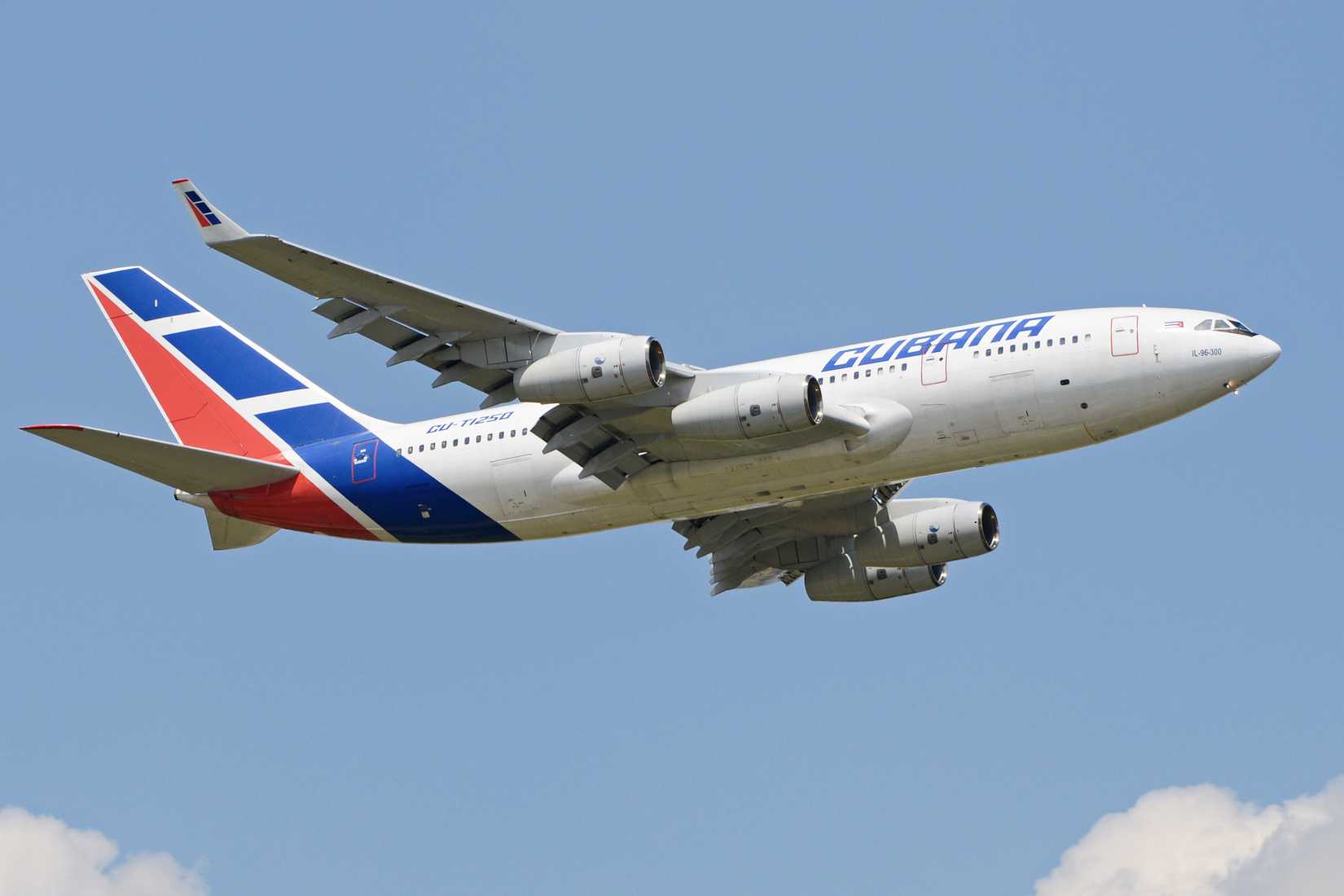
For working pilots and operators outside Russia, this is less a story about a specific airplane than a cautionary tale about the fragility of aviation manufacturing under sanctions and geopolitical isolation. The Il-96's poor reliability history, high operating costs, and four-engine inefficiency made it commercially unattractive even to cash-strapped, sanctioned carriers like Cubana de Aviación, which refurbished and returned one example to service in 2025 only to see the type go unoperational again shortly thereafter. That outcome sends a clear signal: even airlines with no access to new Airbus or Boeing widebodies, and thus strong incentive to make legacy Soviet designs work, cannot make the economics or dispatch reliability pencil out. This matters for flight departments and airline planners tracking global fleet availability, secondary markets, and the used-aircraft ecosystem, particularly in sanctioned or credit-constrained regions where operators may be forced into similar stopgap arrangements involving aging Eastern-bloc types.
More broadly, the Il-96 saga reinforces how consolidated and interdependent the commercial aerospace supply chain has become, with Pratt & Whitney, GE, Rolls-Royce, Honeywell, Collins, and Safran components effectively irreplaceable at scale by any single nation's domestic industry, even one with a legacy design and manufacturing heritage like Russia's. It also offers a data point for the ongoing conversation about COMAC's rise and whether China can achieve genuine supply-chain independence—Russia's experience suggests that decoupling from Western avionics, engines, and systems is an order of magnitude harder than political announcements imply, even for a country with 70+ years of airliner production history. For pilots and dispatchers who may someday encounter Il-96 or Tu-214 variants in charter, VIP, or humanitarian contexts, understanding the aircraft's maintenance history, environmental limitations, and patchwork avionics is essential, as these jets increasingly represent forced-necessity solutions rather than genuinely modernized, dispatch-reliable widebodies.




 Read original article