Why Is Airbus Creating A New A220?
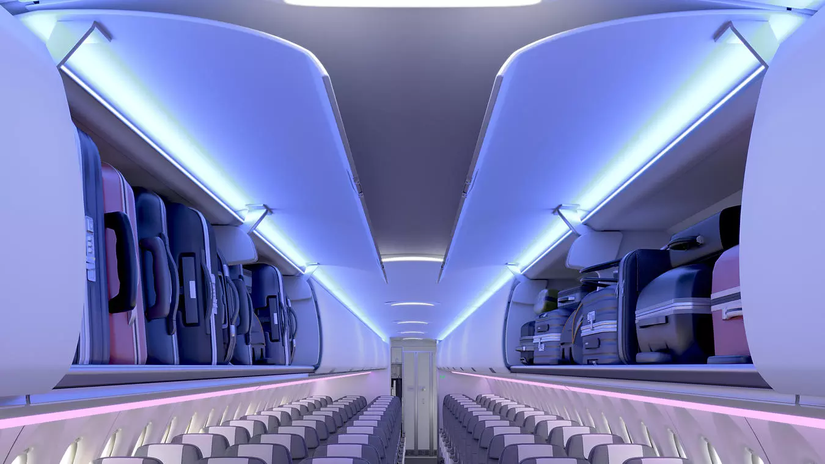
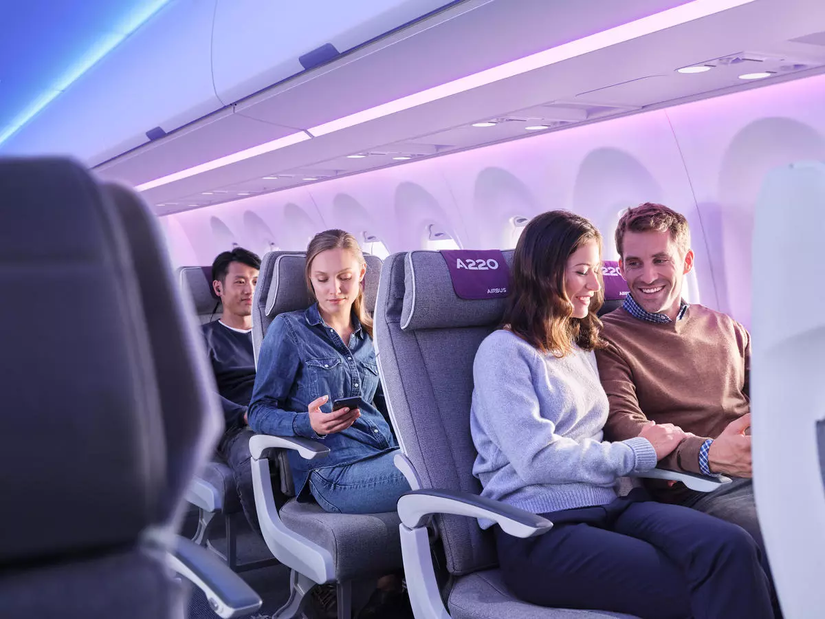
Airbus is not developing an all-new A220 airframe, despite the headline framing—rather, the manufacturer is rolling out a significant cabin overhaul for its smallest jetliner family, bringing the A220 into the Airspace design ecosystem that already spans the A350, A330neo, and A320neo. The upgrade, expected to become available this year with retrofit options for in-service aircraft in coming years, centers on Airspace XL overhead bins that are 20% lighter with 15% more bag capacity, customizable LED mood lighting with 16 million color options, and refined interior styling around the A220's already class-leading windows. Alongside the cabin refresh, Airbus confirmed a higher-density 160-seat A220-300 variant arriving in 2027, a 10-seat increase over current maximum configurations. For an aircraft type still building market share against the Boeing 737 MAX 7 and re-engined regional competitors, this represents Airbus's effort to sharpen the A220's competitive edge on both passenger experience and unit economics simultaneously.
For working pilots, particularly those flying for Delta, airBaltic, Swiss, Air France, JetBlue, and the growing list of regional and mainline operators building A220 fleets, the practical implications extend beyond cabin aesthetics. The redesigned bin mechanisms are engineered with fewer moving parts specifically to improve boarding and turnaround efficiency—a meaningful operational metric on the short-to-medium-haul domestic and regional routes where the A220 is most heavily deployed. Flight crews juggling tight block times on high-frequency city pairs benefit directly when boarding friction from bin closure and gate-checked bags is reduced. The higher-density 160-seat A220-300 variant also signals that airlines will be pushing this aircraft into denser, more mainline-like route economics, which could affect crew scheduling, weight-and-balance considerations, and how the type is positioned relative to A319/A320 assignments within mixed fleets.
The broader significance lies in what this upgrade signals about Airbus's confidence in the A220 program after a rocky financial history. Originally the Bombardier C Series, the A220 struggled commercially before Airbus took a majority stake in 2018, and the program has continued to run at a loss for years despite strong technical performance—25% lower fuel burn per seat than older narrowbodies, a 3,600 nm range on the -100, and fly-by-wire, composite-wing construction that was advanced for its era. With only 17 net orders in 2024 and production still ramping toward a reduced target of 12 aircraft per month (down from 14) amid supply chain constraints, Airbus needs the A220 to become more commercially compelling, not just technically impressive. A cabin experience matching the A350 and A330neo, paired with a higher-capacity variant, is a direct attempt to close the perception and economics gap with Embraer's E2 family and Boeing's smaller MAX variants, both of which compete for the same regional-to-mainline crossover market.
For fleet planners and operators evaluating aircraft for the sub-160-seat segment, this development reinforces a broader industry trend: manufacturers are increasingly using cabin experience and configurability as differentiators once engine technology and range become roughly comparable across competing types. The A220's 10-foot-9-inch cabin width and five-abreast configuration already give it a widebody-like feel in a narrowbody shell, and Airspace integration doubles down on that positioning. With 526 aircraft delivered and a backlog of 581 orders, plus a new program chief taking over amid this transition, pilots and operators should watch whether the upgraded cabin and denser seating option translate into the order momentum Airbus needs to finally push the A220 program toward sustained profitability—a outcome that would likely accelerate fleet growth, new operator entries, and expanded route networks for the type across both mainline and regional carriers.











 Read original article