Inside The Luxurious World Of Michael Jordan's Private Jet
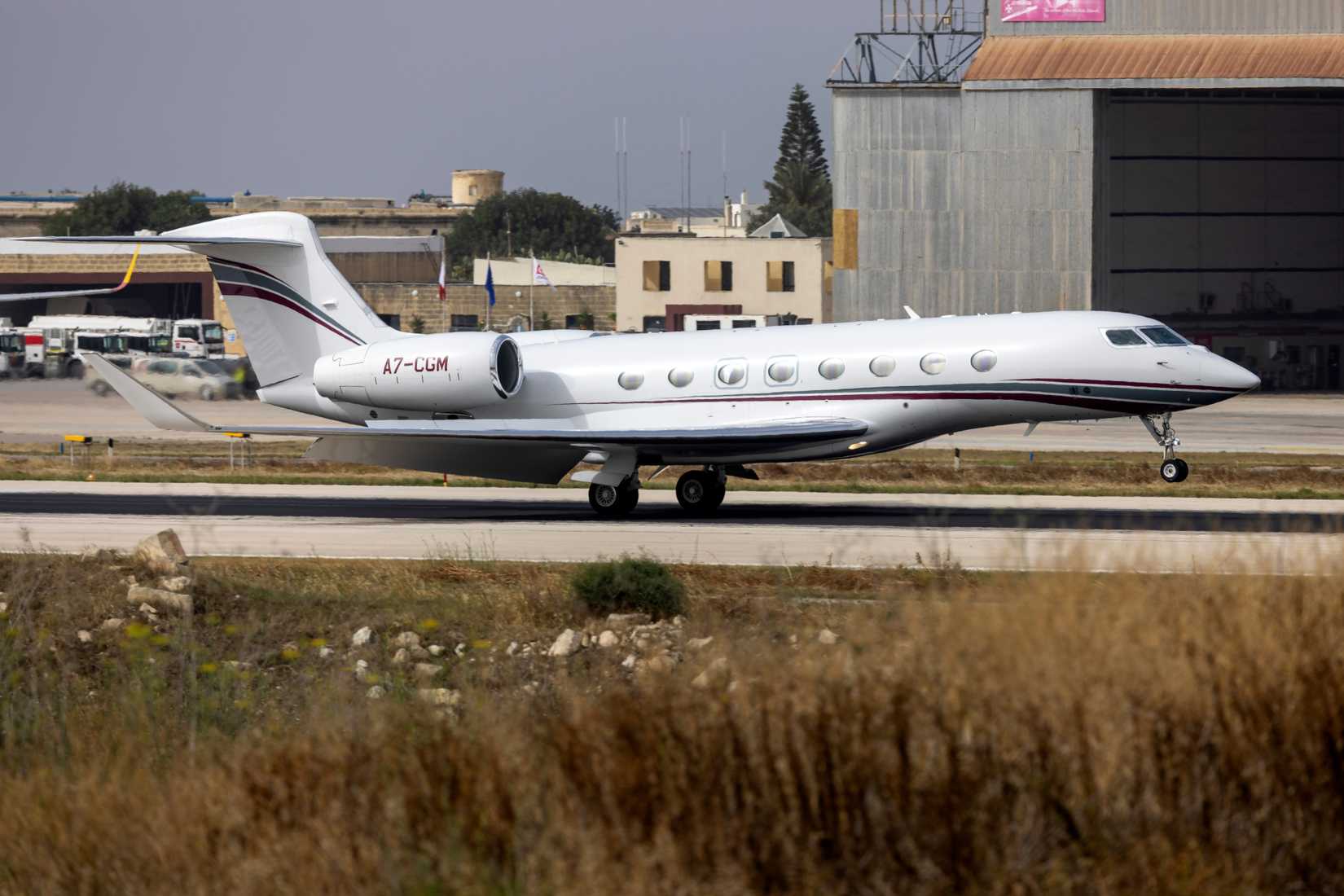
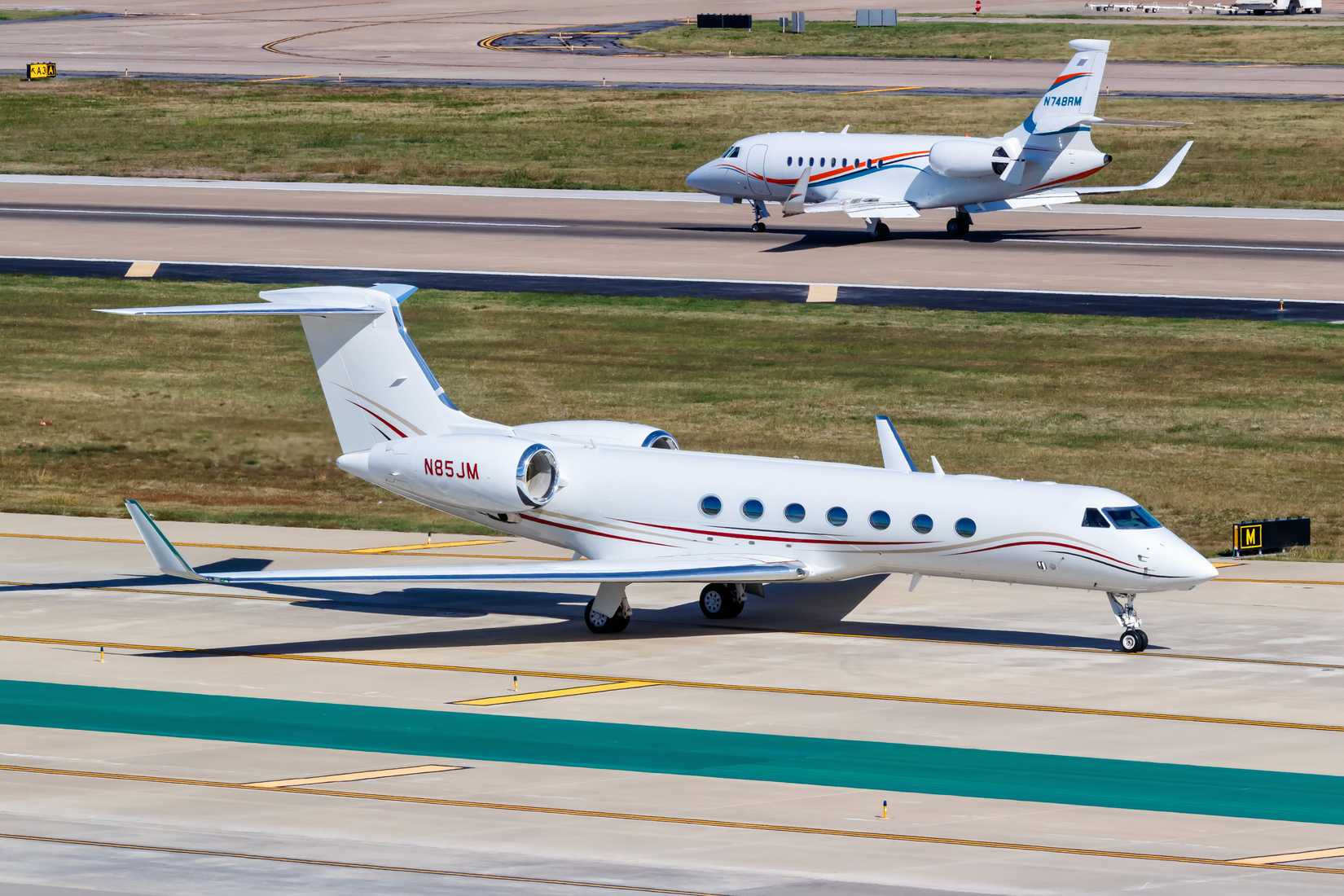
Michael Jordan's 2024 acquisition of a Gulfstream G650ER, registered N236MJ, represents one of the more prominent high-profile deliveries of the type in recent years, coming near the end of the G650ER's production run. The aircraft carries serial number 6579 and features an extensively customized exterior paint scheme commissioned by Jordan, incorporating the elephant-print motif associated with his Air Jordan sneaker line, a bespoke red, black, and grey livery, and the Nike Jumpman logo on the tail. FAA records confirm the deliberate personalization of the N-number itself — 23 for Jordan's jersey number, 6 for his championship titles, and his initials — a practice that reflects the latitude ultra-high-net-worth owners exercise in branding company or personal aircraft. Gulfstream reportedly billed approximately $500,000 for the exterior paint work alone, a figure consistent with complex multi-zone custom liveries on large-cabin business jets.
From an operational standpoint, the G650ER remains one of the most capable large-cabin, ultra-long-range business jets ever certified. Its Rolls-Royce BR725 engines and extended fuel capacity yield a published range of 7,500 nautical miles, enabling nonstop city pairs such as New York to Tokyo or Los Angeles to London without technical stops. The aircraft's 19-passenger maximum capacity and four-zone interior — configurable with dedicated sleeping quarters, a shower-equipped lavatory, conference seating, and crew rest — make it well-suited to the transcontinental and transoceanic mission profiles typical of ultra-high-net-worth individual ownership and large-market charter operations. Flight departments operating G650ERs under Part 91 or Part 91K routinely plan routes that exploit that range advantage, reducing trip times meaningfully compared to midsize or super-midsize alternatives.
The G650ER's production history is directly relevant to current fleet planning conversations across the business aviation sector. Gulfstream introduced the type in 2014 as an evolution of the G650, and the extended-range variant quickly became the production standard. It has since been succeeded by the G700 and G800, both of which expand cabin cross-section, range, and avionics capability while retaining meaningful design continuity with the G650 platform. Jordan's aircraft, being among the final G650ERs delivered, enters service at a point where the pre-owned market for the type is maturing and values are beginning to reflect the G700's availability as a new-production alternative. Charter operators and flight departments evaluating fleet upgrades will increasingly encounter G650ERs on the used market as original owners transition to the newer variants.
The broader trend illustrated by Jordan's acquisition is the continued dominance of Gulfstream in the ultra-long-range large-cabin segment among celebrity and ultra-high-net-worth buyers, a demographic that exerts outsized influence on new aircraft order backlogs and secondary market pricing. The G650ER's pop culture visibility — driven in part by high-profile owners including athletes, technology executives, and entertainers — has reinforced Gulfstream's brand position even as Bombardier's Global 7500 and the emerging Dassault Falcon 10X compete directly for the same mission profile. For corporate flight departments and charter operators, that visibility translates to continued passenger familiarity and preference for the type, which carries meaningful implications for aircraft selection decisions in the Part 135 and Part 91K environments where client expectations shape fleet composition.







 Read original article