How Cabin Lighting Affects The Passenger Experience
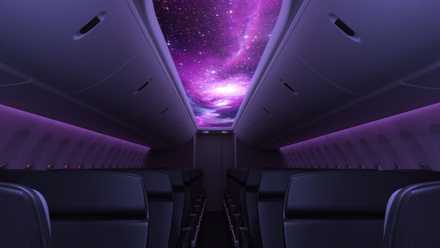
Advanced cabin lighting systems have emerged as one of the most scientifically sophisticated and commercially consequential elements of modern aircraft interior design. What began as basic overhead illumination has evolved into fully programmable, multicolored LED environments engineered to actively manage passengers' circadian rhythms during long-haul operations. Modern LED arrays are capable of shifting color temperature across the full spectrum — from cool, high-Kelvin blue-white tones that suppress melatonin and promote alertness during boarding and meal service, to warm amber and deep indigo gradients that stimulate melatonin production and prepare the body for sleep. Critically, research cited in the field indicates that even brief exposure to high-intensity blue wavelengths during rest phases can delay sleep onset by several hours, meaning poorly sequenced lighting is not merely an aesthetic inconvenience but a measurable physiological stressor that can worsen passenger recovery after crossing multiple time zones.
For flight crews and aircraft operators, this technology carries direct operational relevance that extends beyond passenger satisfaction metrics. Cabin lighting profiles are controlled through the Flight Attendant Panel, where pre-programmed sequences are selected by cabin crew for specific flight phases — boarding, cruise, meal service, and sleep — making lighting management a formal part of cabin service choreography rather than an afterthought. The same circadian-disrupting properties of blue light that affect passengers apply equally to flight attendants working overnight segments and, indirectly, to flight deck crews whose own fatigue management intersects with cabin environment awareness. For Part 135, 91K, and charter operators competing in the ultra-high-net-worth market, the ability to offer customizable LED cabin environments comparable to those found on wide-body airline aircraft represents a tangible competitive differentiator — particularly as business aviation passengers increasingly expect wellness-oriented inflight environments on longer transatlantic or transpacific segments.
The branding dimension of cabin lighting also has strategic implications for operators managing fleet identity and passenger retention. Major carriers have developed proprietary lighting signatures — Virgin Atlantic's violet-and-pink palettes project a lounge-like sensibility, while Emirates' gold and warm white tones reinforce an association with traditional luxury hospitality — demonstrating that lighting functions as a sensory extension of airline brand architecture. For business aviation operators and fractional providers, cabin lighting customization offers an analogous opportunity to communicate brand character and operational quality to discerning clients without structural cabin modifications. The table of color-phase pairings outlined in the source material — ranging from cool blue for boarding through deep purple for overnight cruise and orange-rose gradients for pre-landing waking sequences — provides a practical framework that charter operators and completions houses can reference when specifying or upgrading cabin systems on large-cabin jets.
The broader trend reflected in this development is the aviation industry's accelerating convergence of aerospace engineering, human factors science, and experiential design. Cabin wellness features — including air quality management, seat ergonomics, noise attenuation, and now precision lighting — are increasingly treated as integrated physiological systems rather than independent amenities. For operators who regard cabin environment as a mission-critical variable affecting passenger alertness, mood, and post-flight recovery, advanced LED lighting systems represent one of the highest return-on-investment cabin upgrades currently available, particularly on aircraft regularly operated on routes spanning more than four or five time zones. As LED technology continues to mature and costs decline, the gap between what wide-body commercial operators have deployed for years and what business aviation cabins can offer is narrowing rapidly, making this an active area of investment across virtually every segment of the industry.





 Read original article