Air Force One's Classified Backup: The Secret Aircraft That Follows The President Everywhere
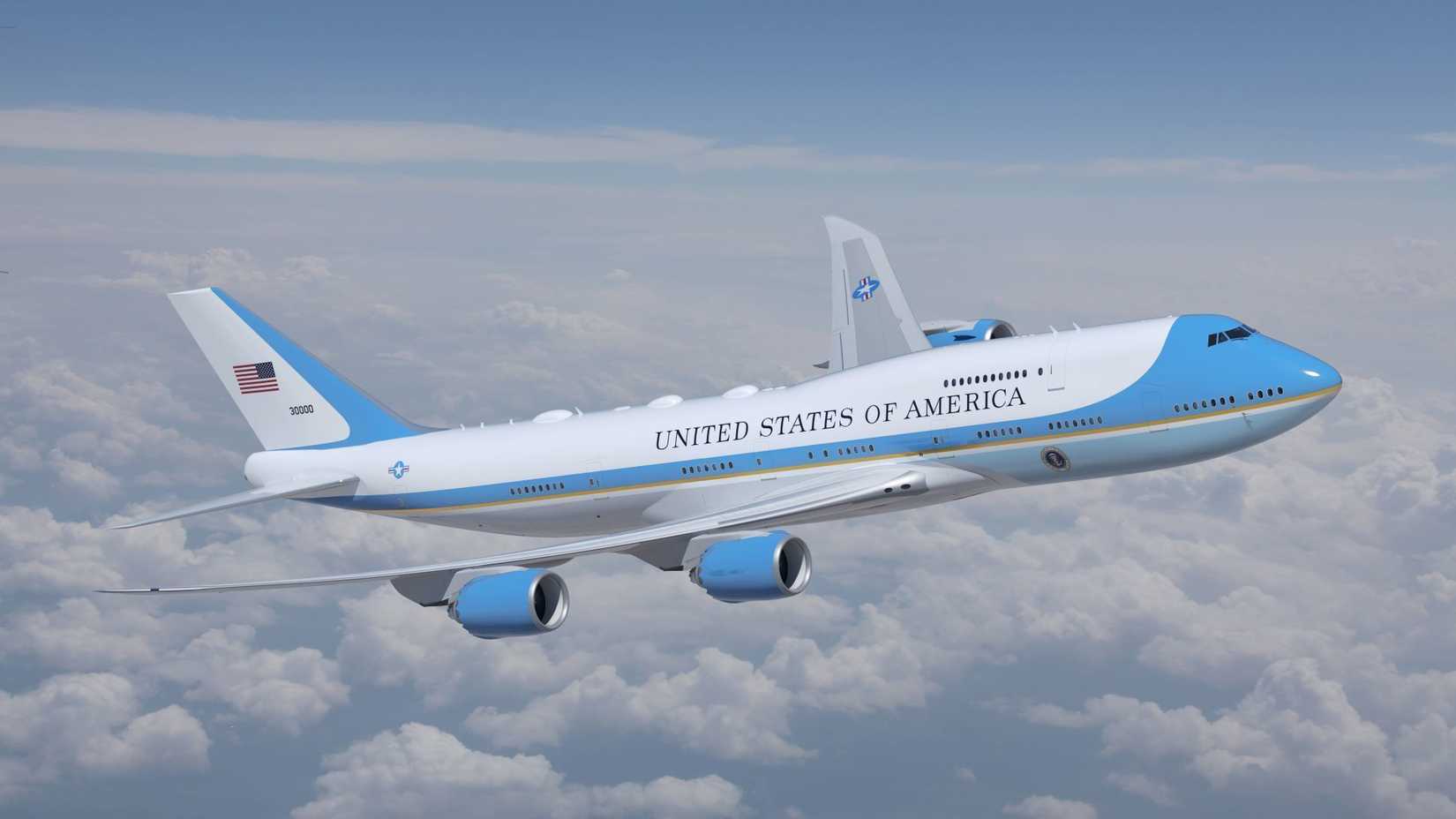
The Presidential Airlift Group operates a substantially larger and more complex fleet than public awareness typically reflects, with the iconic VC-25A Boeing 747-200 representing only one element of a layered transport architecture that routinely deploys eight or more aircraft on international presidential trips. The callsign "Air Force One" applies to any U.S. Air Force aircraft carrying the president — a distinction that carries operational significance, as demonstrated in early 2026 when a minor electrical fault aboard the VC-25A during transit to the World Economic Forum in Davos forced an in-flight transfer to a backup Boeing 757. Similarly, President Biden's 2023 visit to Poland utilized a C-32A rather than the VC-25A, underscoring that the 747s are the primary but not exclusive presidential platform. The full international trip fleet encompasses C-17 Globemasters or C-5Ms for heavy cargo including the presidential limousine and Marine One helicopters, KC-135 or KC-46 aerial tankers, E-4B Nightwatch airborne command posts, Gulfstream C-20Cs and C-37A/Bs for Secret Service and advance elements, C-40C 737s for press and delegation movements, and at least one shadow Boeing 757 shadowing Air Force One at a separate nearby airport.
The shadow fleet of Boeing 757s represents an unusual procurement and operational posture within military aviation. The Air Force publicly acknowledges four C-32As and two C-32Bs, but plane-spotters and investigative reporting have identified at least four additional 757s with registration numbers beginning in 09 — indicating procurement around 2009 — for which no public contracting paper trail or official acknowledgment exists. Boeing ceased 757 production in 2005, meaning the Air Force sourced these airframes from the secondhand commercial market, a practice that parallels its current acquisition of ex-Transaero, ex-Qatari, ex-Lufthansa, and ex-Korean Air 747-8s for the E-4B replacement program. These shadow 757s carry distinctively configured interiors with large seating and conference facilities, serve as presidential backups capable of accessing airports with runway limitations that preclude VC-25A operations, and have reportedly been in presidential service since the Obama administration. Their operational posture — departing shortly after Air Force One, operating from separate airports, carrying no public acknowledgment — reflects a deliberate deception layering strategy intended to complicate adversarial tracking and targeting.
For professional pilots and aviation operators, particularly those working in Part 91K, Part 135, or corporate flight departments serving high-profile clients, the presidential fleet architecture offers meaningful operational context. The practice of operating parallel shadow aircraft at adjacent airports rather than at the primary arrival point is a security methodology employed across VIP transport tiers, and awareness of this pattern is relevant when FBOs, charter operators, or corporate flight departments near major summits or events experience unusual ramp congestion or unexpected NOTAM activity. The C-32A's demonstrated utility for accessing Poland while the VC-25A handled other routing also illustrates how operators managing multi-leg international itineraries with contingency planning treat secondary platforms not as compromises but as integrated mission tools. Pilots operating in airspace near presidential movements should recognize that TFR footprints may encompass coordinated activity across multiple airports simultaneously, with diverse aircraft types operating under the same protective umbrella.
The broader procurement story — a major government operator turning to the secondhand narrowbody market for classified mission-critical transport — reflects a tension that resonates across commercial and business aviation. The 757, widely regarded as one of Boeing's most capable narrowbody designs, has been out of production for two decades, yet demand for its combination of range, runway performance, and cabin volume continues in both the government and commercial sectors. Airlines including United and Delta have maintained and updated their 757 fleets precisely because no direct replacement offers equivalent transatlantic range with single-aisle economics. The Air Force's quiet accumulation of used examples for sensitive missions reinforces the type's enduring operational value and signals the continued thinning of available secondhand 757 airframes on the market. For operators considering 757 acquisitions or MRO planning, the government's parallel demand stream — however opaque — represents a structural factor in fleet availability and pricing that operates largely outside visible market data.











 Read original article