The World's Most Remote Flight Paths: How Far From Mainland Can You Really Fly?
Simple Flying's exploration of the world's most isolated commercial flight paths highlights a critical but often overlooked dimension of long-haul operations: it is not raw distance that defines a route's difficulty, but rather the scarcity of suitable diversion airports along the way. The article draws a clear distinction between ultra-long-haul flights that pass near populated coastlines or island chains and those that venture into truly empty stretches of ocean where ETOPS/EDTO planning becomes the dominant operational constraint. Routes like Los Angeles or San Francisco to Honolulu, at roughly 2,400-2,560 miles, are shorter than many transoceanic services yet arguably more exposed because there are effectively zero usable alternates for hours at a stretch — Midway Atoll and similar Pacific islands exist on paper but lack the runway length, rescue and firefighting infrastructure, or operational approvals to serve as realistic diversions for a modern widebody. The 1989 TWA 767 fuel leak incident cited in the piece, which forced a return to Honolulu with minutes of fuel remaining, remains a touchstone case study in why fuel management and diversion planning on this corridor are treated with such rigor even decades later.
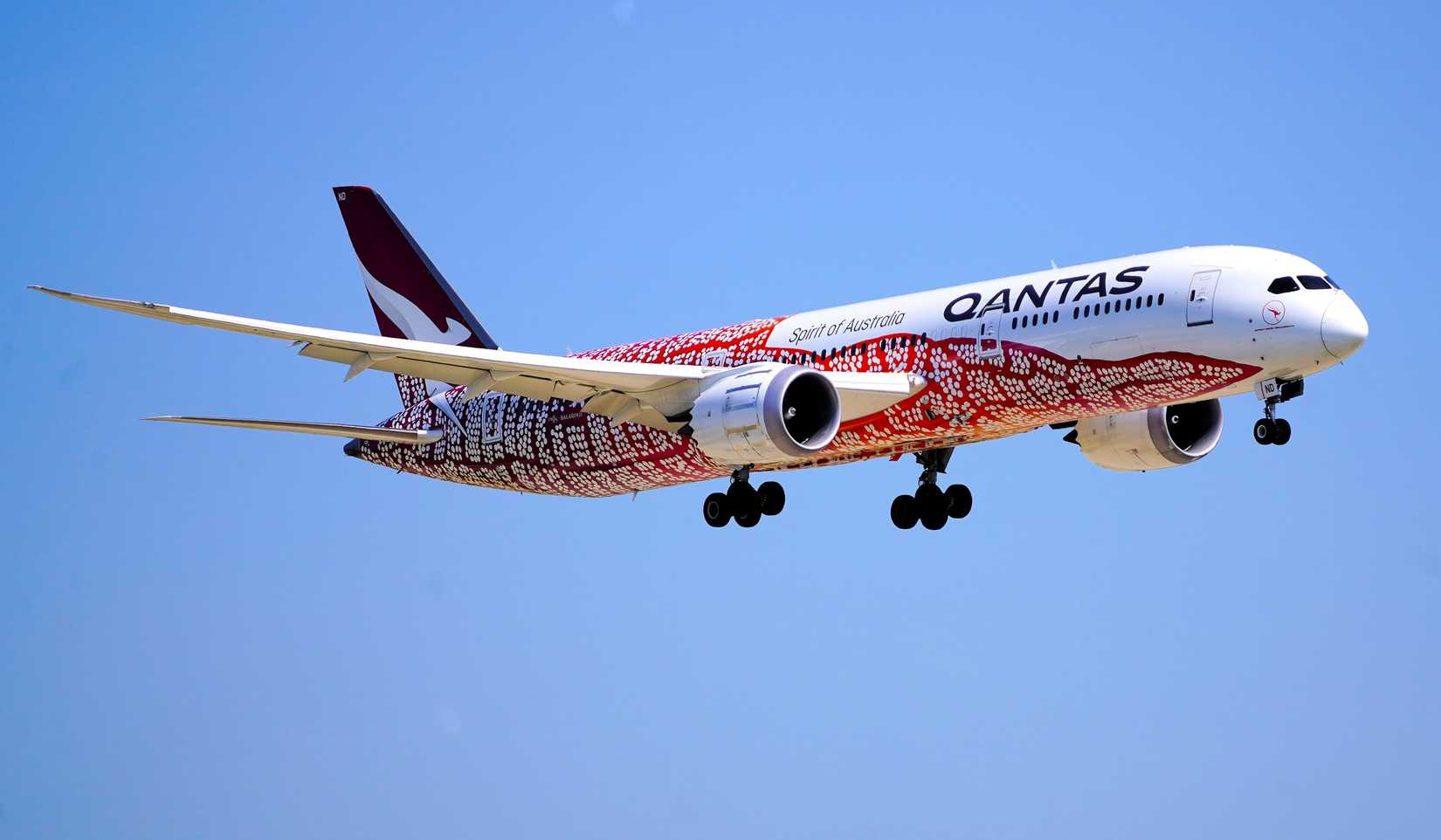
For working pilots, particularly those flying long-haul widebody equipment on Pacific, transpolar, or Southern Ocean routings, this topic is far from academic. EDTO compliance drives real operational decisions every sector: dispatch must identify and continuously validate suitable alternates based on runway length, weather minima, fuel reserves, and emergency services capability before the aircraft ever pushes back, and that picture can change mid-flight if conditions at a planned alternate deteriorate. Crews flying the Sydney-Santiago (QF27/28) or Santiago-Auckland legs, which cross some of the emptiest airspace on Earth with Easter Island offering only marginal utility as an alternate, operate with a much thinner safety margin of options than crews flying, say, a North Atlantic track dense with suitable European and North American diversion fields. Understanding exactly how far the aircraft is from a viable alternate at any given moment — and how that distance interacts with single-engine drift-down performance, MEL items, and medical divert scenarios — is core professional knowledge for anyone flying these routes, not a footnote in a dispatch release.
The broader industry trend this article touches on is the steady expansion of twin-engine ETOPS/EDTO capability, which has fundamentally reshaped which routes are even flyable by which aircraft. Aircraft like the 787, 777, A350, and now the A321XLR have pushed twin-engine diversion times well beyond what was imaginable a generation ago, effectively replacing four-engine aircraft like the 747 and A380 on ultra-long routes that once required that extra engine redundancy as a matter of course. This has commercial implications as much as safety ones: airlines can now serve thin, remote city pairs — Sydney-Santiago, Auckland-Santiago, LA-Honolulu — with more fuel-efficient twins because certification authorities have validated the reliability of modern engines and systems to operate hours from any suitable landing site. For business and general aviation operators eyeing long-range bizjets capable of transoceanic legs, the same principles apply at a smaller scale, where range, single-engine performance, and realistic alternate planning still govern route feasibility regardless of airframe size.
Ultimately, the piece is a useful reminder that "remote" in aviation is a function of infrastructure geography, not just miles flown. As airlines continue to add nonstop routes to increasingly isolated destinations — driven by aircraft range improvements and demand for point-to-point service — the population of flights operating with genuinely no realistic diversion options for extended periods will likely grow. That reality keeps EDTO certification, dispatch alternate planning, and crew fuel discipline squarely at the center of long-haul flight operations, and reinforces why these procedures remain among the most heavily scrutinized areas of regulatory oversight for any carrier operating twin-engine aircraft over the world's largest oceans.










 Read original article