Skydrive Studies Regional EVTOL Applications In Asia
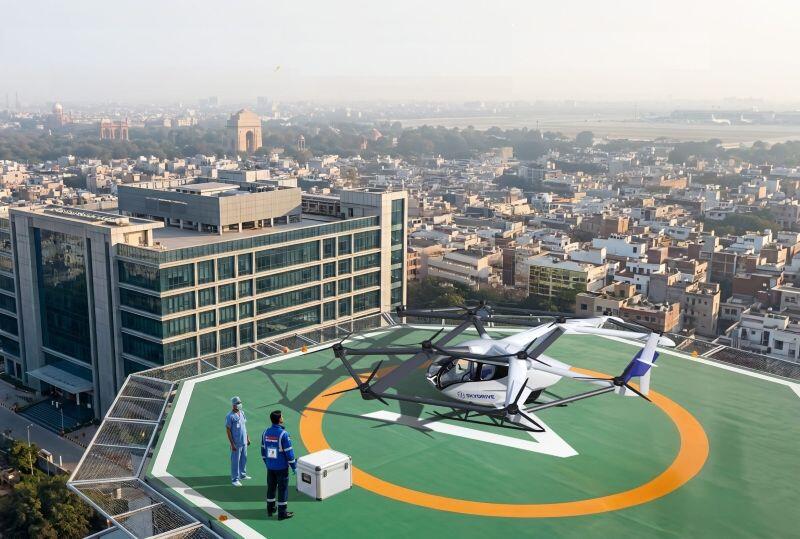
SkyDrive's expanding web of regional partnerships across Taiwan, Thailand, and India signals a maturing strategy for eVTOL market entry that prioritizes application-specific use cases over broad passenger air taxi ambitions. The Japanese startup's SD-05, a piloted two-passenger electric vertical-takeoff-and-landing aircraft, is being positioned for certification and commercial service by 2028, and the company is using this window to lock in operational partners, infrastructure planners, and use-case validation ahead of type certification. The Taiwan agreement with 7A Drones and the Industrial Technology Research Institute is particularly notable because it targets a concrete, underserved need: emergency medical evacuation between Magong City and remote Hujing Island in the Penghu archipelago, where poor weather routinely disrupts interisland transport. This mirrors a broader pattern among eVTOL developers globally, who are increasingly finding that medical and cargo logistics offer a more tractable regulatory and commercial path to revenue than urban passenger transport, which requires higher-density vertiport networks, air traffic integration, and public acceptance that will take longer to develop.
For working pilots, particularly those in rotorcraft EMS, regional charter, or business aviation, these developments matter because they preview where near-term flying jobs and operational models may emerge in Asia-Pacific markets that have been comparatively quiet on eVTOL adoption compared to the U.S., Europe, and China. The SD-05 remains a piloted aircraft, not autonomous, which means SkyDrive's near-term business model still requires trained pilots, likely drawn initially from rotorcraft or fixed-wing backgrounds given the aircraft's VTOL profile and short-route, point-to-point mission set. Operators like 7A Drones, which has already signed a letter of intent for 10 aircraft, will need to build pilot cadres, maintenance infrastructure, and vertiport operations essentially from scratch, creating potential early-mover opportunities for pilots willing to transition into this space. The involvement of established aviation players like Bangkok Airways, which owns and operates three airports and is evaluating eVTOL routes linking Bangkok's city center to Suvarnabhumi International Airport, suggests regional carriers see eVTOL not as a competitive threat but as a feeder or complementary service that could extend their existing route networks and airport real estate value.
The Thailand routes under consideration, connecting Bangkok's urban core to the airport, Sri Racha's Japanese expatriate communities to tourist destinations, and Koh Samui's airport to resort properties, reflect the classic eVTOL value proposition of bypassing ground congestion in markets with severe traffic bottlenecks and strong tourism or business travel demand. This is a pattern being replicated in other congested Asian megacities and tourist economies, where the business case for short-hop, premium-priced air mobility is stronger than in lower-density markets. Similarly, the Air India and Suzuki Motor feasibility study into medical air logistics in congested Indian cities underscores how eVTOL developers are pairing with established automotive and industrial manufacturers, not just airlines, to build supply chains and ground infrastructure. Suzuki's role as SkyDrive's manufacturing partner in India also points to the localization strategies eVTOL makers are pursuing to reduce production costs and navigate import regulations in emerging markets.
Collectively, these partnerships illustrate that the eVTOL industry's path to commercialization is unfolding unevenly across geographies and mission sets, with medical transport and airport-connector routes emerging as the most credible early applications rather than the urban air mobility networks originally hyped by the sector. For aviation operators and corporate flight departments watching this space, the multiplicity of small, regionally tailored deals signals that eVTOL integration will likely happen market-by-market and mission-by-mission rather than through a single dominant global rollout. Pilots and operators in Asia-Pacific, particularly those with EMS, island-hopping, or resort-shuttle experience, should watch SkyDrive's 2028 certification timeline closely, as the company's approach of embedding itself with airlines, automakers, and drone operators well ahead of certification suggests it intends to have operational infrastructure and trained crews ready to scale quickly once the aircraft receives approval.









 Read original article