Solairus buying Clay Lacy's aircraft management and charter, brings fleet to 500 jets | Corporate Jet Investor | CJI news
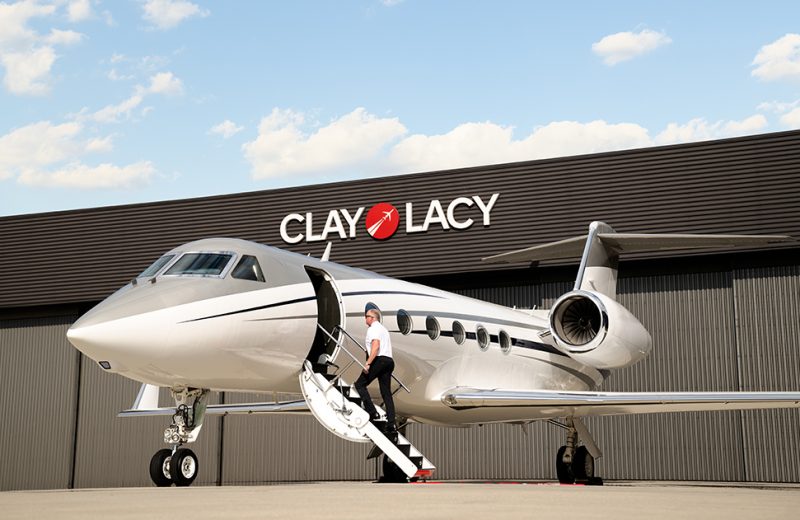
Solairus Aviation's agreement to acquire Clay Lacy's aircraft management and charter operations represents one of the most significant consolidation moves in the business aviation management sector in recent years. The deal, expected to close by September, will combine Solairus's roughly 360-aircraft managed fleet with Clay Lacy's approximately 160 aircraft, creating the first independent aircraft management company to surpass 500 aircraft under management. Notably, Clay Lacy founder Brian Kirkdoffer will retain the company's FBO network, maintenance operations, and real estate holdings, meaning this transaction is narrowly scoped to the management and charter business rather than a full acquisition of the storied Van Nuys-based operator. Clay Lacy, founded in 1968 by aviation pioneer Hershel Clay Lacy—the first person to land a business jet in Los Angeles—has been a fixture of West Coast business aviation for over five decades, making this a notable transfer of a legacy brand's flight operations into a larger consolidator's portfolio.
For working pilots at both organizations, this transaction signals the kind of scale-driven restructuring that has become increasingly common as private equity capital flows into aircraft management. Solairus itself was acquired by Ancient, a PE firm founded by Alexander Klabin that also controls superyacht brokerage Burgess and Sotheby's Financial, back in 2022. That ownership structure underscores a broader pattern: aircraft management companies are increasingly viewed as scalable, cash-flow-generating platforms attractive to institutional capital, not unlike FBO chains or MRO networks that have undergone similar consolidation waves. Pilots employed under Clay Lacy's management umbrella should expect scrutiny of how operating certificates, crew scheduling systems, training programs, and benefits harmonize under Solairus's structure, as post-merger integration in this sector often brings changes to duty rigs, base assignments, and standard operating procedures even when messaging emphasizes continuity.
CEO Dan Drohan's public comments deliberately downplay the "biggest" narrative in favor of framing the deal around cultural alignment and personalized service, language that is standard in aviation M&A but also reflects genuine anxiety in the industry about consolidation eroding the high-touch relationships that owners and charter clients expect. This tension matters operationally: as management companies scale past 500 tails, maintaining consistent safety culture, training standards, and pilot retention becomes harder, even as economies of scale improve access to maintenance vendors, fuel discounts, insurance terms, and charter sales networks. For charter operators and fractional providers competing against this newly enlarged Solairus-Clay Lacy entity—as well as against NetJets, which already commands over 650 fractional aircraft plus 200-plus managed through Executive Jet Management—the deal raises the competitive bar and may accelerate further roll-up activity among mid-tier management companies trying to avoid being squeezed between mega-fleets and boutique operators.
More broadly, this transaction fits into a multiyear trend of consolidation across business aviation infrastructure, mirroring similar moves in FBO ownership (Signature, Atlantic, ATP Flight School networks) and maintenance provider roll-ups. As demand for managed and chartered private jet access remains elevated post-pandemic, capital continues seeking exposure to business aviation's recurring-revenue segments—management fees, charter margins, and maintenance contracts—rather than aircraft ownership itself. For pilots and operators alike, the Solairus-Clay Lacy combination is likely a bellwether for further consolidation among the remaining independent management companies, and it will be closely watched as a test case for whether scale and "personalized service" can coexist at a 500-aircraft-plus level.