Waypoint: FAA’s Rocheleau On Radars, Radios, Fuel & More
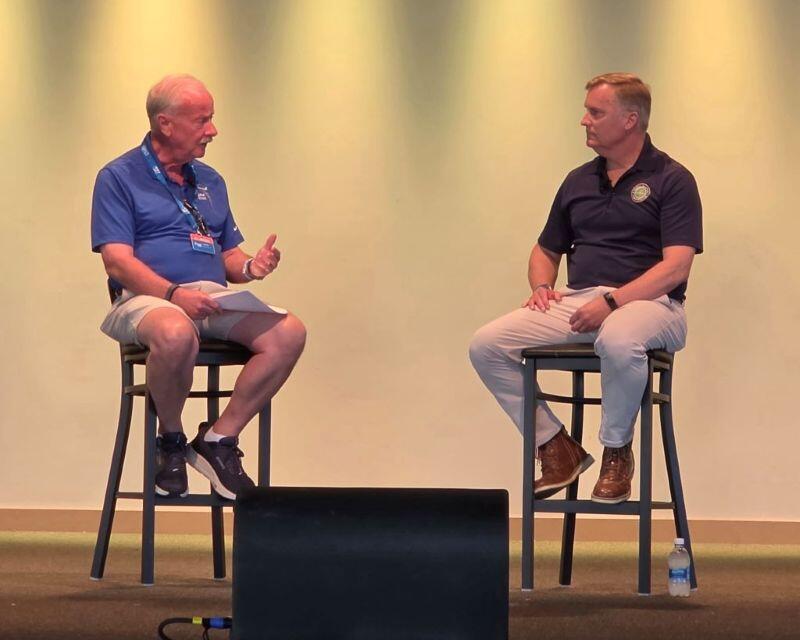
FAA Deputy Administrator Chris Rocheleau used his Meet the FAA forum at EAA AirVenture Oshkosh to lay out the agency's progress on Flight Plan 2026, the organizational and technological overhaul intended to modernize the National Airspace System. Central to that effort is the $12.5 billion Congress has appropriated as a down payment on rebuilding air traffic control infrastructure—replacing aging radars, moving from copper-wire analog systems to fiber optics and cloud-based digital radios, and redesigning airspace to accommodate the surge in eVTOLs, drones and commercial space operations. Rocheleau framed this as essential to maintaining safe, equitable access to the national airspace as new entrants proliferate alongside traditional operators. Notably, the forum occurred just before news broke that Rocheleau is departing the FAA to return to his prior post as NBAA's COO, a role he left when appointed acting FAA administrator by President Trump in January 2025—a leadership transition that adds a layer of uncertainty to how consistently these initiatives will be executed in the near term.
For working pilots, the substance of Rocheleau's remarks touches several operationally relevant fronts. The push toward digital, AI-assisted ATC infrastructure is aimed at improving system resilience and reducing the kind of equipment failures and outages that have plagued facilities like those serving the New York and Newark airspace in recent years. Air traffic controller staffing remains a persistent constraint on capacity and delays industry-wide, and the FAA's stated hiring targets—2,200 new controllers in 2026, climbing to 2,400 by 2028—signal that the current staffing crunch is expected to persist for several more years even under an aggressive recruiting push. Pilots operating in busy terminal airspace, particularly those flying Part 135 and business jet operations into congested Class B facilities, will continue to feel the effects of controller shortages regardless of how quickly modernization funding gets deployed. Rocheleau's citing of 2025's record-low GA fatality rate is a genuine bright spot, but his own caveat—that safety is "a continuous journey" rather than an endpoint—reflects the reality that accident rates can reverse quickly as new aircraft categories and autonomous systems enter shared airspace.
The unleaded fuel transition drew some of the most pointed commentary and is arguably the most consequential near-term issue for piston GA operators. Rocheleau's acknowledgment that the 2030 EAGLE deadline lacks a "drop-and-go system or solution" is a candid admission that the timeline set years ago may not hold as originally structured. His comments suggest the FAA anticipates working with Congress and industry to recalibrate expectations as testing and certification realities become clearer—welcome news for owners and operators of legacy piston fleets who have watched 100LL's regulatory future remain unsettled. EAA CEO Jack Pelton's parallel comments, noting that fuel testing timelines look achievable but that the real bottleneck lies with petroleum refiners' willingness and capacity to retool production and distribution, underscore that the challenge is now industrial and logistical rather than purely technical. Operators should expect 100LL to remain available for the foreseeable future, but the lack of a clear "drop-and-go" replacement means fleet owners, FBOs and fuel suppliers face continued ambiguity in long-term planning.
Broadly, these themes—infrastructure modernization funded by fresh congressional investment, AI integration into both safety analytics and controller decision-support tools, chronic controller staffing deficits, and the slow-moving unleaded fuel transition—represent the defining regulatory and operational currents across commercial, business and general aviation heading into the back half of this decade. The airspace integration challenge Rocheleau described, balancing airliners, business jets, GA aircraft, drones and eVTOLs within the same finite resource, will increasingly shape how flight planning, equipage requirements and airspace access evolve for all operator classes. With leadership at the FAA now in flux following Rocheleau's departure announcement, industry stakeholders including NBAA, EAA and AOPA will be watching closely to see whether the pace of modernization, hiring and fuel-transition flexibility holds steady or stalls amid another transition at the top of the agency.









 Read original article