The state of alternative propulsion aircraft? Part 10. - Leeham News and Analysis
Bjorn Fehrm's tenth installment in Leeham News and Analysis's ongoing alternative propulsion series turns its technical lens on hydrogen combustion in conventional gas turbines, a pathway that diverges sharply from the fuel cell and hybrid-electric architectures examined in prior installments. The series, which applies Fehrm's proprietary Aircraft Performance and Cost Model across takeoff, cruise, and reserve flight phases, has systematically dismantled the near-term viability of battery-electric and serial hybrid architectures before arriving at hydrogen as the most technically credible decarbonization route. Part 10 deepens the analysis of the direct-burn variant, which routes liquid or gaseous hydrogen through a modified combustor in an otherwise conventional gas turbine, preserving the power-to-weight ratio that makes turbine propulsion dominant in commercial and business aviation. The trade-off is a heavier and considerably more complex fuel system compared to Jet-A or SAF-burning equivalents, though the fuel itself is meaningfully lighter on a mass-per-energy basis.
The series arc from battery-electric through hybrids to hydrogen reflects a hard technical reality that working operators should understand clearly. Fehrm's modeling through Parts 3 and 5 established that current battery energy density — approximately one-sixtieth that of jet fuel by mass — makes battery-electric aircraft categorically unworkable for IFR operations above nine seats before 2030 and arguably well beyond. Serial hybrid architectures, analyzed in Part 6, compound inefficiency through the generator-inverter-motor chain, producing economics that cannot approach a Cessna Caravan or SAAB 340, two benchmarks relevant to the regional and commuter markets these aircraft ostensibly target. Parallel hybrids, covered in Part 7, recover some efficiency but still carry production and operating cost premiums that undermine the business case. Hydrogen combustion sidesteps these energy density and conversion-loss problems by keeping the thermodynamic work inside the turbine core, where gas turbines already operate at their highest efficiency.
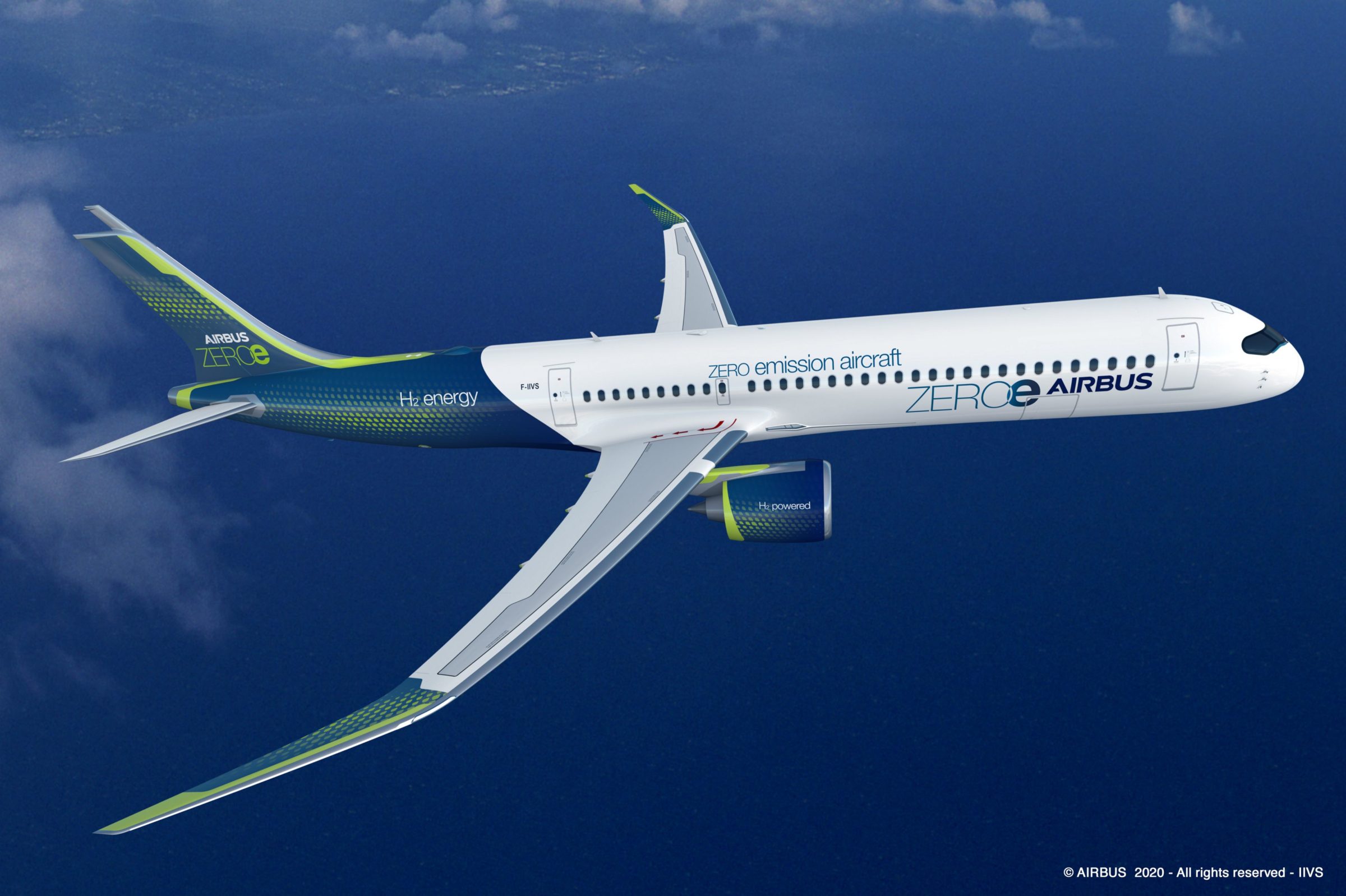
For professional pilots and flight departments operating turbine equipment, the practical relevance of hydrogen gas turbine development lies in its timeline and infrastructure dependencies rather than any near-term cockpit impact. Unlike battery swaps or hybrid powertrains that might appear on new-type or supplemental type certificates within this decade, hydrogen turbines require parallel development of airport liquefaction, storage, and fueling infrastructure at a scale that does not yet exist outside limited demonstration programs. Airbus's ZEROe concept, which the series uses as a benchmark for the fuel cell pathway, illustrates the ambition at the 100-seat airliner level, but that program itself has faced internal Airbus restructuring pressure and timeline revision. The gas turbine combustion variant, by contrast, is more attractive to engine OEMs because it preserves the core architecture of products already in service and in the certification pipeline.
The broader significance of Fehrm's series for operators and aviation businesses is methodological as much as technical. By running each alternative propulsion concept through a consistent performance and cost model against real-world mission profiles — IFR reserves, commuter range requirements, seat-mile economics — the analysis provides a discipline that marketing claims from propulsion startups and airframe manufacturers rarely supply. The consistent finding through ten installments is that no alternative propulsion system yet matches the economics and operational flexibility of current turbine aircraft on commercially meaningful missions, and that hydrogen combustion represents the most credible long-range candidate precisely because it demands the least departure from proven turbine engineering. For Part 91, Part 135, and airline operators evaluating fleet replacement timelines and sustainability commitments, this work reinforces that SAF remains the only operationally mature decarbonization tool available through at least the mid-2030s, and that hydrogen turbines are a serious engineering project rather than a near-term procurement consideration.




 Read original article