Airbus sticks to 2027 EIS for A350F
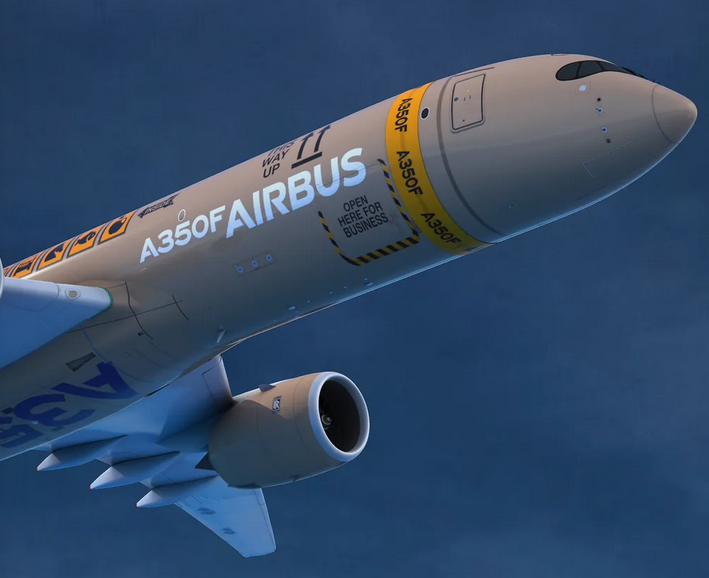
Airbus is holding firm on a second-half 2027 entry-into-service target for the A350F freighter, pushing back against customer chatter suggesting the program could slip into 2028. Crawford Hamilton, the airframer's head of freighter marketing, told the Cargo Facts conference in Nashville that conversations with the chief engineer, deputy program manager, and program manager confirmed the certification basis remains unchanged and that Airbus continues working toward both EASA and FAA requirements on the original timeline. The caveat customers are raising is real, however: the post-737 MAX certification environment has made EASA's review processes more exhaustive across the industry, and any freighter program touching a widebody derivative now faces more scrutiny than pre-MAX baselines assumed. With assembly of the first two A350F airframes underway and first flight targeted for next year, the program is entering the phase where certification timeline risk becomes most visible to customers and lessors trying to plan fleet transitions.
For cargo operators and the pilots who will eventually fly this airplane, the EIS date matters less as an abstract program milestone and more as a fleet-planning and training-pipeline variable. Freight carriers replacing aging 747s, MD-11s, and older 777Fs need certainty on delivery slots to sequence crew training, route certification, and phase-out of legacy equipment. A slip from 2H2027 to 2028 ripples into simulator availability, type-rating scheduling, and the retirement timing of older widebody freighters that operators may otherwise need to extend past planned sunset dates — extensions that carry their own maintenance-cost and reliability tradeoffs. Program-level certification delays of this kind are not new; they tend to compound in the current regulatory climate because EASA and the FAA are both applying lessons learned from the MAX's MCAS failures to any airplane with a new or modified type certificate basis, even when the underlying airframe (in this case, the proven A350-1000) is not new.
The more operationally significant thread in Hamilton's remarks is the Trent XWB-97's on-wing durability, not just its dispatch reliability. He cited reliability above 99.9%, but volunteered that durability and time-on-wing have "fallen well short of promises," particularly for Middle Eastern operators flying in hot, sandy conditions, and to a lesser degree for Cathay Pacific in salt-air environments. This is a distinction working pilots and maintenance planners should track closely: an engine can dispatch reliably in the near term while still degrading faster than expected, driving unplanned removals, shop visits, and spare-engine pool strain. Rolls-Royce's Trent XWB-97 issues echo a broader pattern across the industry — GE's GE9X and Pratt & Whitney's GTF have both faced durability shortfalls tied to high-thrust, high-temperature operating environments — underscoring that modern high-bypass engines optimized for fuel burn are running closer to their thermal and material limits, with maintenance intervals sometimes not keeping pace with promised on-wing life.
For business and general aviation operators, this story is a reminder that certification timelines and engine maturity curves are now materially different from a decade ago, and that applies across categories, not just to widebody freighter programs. Part 91/135 operators evaluating new-generation business jets with derivative or heavily modified engines should expect EIS dates to carry more schedule risk than airframers' initial marketing suggests, and should build contingency into fleet-renewal and training plans accordingly. The A350F situation also illustrates why engine OEM relationships and durability track records deserve as much weight in acquisition decisions as headline fuel-burn and payload figures — an airplane that meets its performance numbers on paper but requires more frequent shop visits than planned will erode the economic case that justified the purchase in the first place. As freighter conversions, new-build widebody freighters, and next-generation narrowbodies all compete for airline capital over the next several years, EIS date credibility and demonstrated engine durability are likely to become the two most scrutinized variables in every RFP.







 Read original article