Iberia Is Flying An Airbus A321XLR To Livestream Today's Total Solar Eclipse From 33,000 Ft
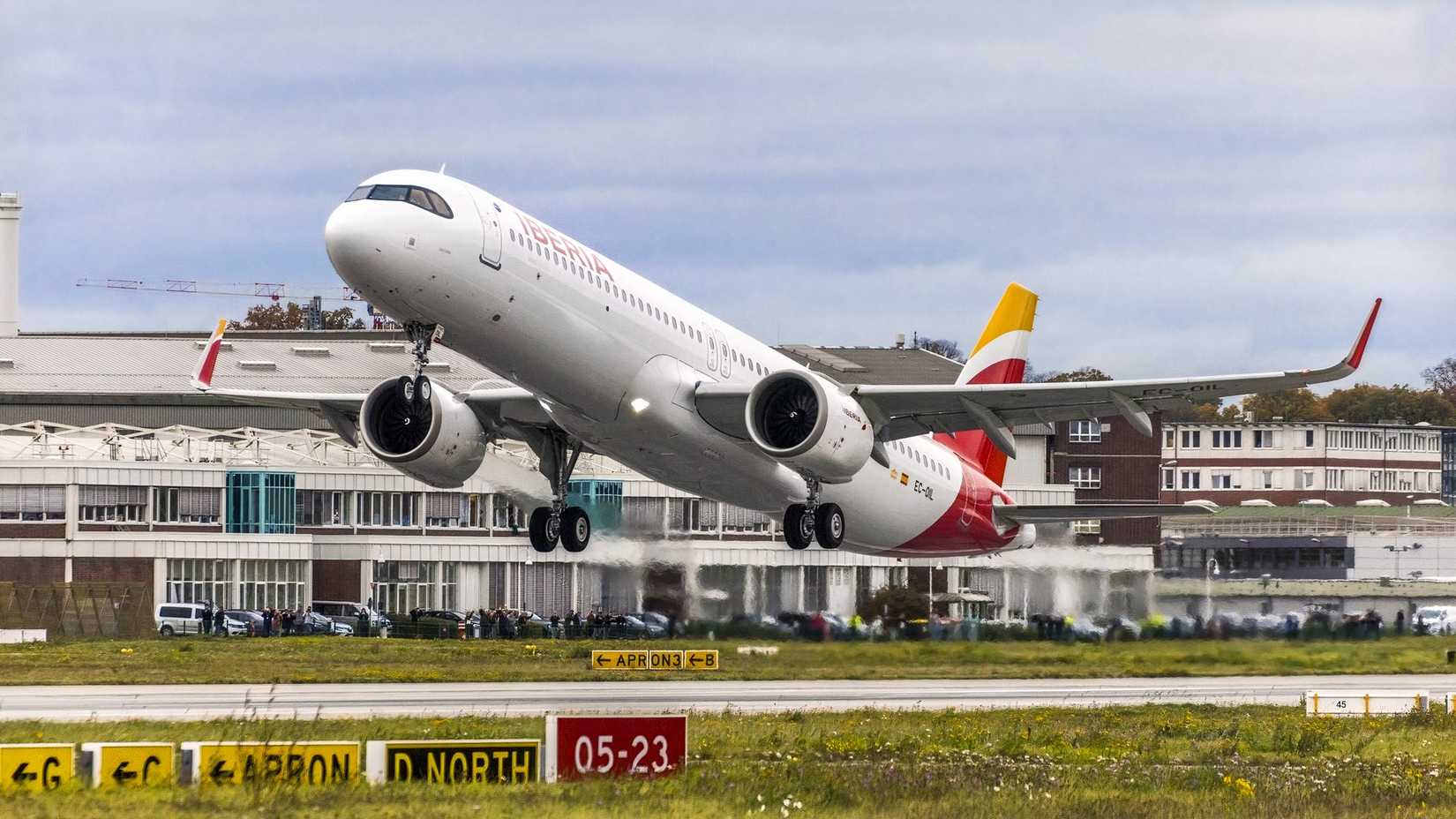
Iberia's decision to fly an Airbus A321XLR into the path of totality for Spain's first total solar eclipse in over a century is a novel demonstration of two converging trends in commercial aviation: the growing operational flexibility of extended-range narrowbodies and the rapid maturation of satellite-based inflight connectivity. Flight IB1473, departing Madrid Barajas at 6:45 PM local time and routing over Palencia province to intercept totality around 8:29 PM, is not a revenue charter but a dedicated science and marketing mission, carrying researchers from the Shelios project as the aircraft functions as an airborne observatory. The symbolic flight number, referencing Copernicus's birth year, underscores how deliberately Iberia has packaged this as both a technical showcase and a public-relations event, livestreamed globally via YouTube and social channels with cockpit GoPro feeds and outward-facing cameras capturing the celestial event in real time from FL330.
For working pilots, the flight is a useful illustration of how far single-aisle aircraft capability has evolved. The A321XLR, which Iberia launched into transatlantic service in late 2024 and has now fully integrated as an eight-airframe fleet, was designed for long, thin routes previously the domain of widebodies. Using the type for a precision-timed, altitude- and route-optimized observation mission—rather than a standard revenue sector—highlights the operational versatility crews now have with this aircraft category, including the routing precision needed to place a fast-moving jet inside a narrow shadow path only minutes wide. Flight planning and dispatch for this kind of mission requires tight coordination with astronomical timing data from agencies like ESA, a level of mission-specific planning more typical of research or military aviation than scheduled airline operations, and it signals how airlines are increasingly willing to repurpose mainline fleet and crews for high-visibility, non-standard missions.
The Starlink angle is equally significant for the industry at large. Iberia's use of SpaceX's Starlink hardware to stream real-time, high-bandwidth video from a moving aircraft at altitude is a practical proof point for IAG's broader connectivity rollout, which will eventually cover more than 500 aircraft across British Airways, Aer Lingus, Vueling and Iberia. For flight crews and IFEC-focused operations teams, this reinforces the trajectory away from legacy Ku/Ka-band air-to-ground systems toward low-earth-orbit constellations capable of supporting live video uplinks, crew communications, and eventually EFB and connected-cockpit applications with far lower latency. As more carriers equip their fleets with Starlink, this kind of stunt flight doubles as a public stress test of bandwidth and reliability under real operational conditions, data that will matter to dispatchers, IT/avionics teams, and airlines evaluating vendor performance.
More broadly, the eclipse has triggered a small but telling wave of special operations across European and North American aviation—Brussels Airlines and a Liege-based ERJ135 charter, UK-based Air Charter Service flights out of Stansted, and NASA's WB-57 high-altitude research flight at 50,000 feet—alongside a documented 25% year-on-year spike in bookings to airports along the totality path. For commercial and charter operators, this reflects a growing niche market around astro-tourism and celestial event charters, comparable to past eclipse-chasing flights over the U.S. in 2017 and 2024. For business aviation and Part 135 operators in particular, these events represent recurring opportunities for premium charter demand tied to precise timing and routing requirements, reinforcing the value of operators who can offer flexible, short-notice scheduling and airspace coordination for niche, high-value missions outside the standard scheduled network.




.jpg?q=70&fit=crop&w=825&dpr=1)


 Read original article