Could The Airbus A220-500 Really Become The A320neo's Biggest Threat?
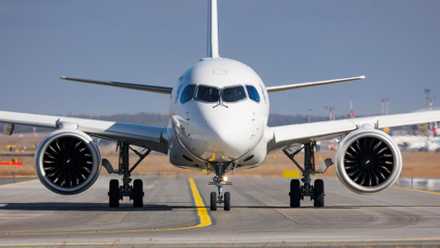
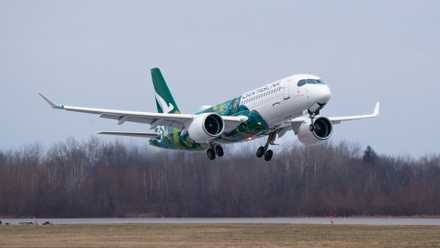
Airbus's internal deliberations over a stretched A220-500 have surfaced a genuine strategic tension at the heart of its narrowbody portfolio, and the implications extend well beyond a single product decision. The A220, inherited from Bombardier's CSeries program, has quietly outperformed expectations in the sub-150-seat segment, and a 180-seat stretch would push it directly into territory currently occupied by the A320neo and, more pointedly, into the space the A319neo was supposed to fill but never did. With fewer than 60 orders, the A319neo has become something close to an orphan variant, and its failure signals that airlines no longer want a shrunken derivative of an aging architecture when a clean-sheet, more efficient alternative exists. For fleet planners, that distinction matters: unit economics and cabin efficiency are increasingly winning out over the traditional appeal of commonality within a single family.
For working pilots, particularly those flying for carriers with mixed A220/A320 fleets or eyeing future type ratings, this debate has direct relevance to training pipelines, crew bidding structures, and long-term fleet planning. An A220-500 with meaningfully different systems, engine architecture, or handling characteristics from the A220-300 could complicate the common-type-rating logic that has made the A220 attractive to carriers like Delta and Air France in the first place. Conversely, if Airbus opts for a simple stretch that preserves commonality with the -300, it reinforces the A220 as a low-cost, high-commonality growth path for operators, which has downstream effects on pilot staffing models, reserve pools, and cross-fleet flying opportunities. The tug-of-war between a quick, low-cost stretch versus a re-engineered variant with preserved range is not just an engineering question — it determines whether pilots see a genuinely new type or an evolution that slots neatly into existing operating specs and training programs.
The production and reliability angle deserves particular attention from operators and maintenance planners. The A220 program only recently emerged from a prolonged AOG crisis tied to Pratt & Whitney PW1500G durability issues, and Airbus is understandably cautious about layering a new variant onto the Mirabel line before the current rate of 12-14 aircraft per month proves durable. This is a familiar pattern in commercial aviation — Boeing's 737 MAX and 777X programs have both illustrated the risks of rushing derivative aircraft to market before the baseline platform has demonstrated production and reliability maturity. Airlines currently holding A320neo or 737 MAX orders booked into the 2030s are watching closely, since any credible A220-500 program gives them leverage in slot and pricing negotiations regardless of whether the aircraft ever launches. That dynamic — using a theoretical aircraft as a bargaining chip — is itself a broader trend in the current OEM duopoly environment, where order backlogs are so deep that manufacturers' internal roadmap decisions have become de facto pricing tools for airline procurement teams.
More broadly, this situation reflects a maturing narrowbody market where the traditional 100-to-230-seat continuum, once neatly divided between regional jets and mainline single-aisles, is being reshaped by more efficient engines and composite structures that make larger regional-heritage aircraft viable competitors to established mainline platforms. Embraer's E195-E2 has already demonstrated demand at the upper end of the regional segment, and Airbus's hesitation partly reflects a defensive calculation to avoid ceding that ground. For corporate flight departments and Part 91/135 operators, the ripple effects are less immediate but still notable: a shifting narrowbody landscape influences used aircraft values, parts and engine support ecosystems, and the broader trajectory of PW1500G versus CFM LEAP-1A competition, all of which shape long-term costs across adjacent aviation sectors. Whether or not Airbus ultimately launches the A220-500, the debate underscores how thin the margins have become between protecting a legacy cash-cow program and embracing the next generation of narrowbody efficiency.









 Read original article