How This 94-Seat Premium Economy Cabin Is Breaking The Ultra-Long-Haul Product
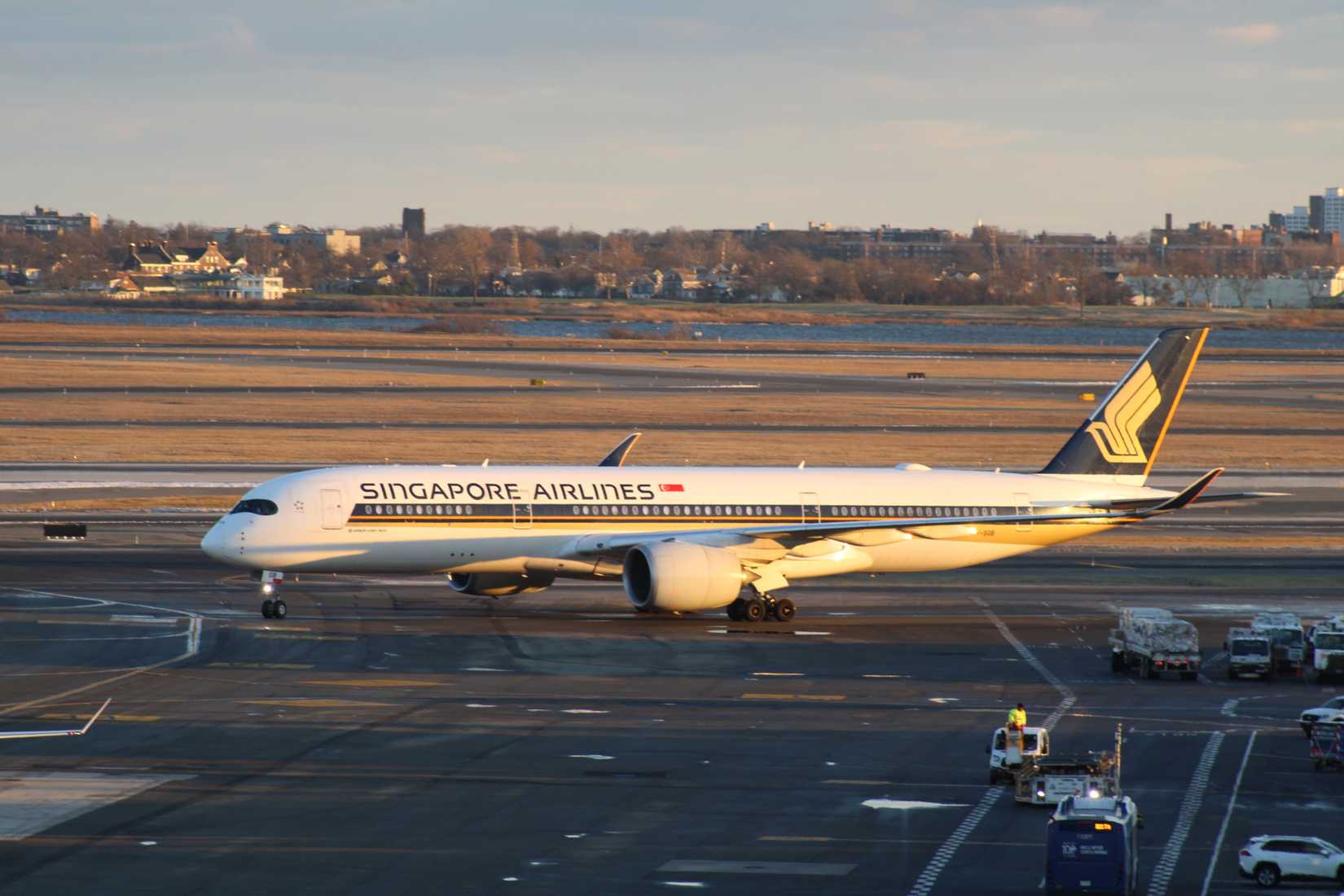
Singapore Airlines' New York–Singapore route (SQ23/SQ24), operating at roughly 18 hours as the world's longest scheduled commercial flight, has become a case study in the operational limits of ultra-long-haul (ULH) cabin design. The Airbus A350-900ULR fleet flying this route carries no traditional economy class, instead offering 67 business class and 94 premium economy seats. While the premium economy hard product itself—38 inches of pitch, 19 inches of width, integrated calf and footrests, and a genuine 2-4-2 layout with a pay-to-convert double-seat option—is well regarded by reviewers, the supporting infrastructure has not scaled with cabin density. A single galley and three lavatories serving 94 passengers over 18 hours has produced documented friction points: crew and passengers colliding near a curtained galley entrance, cramped rear-row seating (notably row 43), and lavatory queues that become materially more disruptive on ULH sectors, where bathroom visits run longer and coincide with critical sleep windows.
This matters to working pilots and flight crews beyond the passenger-experience narrative because cabin layout and servicing constraints directly affect crew workflow, turnaround coordination, and in some cases safety-adjacent considerations like aisle obstruction during turbulence or emergency egress on marathon sectors. Flight and cabin crews operating ULH routes already contend with elevated fatigue-management requirements, augmented crewing, and rest-facility logistics; a cabin that funnels 94 passengers through one galley and three lavatories compounds crew workload during service and adds friction to cabin surveillance duties. For operators and network planners, the Singapore Airlines case is becoming a cautionary data point as more carriers pursue sub-19-hour-range aircraft (A350-900ULR, A321XLR, and now the A350-1000ULR) to open new city pairs—design decisions made for aircraft flying 10-12 hour missions don't automatically translate to 17-plus-hour missions, and retrofitting after entry into service is costly.
Qantas' Project Sunrise, using the A350-1000ULR for nonstop Sydney-London and Sydney-New York service, represents a direct response to these lessons. Rather than maximizing seat count within available cabin space, Qantas is allocating real estate to a dedicated "Wellbeing Zone" positioned between premium economy and economy, featuring hydration stations, guided-movement video programming, and ergonomically sculpted surfaces with integrated handles for in-flight stretching. With only 40 premium economy seats (versus Singapore's 94) and a broader four-class configuration spreading 238 passengers across six first suites, 52 business suites, premium economy, and 140 economy seats, Qantas is deliberately trading density for circulation space and passenger movement—a tacit acknowledgment that sustained immobility and service bottlenecks are the real threats to ULH viability, not seat comfort alone.
The broader trend here reflects a maturing understanding across the industry that ultra-long-haul routes are a distinct operating category requiring purpose-built cabin philosophy rather than scaled-up long-haul design. As Airbus's A350-1000ULR and Boeing's 777-9 extend the addressable range for nonstop city pairs, and as more carriers—particularly Australasian and Gulf operators—chase records for flight duration, the industry is moving toward wellness-oriented cabin architecture: dedicated stretch zones, self-service hydration, and lower seat density in premium cabins. For corporate and airline pilots monitoring fleet planning and route development, this signals that future ULH aircraft orders will increasingly weight non-revenue cabin space as a competitive and operational necessity, influencing everything from galley and lavatory ratios to crew rest module placement and overall aircraft weight-and-balance planning on missions where every design tradeoff is amplified by 15-plus hours aloft.




 Read original article