The Real Reason Why The KC-46 Pegasus Became Both Essential & Deeply Troubled
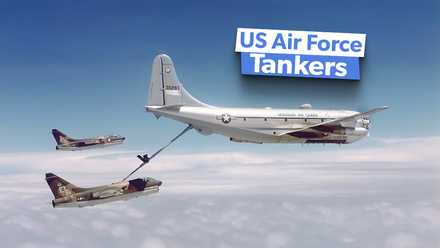
The KC-46 Pegasus program illustrates a stark reality confronting the US Air Force's tanker fleet: an aging KC-135 Stratotanker force, some airframes now approaching seven decades of service, has become a genuine safety liability, while its replacement remains mired in cost overruns, technical defects, and program uncertainty. The core issue with the KC-46 has long centered on its Remote Vision System, the camera-and-sensor suite that boom operators use to guide refueling contacts, which has produced depth-perception distortions leading to boom strikes on receiver aircraft. Boeing is now pursuing a Boom Telescope Actuator Redesign intended to reduce the force of boom contact and make the system safe across the full spectrum of USAF airframes, from lightweight fighters to heavy bombers. That fix, still not complete, has come at enormous financial cost to Boeing, which booked a $565 million loss on the program in Q4 2025 alone, adding to billions in cumulative losses since the fixed-price contract was awarded in 2011.
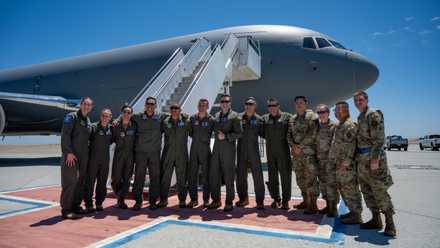
For working pilots and crews, particularly those in the tanker and mobility community, this story is not abstract. Boom operators and receiver pilots have had to operate around known RVS limitations for years, and the slow pace of certification for expanded refueling compatibility (including probe-and-drogue operations for Navy, Marine Corps, and allied receivers) has constrained operational flexibility. Meanwhile, KC-135 crews continue flying an airframe with documented structural fatigue issues and recent midair mishaps, raising legitimate concerns about airworthiness margins on a fleet never designed for indefinite service life. The tension between "known-flawed but modern" and "reliable-on-paper but genuinely aging" airframes is a live operational risk calculus for aircrews, maintainers, and mission planners, not just a procurement debate playing out in budget hearings.
The broader significance extends into fleet modernization trends across military and, by extension, commercial aviation. The KC-46's multi-mission design philosophy, quick reconfiguration between cargo, aeromedical evacuation, passenger transport, and refueling, reflects a broader shift toward multirole platforms that maximize aircraft utilization rates, a concept familiar to commercial operators managing widebody fleets for cargo/pax swing capacity. The 767 airframe lineage also underscores how derivative commercial platforms continue to serve as the backbone of military logistics, similar to the KC-135's own 707 heritage, meaning commercial pilots transitioning to military contracts or reserve/guard units retain some airframe familiarity even as mission systems diverge sharply.
Perhaps most consequential for long-term industry watchers is the funding gap exposed around the Next Generation Air-refueling System (NGAS). With only $12.9 million requested for NGAS concept refinement in the FY2026 budget, and senior leaders like retired General Mike Minihan publicly criticizing the disparity between tanker investment and other line items, the Air Force faces a credibility gap in its stated pivot toward great-power competition in the Indo-Pacific. A stealth or low-observable tanker capable of supporting B-21 and F-47 operations in contested airspace is widely seen as operationally necessary, yet the funding trajectory suggests that gap won't close soon. For pilots and planners across the mobility, bomber, and fighter communities, this means continued reliance on non-stealthy tankers operating farther from the fight, or accepting risk by pushing legacy platforms closer to contested airspace, a strategic vulnerability that shapes tactics, basing decisions, and force protection planning for years to come.










 Read original article