SkyAccess CEO on realising the empty leg opportunity
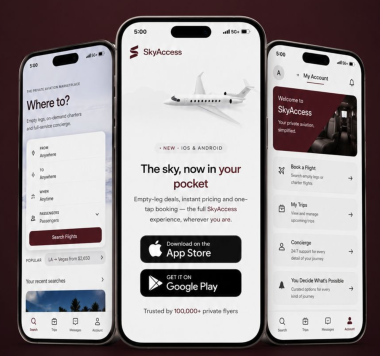
SkyAccess, an online marketplace launched to democratize access to empty-leg private jet flights, has reached 400 active operators and roughly 230,000 active users just 17 months after founding. CEO Daniil Buriev's core thesis is that private aviation's exclusivity was never really about affordability but about access—empty legs, which account for roughly four in ten private flights (over one million passenger-less movements annually), have historically been hidden behind broker networks and informal WhatsApp distribution rather than being unavailable to a broader market. The platform operates on a two-sided free model, charging only a dynamic, Airbnb-style service fee baked into the displayed price, with revenue predicated on volume rather than margin per transaction. Notably, SkyAccess absorbs pricing discrepancies caused by operator-side changes out of its own fee rather than passing them to the customer, a design choice aimed at building trust in a market segment long plagued by unreliable inventory.
For working pilots and charter operators, the significance lies in how SkyAccess attempts to solve the structural problems that have killed previous empty-leg marketplaces: stale inventory, high cancellation rates, and pricing that fails to account for real billable duration and repositioning costs. The platform's reliability scoring system—grading each operator's listings out of 100 based on whether bookings actually go as advertised—and its real-time FMS synchronization directly target the "AOG by the time you see it" problem that has undermined trust in online empty-leg booking for years. The introduction of instant-book functionality for high-scoring operators (above 500 bookings and a 95+ reliability score) signals a maturation point where enough transaction data exists to automate trust decisions, a milestone few prior platforms reached before folding. For Part 135 operators still managing empty-leg sales through manual spreadsheets and daily WhatsApp blasts, this represents both a competitive threat and a potential revenue channel, since SkyAccess requires only an active Part 135 certificate and visible safety certifications, plus a public two-way review system that lets travelers rate crew, aircraft condition, and communication in ways brokers traditionally have not exposed.
This development sits within a broader trend of technology-driven disintermediation in business aviation, echoing earlier waves of jet-card and on-demand charter apps (Wheels Up, XO, Villiny, JetSmarter's ill-fated run) that tried and often failed to modernize a famously relationship-driven, opaque industry. What differentiates SkyAccess's pitch is its explicit acknowledgment of past failures—stale listings, poor cancellation transparency, and pricing that ignored actual operational costs—and its attempt to engineer around them with algorithmic matching ("for you" recommendations), dynamic real-time pricing, and operator-specific cancellation-rate tracking that can pull unreliable listings from the platform entirely. For flight departments and charter operators evaluating distribution channels, the emergence of a free-to-list, fee-on-booking model with FMS integration could reduce reliance on broker networks and manual scheduling communications, potentially improving aircraft utilization economics on otherwise dead-leg repositioning flights. Whether SkyAccess avoids the "graveyard" of prior empty-leg marketplaces will likely hinge on whether its reliability infrastructure can scale with operator growth without the trust erosion that doomed earlier platforms—a test that mobile app rollout and instant-booking adoption will make visible over the coming flight seasons.