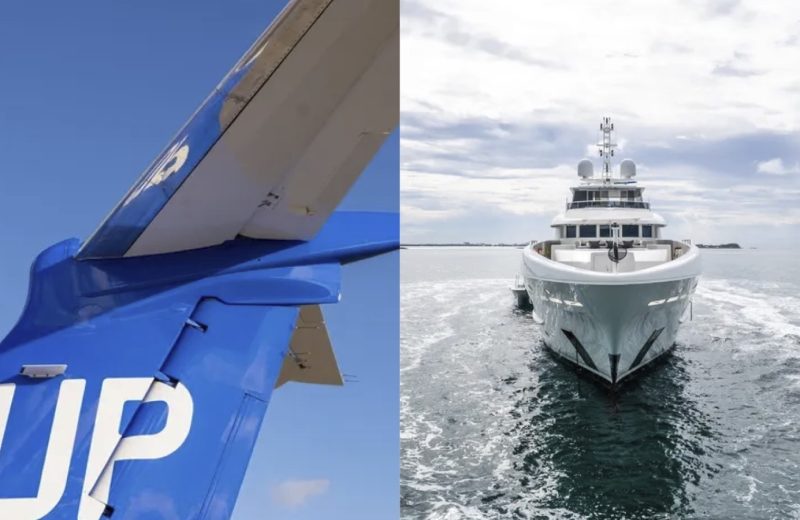
Wheels Up, Fraser Yachts team up for jet-to-yacht journeys
Wheels Up has partnered with Fraser Yachts to create an integrated jet-to-yacht travel offering, giving Wheels Up members preferred charter rates and access to Fraser's network of more than 240 yachting specialists and a fleet exceeding 2,300 luxury yachts worldwide. The arrangement pairs on-demand private aviation with high-end yacht charter services, positioning both brands to capture clients who view travel not as discrete transactions but as continuous, curated experiences. For Wheels Up, this represents a lifestyle-ecosystem play rather than a purely operational one, an attempt to extend its brand relevance beyond aircraft charter and membership flying into adjacent luxury verticals.
For working pilots and flight departments, the significance of this deal lies less in aircraft operations and more in what it signals about the private aviation business model. Wheels Up has spent the past several years restructuring after financial distress, a change in ownership involving Delta Air Lines and Certares, and a management overhaul under CEO George Mattson. Partnerships like this one with Fraser Yachts are low-capital, high-visibility ways to differentiate a membership program in a crowded charter and fractional market without adding fleet, crew, or maintenance overhead. Pilots flying for Wheels Up or similarly structured programs should note that these lifestyle tie-ins are increasingly used to justify membership pricing and retention, which indirectly affects flight volume, scheduling patterns, and the destinations frequently requested by clients, particularly coastal and island markets near major yachting hubs like the Mediterranean, Caribbean, and South Florida.
More broadly, this deal reflects a trend across the business aviation and luxury travel sectors toward bundled, concierge-style offerings. Fixed-base operators, charter brokers, and fractional providers have been building alliances with hospitality, real estate, and now yachting brands to position private jet travel as one node in a broader network of premium mobility. NetJets, Flexjet, and other operators have pursued comparable partnerships with hotel groups and lifestyle brands, underscoring that customer acquisition in this space increasingly depends on experiential ecosystems rather than aircraft specifications alone. For flight crews and operations teams, this trend translates into growing expectations around service integration, itinerary complexity, and coordination with third-party logistics providers at both ends of a trip.
Finally, the partnership illustrates how private aviation companies are working to insulate themselves from cyclical demand by diversifying revenue touchpoints and deepening customer relationships beyond the flight itself. As Wheels Up continues stabilizing its financial position, initiatives like this generate marketing value and ancillary revenue opportunities without requiring capital-intensive fleet expansion. Corporate flight departments and charter operators watching the competitive landscape should expect more of these cross-industry alliances, as operators increasingly compete on total travel experience rather than solely on aircraft availability, safety record, or price per flight hour.