How Pratt & Whitney Traded The Widebody Engine Market For Narrowbody Dominance
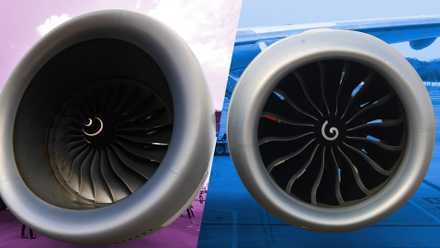
Pratt & Whitney's retreat from the widebody engine market represents one of the more consequential structural shifts in commercial aviation propulsion over the past two decades, even though it unfolded gradually enough to escape the level of scrutiny given to the company's more publicized geared turbofan durability issues. Where the PW4000 family once competed directly against GE and Rolls-Royce across the Boeing 777, 767, 747, and Airbus A330/A310 programs, every newly launched widebody today — the A350, A330neo, 787, and 777X — is powered exclusively by either Rolls-Royce or GE Aerospace. Fleet data cited from Cranky Flier underscores how thin Pratt's widebody position had already become before this generational shift: just 81 of 629 active 777-200/-200ER/-300 aircraft fly on PW4000 engines, versus roughly 70% GE and 18% Rolls-Royce. That imbalance foreshadowed a strategic retreat rather than a sudden exit.
For working pilots and flight operations groups, this consolidation matters less at the stick-and-rudder level and more in terms of fleet planning, maintenance economics, and the broader operating environment airlines will negotiate within for the next 20-30 years. Exclusive engine arrangements — Rolls-Royce's Trent XWB on the A350, Trent 7000 on the A330neo, and GE's GE9X on the 777X — eliminate the airline's ability to shop between manufacturers on price, MRO support, spare-engine availability, and long-term service contracts. Historically, three-way competition among GE, Pratt, and Rolls-Royce gave carriers real leverage during aircraft acquisition; that leverage has narrowed considerably. Pilots flying for airlines locked into single-source widebody engine programs will increasingly see maintenance scheduling, engine swap logistics, and even route planning shaped by whatever capacity constraints or supply chain issues affect that sole manufacturer — a dynamic already visible in GE9X production delays tied to 777X certification timelines and in Trent 1000/Trent 7000 durability issues that have periodically grounded aircraft or forced power-limited operations.
The flip side of this story is Pratt & Whitney's near-total pivot toward narrowbody dominance through the PW1000G geared turbofan family, which now powers the A220, a significant share of the A320neo family, and Embraer's E2 jets. This is a deliberate reallocation of engineering and capital resources toward the highest-volume segment of commercial aviation — single-aisle aircraft — rather than a failure to compete in widebodies. For narrowbody operators and pilots, this has meant grappling with the GTF's well-documented durability and powder-metal contamination issues, which triggered widespread fleet groundings, extended shop visits, and AOG situations across A320neo-family operators worldwide. The tradeoff Pratt made — betting on geared architecture's fuel-burn advantages at the cost of shouldering higher near-term reliability risk — has had operational ripple effects felt directly by crews dealing with aircraft availability and dispatch reliability.
Broadly, this widebody duopoly reflects a maturing pattern across commercial aviation where engine OEMs increasingly specialize rather than compete head-to-head across every segment, mirroring similar consolidation pressures seen in airframe manufacturing itself. For airline planners, business aviation OEMs, and pilots alike, the takeaway is that engine choice is becoming less a matter of competitive selection and more a fixed variable baked into airframe programs years before delivery. That shift raises the stakes on OEM reliability, supply chain resilience, and long-term parts/support availability — factors that increasingly influence which aircraft types operators choose to fly, and how much operational risk crews and maintenance teams must absorb when a single engine manufacturer effectively controls an entire aircraft program's propulsion destiny.




.jpg?q=50&fit=crop&w=32&h=32&dpr=1.5)





 Read original article