Embraer's KC-390 Has Now Won Orders From 5 NATO Air Forces As A C-130 Replacement — But The USAF Still Won't Touch It
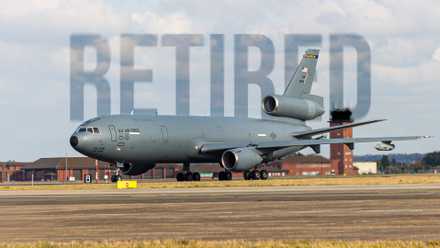
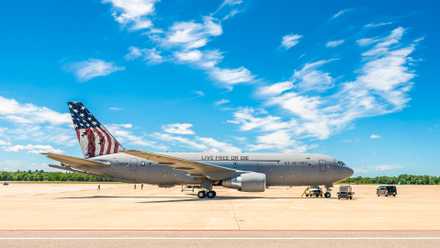
Embraer's KC-390 Millennium continues to gain traction across NATO's tactical airlift and tanker fleets, with the twinjet now securing orders from five NATO member states and interest from at least seven European operators including Austria, the Netherlands, the Czech Republic, Hungary, Lithuania, Portugal, and Slovakia. Positioned as a rugged, medium-class alternative to the aging Lockheed Martin C-130 Hercules, the KC-390 combines the speed and cargo volume of a jet-powered strategic airlifter with the short-field, unimproved-runway capability traditionally associated with turboprop tactical transports. Embraer's partnership with L3Harris to develop a boom refueling system dates back to at least 2022, positioning the aircraft as a potential aerial refueling asset as well as a cargo hauler. Despite this momentum in Europe, the US Air Force has shown no procurement interest in the platform, even as it grapples with well-documented Remote Vision System deficiencies on its Boeing KC-46A Pegasus fleet and a KC-135 Stratotanker fleet that is now approaching seven decades of service.
The disconnect between USAF disinterest and European enthusiasm is worth examining closely for operators tracking the future tanker and airlift landscape. The Air Force's Agile Combat Employment doctrine, built around dispersing fighter and bomber assets across small, austere Pacific island airstrips to complicate Chinese targeting, would seemingly favor a rugged, semi-prepared-runway-capable tanker like the KC-390 over a KC-46 that requires long, pristine concrete. The strategic logic is reinforced by the PLAAF's J-20 fleet, which is optimized to hunt high-value enablers like tankers in contested airspace — a threat that argues for smaller, more dispersible, harder-to-target refueling assets rather than concentrating fuel in a handful of large, vulnerable KC-46s or legacy KC-135s. Yet the math on fuel offload remains a hard constraint: the KC-390 carries roughly 70,000 pounds of fuel versus 212,000 pounds for the KC-46 and 200,000 pounds for the KC-135, a gap that raises serious questions about sortie generation rates and total force fuel throughput if the Millennium were adopted as anything more than a niche ACE-support asset.
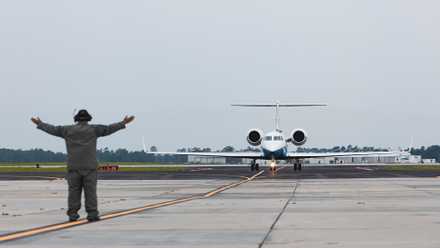
For working pilots and operators, this story is less about an imminent USAF acquisition and more about a broader signal of where military aviation logistics is heading — and it has downstream relevance for civil and business aviation stakeholders who interact with defense-adjacent markets. The Air Force's own acknowledgment that it is exploring business-jet-based refueling platforms to accelerate KC-135 retirement, alongside the effective mothballing of the Next Generation Air Refueling System stealth tanker program, suggests a period of genuine uncertainty and improvisation in USAF tanker recapitalization. Business aviation OEMs and MRO providers with defense connections should watch this space, as any serious pivot toward smaller, jet-based tanker solutions — whether Gulfstream-based platforms or aircraft like the KC-390 — would represent a meaningful new market segment. Meanwhile, corporate and charter operators flying into or near military airfields, particularly in the Pacific theater, may see increased KC-390 presence from allied NATO air forces participating in joint exercises, given the aircraft's rapid adoption rate in Europe.
More broadly, the KC-390's success illustrates a recurring theme in current military and commercial aviation procurement: legacy platforms sized for Cold War-era logistics are increasingly mismatched against modern doctrines that prize dispersal, survivability, and flexibility over sheer capacity. The B-21 Raider's deliberate downsizing relative to the B-2 Spirit is cited in the source reporting as a precedent for this shift, and it parallels commercial aviation's own multi-decade trend toward right-sizing aircraft to mission rather than defaulting to maximum size. For pilots transitioning between military and civilian careers, or for those flying support and logistics missions adjacent to defense operations, the KC-390's trajectory is a useful case study in how procurement decisions increasingly weigh survivability and basing flexibility alongside raw performance specs — a calculus that will likely shape tanker, airlift, and even business-jet-derived special-mission aircraft decisions for the next generation of fleets on both sides of the Atlantic.







 Read original article